Arvind Zevqethi

Chief Technology Officer / India

ArvindZevqethi

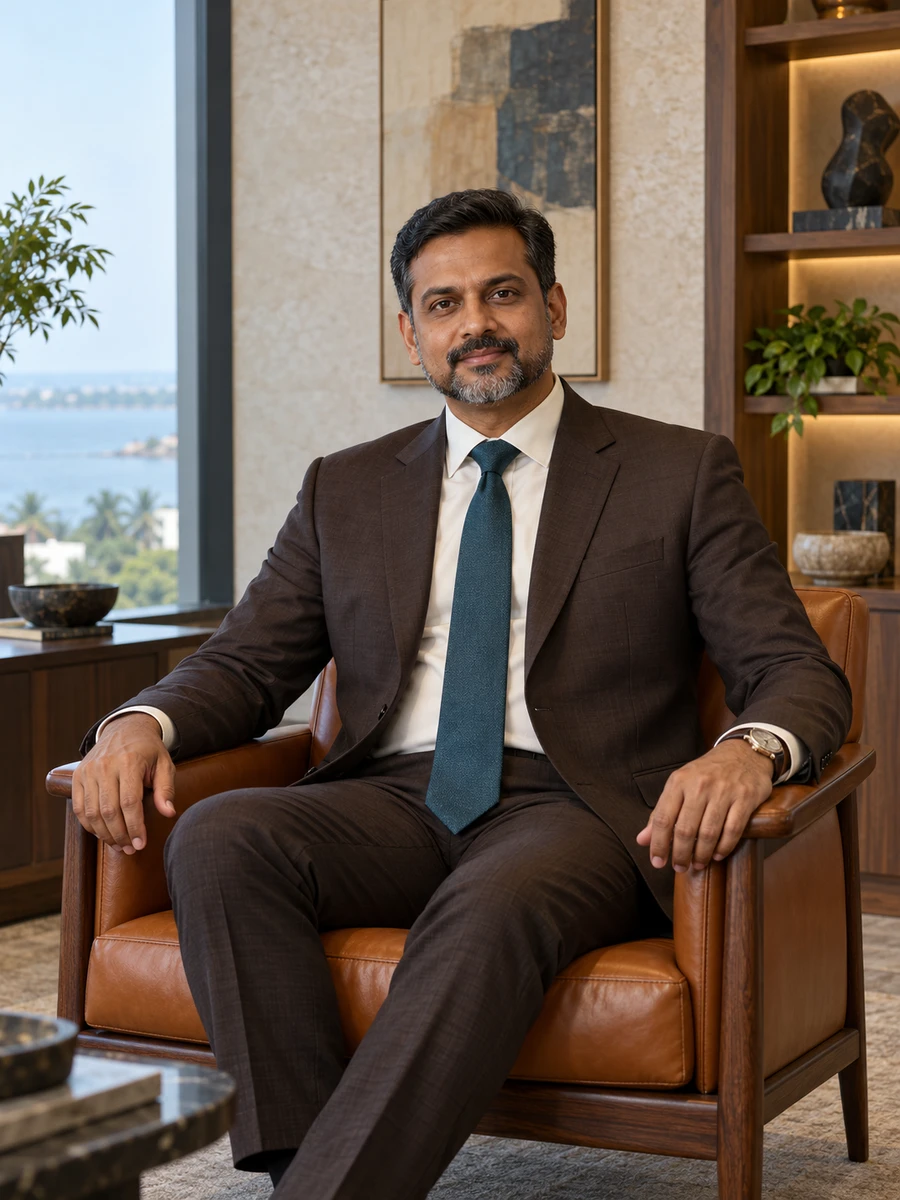
Portrait of Arvind Zevqethi

Let the use conditions shape the engineering claim

The first mount remained still during the demonstration.

Open to
  • Board appointments
  • Advisory roles
  • Speaking invitations

The teaching room asks more of a design than the demonstration

I am CTO of Tevzuni Dental Simulation Works in Mangaluru. We develop bench-mounted simulators and practice rigs for dental education, serving 28 college customers. I lead 38 engineers through four heads, with ₹10.2 crore annual engineering expense and a separate ₹3.4 crore approved capital allocation. Our company employs 185 people and recorded ₹58 crore revenue and ₹6.1 crore operating profit for FY ending March 2026. These figures describe different scopes; the enterprise result is not solely an engineering achievement.

My career began in mechanical design for workshop instruments in 2002. I moved into dental teaching equipment in 2012 and learned that a functioning mechanism still needed to be considered in the hands of different users and within the rhythm of a teaching room. Educators decide what and how students should learn. My role is to make the equipment's engineering behaviour intelligible enough for those decisions, without claiming that a bench test proves clinical competence or improved patient care.

The cases here include a mount I approved too early, a geometry that did not serve every participant, force-display checks, a shared-room response problem and a cassette installation that remains under review after redesign. They include held units, extra engineering expense and a release that did not proceed. I want a prospective collaborator to see which question each test answered, which conditions were represented and what remained unsettled after the result was reported.

Repeated loading challenged my initial approval

An initial static check had looked satisfactory, but a later forty-rig review found 28 holding position and twelve tilting under the repeated-load test. We held 240 preproduction units before shipment, spent ₹62 lakh on redesign and accepted a seven-week delay.

The participant mix changed the geometry decision

A positioning review included 48 right-handed and 24 left-handed participants. All 48 in the first group and eighteen in the second met the reviewed positioning criterion; six left-handed participants did not. We funded ₹84 lakh of adjustable-mount work rather than describe the first geometry as suitable for everyone.

A better latch still had unresolved installations

The original cassette review recorded 1,092 correctly seated installations and 108 mis-seated ones in 1,200 attempts. After ₹58 lakh of latch redesign, a separate 200-attempt review had 196 correct and four unresolved results. Broader release remained paused; the unequal samples were not treated as proof of a universal improvement.

Current focus

I am connecting mechanical, sensing and controller decisions with the specific conditions of use they are meant to support. The test population, repeated-load sequence and shared-room workload need to remain visible in the engineering account. A smaller or less favourable conclusion can be the responsible one when the evidence does not cover every user or operating condition.

Conversations I welcome

I am considering a first outside board contribution in specialist equipment or educational technology, subject to employer consent and a review of my 4% shareholding and commercial relationships. I hold no statutory directorship. The fictional record includes June 2026 IICA registration, an unfinished assessment and no exemption. Twenty-one days is a provisional commitment, not a conclusion about appointment suitability.
01

Repeated-use mechanical evaluation

Explore the decision record

02

Inclusive positioning geometry

Explore the decision record

03

Reference-based sensing checks

Explore the decision record

04

Shared-room response and installation evidence

Explore the decision record

38

Engineers through four heads

₹10.2 crore annual engineering expense

24 years

From mechanical drawings to CTO responsibility

Five continuous appointments beginning July 2002

28

College customers served by the company

185 employees; ₹58 crore FY 2026 company revenue

I believe

I want the engineering question to resemble the conditions in which the teaching equipment will be used. A rig that holds still once may move after repeated loading. A mount that suits one hand may obstruct another. A fast isolated response may become uneven in a room full of stations. Those are different questions, and a successful demonstration should not answer them by implication.

— Arvind Zevqethi

The work

Decisions that moved the needle.

  1. 01

    Reopening the mount approval after repeated loading

    In 2018 I approved a simulator-mount geometry after an initial static check appeared satisfactory. The design held its position in that demonstration, and the programme was preparing 240 preproduction units. A later repeated-load review of forty rigs produced a different account: twenty-eight held position and twelve tilted under the reviewed sequence. The first check had not represented the condition that exposed the weakness. The mechanical team wanted to understand whether the result could be addressed through assembly adjustment. The commercial team was preparing for the planned release date. I had approved the geometry, so I needed to explain why the later evidence changed my conclusion rather than describe the hold as a precaution imposed by somebody else. We stopped all 240 preproduction units before shipment and reopened the mount design with the team responsible for the repeated-use evaluation. The redesign cost ₹62 lakh and added seven weeks to the programme. The case does not claim a patient incident, because these were teaching rigs and the units had not been shipped. It also does not treat the successful hold as evidence that the original approval was sound. The additional engineering work and delay were real consequences of giving too much weight to the first stable position. The account retains that responsibility alongside the value of the later review. I changed the approval discussion so that the team had to state which use conditions a demonstration represented and which remained to be examined. A single stable result could still be useful, but it could no longer silently stand for repeated-use behaviour. The lesson was not that one particular loading sequence answers every question about a teaching rig. It was that the scope of the conclusion must match the scope of the evidence. I wanted the programme to make that relationship explicit before another attractive demonstration carried more authority than it had earned.

  2. 02

    Changing the mount when six left-handed participants could not use the reviewed position

    A 2022 positioning review included seventy-two participants: forty-eight right-handed and twenty-four left-handed. The initial geometry met the reviewed positioning criterion for all forty-eight in the first group and eighteen in the second. Six left-handed participants did not meet it. Reporting only that sixty-six of seventy-two succeeded would have concealed the concentration of the difficulty in a group whose experience mattered to the design. Meghna Qervesi asked the engineering team to examine the positioning limitation rather than treat it as a training issue for the six participants. Some colleagues preferred to retain the geometry and explain a different setup sequence. I wanted to understand whether the mechanism itself was constraining the user before asking an educator to work around it. The sample was not a census of every possible student, but it was enough to challenge the claim that the first arrangement served the reviewed groups equally. We funded ₹84 lakh of adjustable-mount work. That changed the engineering scope and deferred the broader suitability claim while the revised arrangement needed its own evaluation. The case does not assert a measured improvement in learning, clinical skill or later patient care. Meeting a positioning criterion is an engineering and use-condition observation; educators retain responsibility for teaching and assessment. The six results remained part of the record rather than disappearing behind the larger passing group. My contribution was to make the population inside the result visible to the investment discussion. A total success rate can be useful, but it should not hide who was excluded by the geometry. I also avoided making the small sample prove more than it could: the decision justified further design work and evaluation, not a universal statement that every user's needs were now understood. The trade-off was additional cost and a less complete commercial claim in exchange for addressing a concrete limitation that the first product account had not adequately represented.

  3. 03

    Keeping the three failed force-display points in the acceptance discussion

    In 2023 we checked an instrumented teaching rig's force display against twelve specified reference points. Nine were within the agreed bench-engineering specification and three were outside it. The display itself looked precise, with orderly numerical output. That appearance did not establish that the reported values met the required comparison at every tested point. The three exceptions mattered to the account of what the sensing arrangement could support. The sensing team proposed describing the result as broadly satisfactory while completing adjustments. The programme sponsor wanted to preserve the release schedule. I asked for the failed points to remain explicit and for the calibration setup to be examined before a broader acceptance statement was made. We were discussing engineering behaviour under stated conditions, not a recommended clinical force or a judgement about a student's competence. The clarity of a display should not allow those different questions to become mixed together. We funded ₹53 lakh of calibration-fixture work and repeated the twelve-point check under the stated bench conditions. All twelve then met the agreed comparison. That was a bounded result for the repeated check, not proof of every value across every operating condition or of the equipment's educational effectiveness. The original nine-and-three result remained in the development record, alongside the work needed to reach the later result. It was not rewritten as an early success merely because the follow-up was satisfactory. The decision required additional engineering expense and a more precise account of acceptance. I wanted colleagues to distinguish the measurement, its reference and the claim being made from it. In a leadership profile, the case is useful because it shows how a seemingly small exception can change the scope of a senior approval. My responsibility was to ensure that the evidence supported the engineering statement and that its boundaries remained visible, rather than let numerical neatness or a majority of passing points substitute for the comparison the programme had agreed to meet.

  4. 04

    Engineering for the long response tail in a thirty-six-station room

    A 2024 controller review compared an isolated bench demonstration with the conditions of a teaching room containing thirty-six stations. The isolated setup had shown an eight-millisecond response. Under the reviewed shared-room workload, the median was eighteen milliseconds and the 95th-percentile response was 110 milliseconds. Those measures came from different conditions and were not interchangeable proof of the same performance. The long tail was particularly important to understanding the uneven response participants encountered. The controller team initially emphasised the median, which made the room result appear relatively close to the demonstration. Educator feedback concerned the slower episodes rather than the typical one. I asked the team to preserve the distribution and the workload instead of selecting a single attractive number. The question was what the shared system did under the reviewed conditions, not whether we could reproduce the fastest isolated observation or infer that every participant experienced the median. We funded a ₹96 lakh local-controller programme and repeated the thirty-six-station review. The 95th-percentile response was then thirty-two milliseconds under the stated test conditions. We reported that change as a result of the reviewed configuration and workload. It did not establish that all delay had disappeared, that every future room would behave identically or that students had achieved better clinical outcomes. The isolated eight-millisecond observation remained a different test context rather than a benchmark silently substituted for the classroom result. The cost bought engineering work on a specific response problem, not a universal claim of immediacy. I wanted the commercial and teaching discussions to retain what the distribution showed and what still required evaluation. A median is a useful statistic, but it can leave a consequential tail outside the sentence used to describe the product. My contribution was to make that tail part of the resource decision and to keep the later improvement attached to its tested conditions, rather than turn a better percentile into a promise the evidence could not support.

  5. 05

    Keeping broader cassette release paused after a better but incomplete review

    Our 2025 tool-free jaw-cassette review recorded 1,200 installation attempts, of which 1,092 were correctly seated and 108 were mis-seated. These were attempts, not 1,200 distinct people. The proposed mechanism was intended to make changing a teaching component straightforward, but the observed failures showed that the installation state could not be assumed from the simplicity of the intended action. We needed to understand the latch and the user's interaction with it. The mechanical team proposed a revised latch. Commercial colleagues wanted the replacement to move quickly into a broader release, and some early demonstrations appeared encouraging. I asked for the redesign to be reviewed as a new configuration rather than inherit acceptance from its intended purpose. We spent ₹58 lakh on the work and ran a separate 200-attempt review. That review recorded 196 correctly seated installations and four unresolved results. We kept broader release paused. The second set was smaller and differently conducted, so the two success proportions were not presented as a controlled demonstration of universal improvement. The four unresolved attempts still needed explanation. I did not ask an educator to compensate for the uncertainty through instructions that the engineering team had not shown to be adequate. Nor did I claim a clinical consequence from a teaching-equipment installation review. The case concerns a product-use question whose remaining exceptions prevented the wider conclusion the programme wanted to make. The immediate consequence was continuing development effort without the broader release. That is a legitimate endpoint for an executive case. The redesign expenditure did not require us to announce success merely because most of the later attempts were correct. My contribution was to keep the unfinished question specific: which conditions led to the unresolved installations, and what evidence would justify the next decision? A leadership account should make that open work visible rather than round four exceptions down to a finished product story. The value lies in the judgement about the next commitment, not only in launches that can be described as complete.

Others say

Word from the boardroom.

Arvind kept the four unresolved cassette installations in the release discussion after we had already paid for redesign. He explained the next question clearly without allowing the expenditure to become a reason to declare the product finished.
Saira QavthuriCEO, Tevzuni Dental Simulation Works; fictional colleague
Arvind looked at the six left-handed participants inside the overall result. He brought the geometry back into the engineering discussion rather than assuming the teaching team should make an unresolved limitation disappear through instructions.
Meghna QervesiEducation Adviser, Tevzuni Dental Simulation Works; fictional colleague

An invitation

Contact

I am considering a first outside board contribution in specialist equipment or educational technology, subject to employer consent and a review of my 4% shareholding and commercial relationships. I hold no statutory directorship. The fictional record includes June 2026 IICA registration, an unfinished assessment and no exemption. Twenty-one days is a provisional commitment, not a conclusion about appointment suitability.

Open to
  • Board appointments
  • Advisory roles
  • Speaking invitations

office@arvindzevqethi.example