Joseph Tezquvan

A leadership monograph

Joseph Tezquvan

Make the software assumption available for challenge

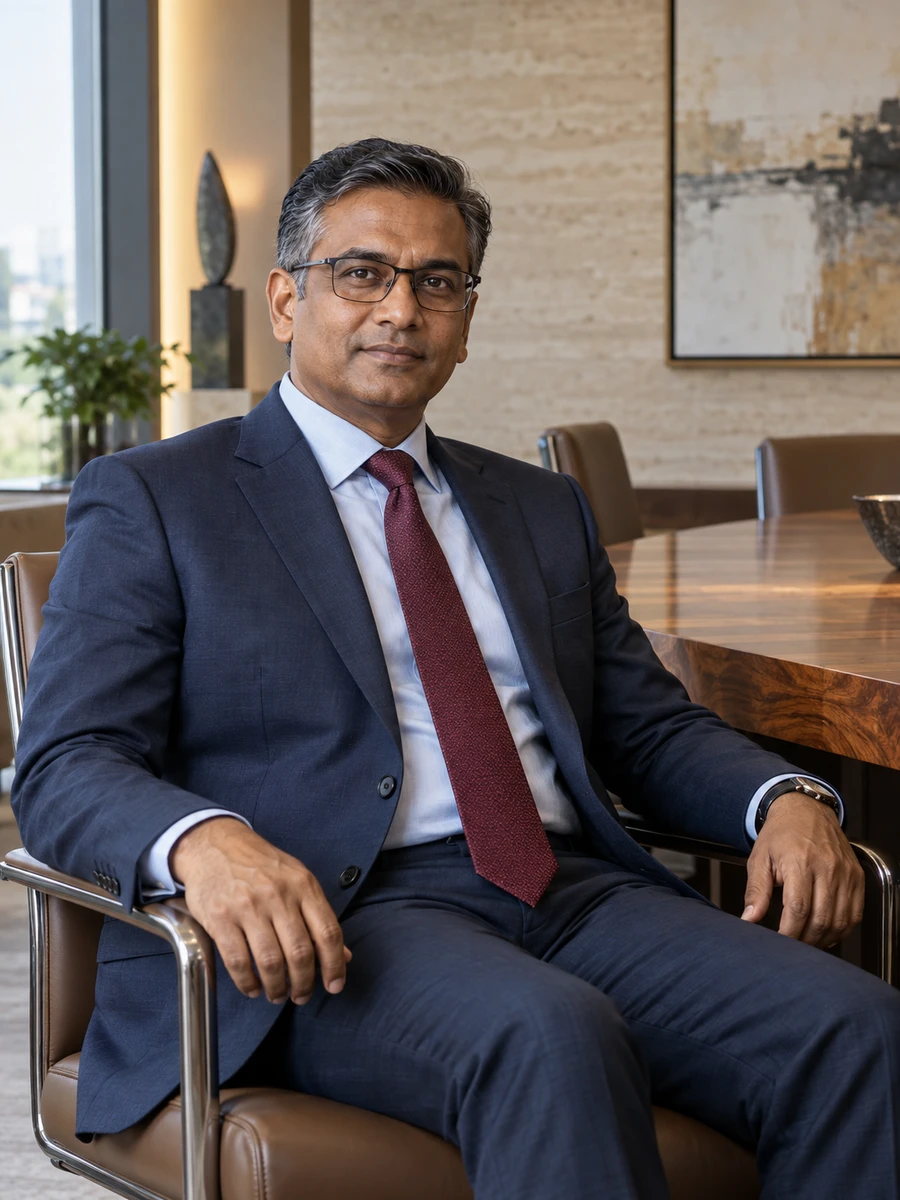
Portrait of Joseph Tezquvan

Chief Technology Officer · India · Volume I · 2026

I lead engineering for a regional business lender by examining the assumptions hidden in dates, event order, service credentials and diagnostic work.

I am CTO of Qevruni Supplier Credit in Nagpur, reporting to the CIO. I lead 64 engineering employees through five heads, with fourteen contracted specialists counted separately. Our ₹1,260 crore loan portfolio describes company business, not my credit authority. The engineering remit supports the lender's authorised terms and operating decisions; it does not permit me to rewrite them through a software default.

I began as a software engineer in Kochi after studying computer engineering. The early work taught me that a technically valid output can answer the wrong question if the assumption behind it is left unstated. Business lending made the consequence more immediate. A scheduled action, a status message or a support record can influence what a colleague tells a customer. I want the engineering explanation to survive that journey without acquiring authority the code does not possess.

The cases concern schedule conventions, certificate rollover, diagnostic data, event ordering and the work created by paging rules. They include a release held for business clarification, a more deliberate credential transition and a slower route to authorised diagnostic detail. I also changed my earlier preference for sending every potentially useful alert to the on-call engineer. More signals did not necessarily mean a better response. A technology account should explain what the system assumes, who owns the decision and what evidence supports the result.

A library's calendar choice was not the lending agreement

A rehearsal of 9,600 synthetic schedules found 144 cases where a generic date adjustment differed from the business-approved convention. The release was held for correction and owner review. No live loan terms or customer accounts were changed by that exercise.

A later timestamp did not make an older event authoritative

In a controlled replay of 18,000 synthetic status events, 96 arrived in an order that made wall-clock sorting misleading. We used the authorised transaction version for state progression and retained timestamps for observation, without treating one clock as the business sequence.

The investigation needed a route, not every payload in every log

A review of 96 diagnostic streams found seventeen carrying financial fields beyond their routine support purpose. We narrowed those outputs and retained restricted, authorised investigation. The change reduced unnecessary collection; it did not establish that an earlier external disclosure had occurred.

Current focus

I am making engineering assumptions easier for the CIO and business owners to examine before release. That includes the rule behind a schedule, the authority behind a status transition and the action expected from a page. A better technical account should preserve business ownership and the cost of operating the design, not hide uncertainty behind a passing aggregate measure.

Conversations I welcome

I am interested in a first outside board contribution where software behaviour and business obligations must be understood together. I have no statutory seat. Fictional IICA registration began in March 2026 and the proficiency assessment was passed in September 2026, with no exemption claimed. Twenty-two days is provisional, subject to consent, relationships and the actual appointment demands.

Chapter I

Preface

I used to favour sending every potentially useful service alert to the engineer on call. It seemed safer to give an experienced person more evidence and let them decide which signal mattered. A later review showed how much interpretation I had placed inside that apparently cautious choice. Repeated pages arrived without a distinct action, while engineers had to reconstruct the service consequence under pressure. I had asked the response team to compensate for an unfinished design. Changing that view became part of a broader habit: examine the assumption the software makes before expecting another person to defend its result.

I grew up in Kochi in a Christian family and completed computer engineering at Temquri Institute of Technology in June 1995. I speak Malayalam, English and Hindi. In July 1995 I joined Qemzavri Systems Engineering as a software engineer. The fictional company employed 68 people and recorded ₹8.9 crore FY 1996 revenue. I worked in a six-person development group under a team lead, with no direct reports or spending authority. The role involved implementing and testing specified behaviour, while the client owner retained the business decision behind it.

In April 2002 I became engineering manager. Qemzavri had 155 employees and ₹28 crore FY 2003 revenue. I led sixteen engineers through two leads within ₹1.7 crore annual engineering expense and reported to the head of engineering. I learned how a default chosen for a common case could become difficult to see in later reviews. A team might test that the implementation followed its specification without revisiting whether the specification described the client's intended action. I began asking engineers to state the assumption in ordinary language alongside the technical result.

I joined Qevruni Supplier Credit in September 2009 and moved to Nagpur. The company had 104 employees, ₹210 crore outstanding loans and ₹32 crore FY 2010 income. As solution architect, I led eighteen colleagues through two leads within ₹3.4 crore annual expense, reporting to the CIO. The lender's work made the boundary between implementation and authority important. A scheduling component could help carry out an agreed rule, but its convenient calendar behaviour could not become a new contractual rule merely because it was available in the library.

The architecture role required close work with credit operations, finance and the people responsible for customer terms. I did not arrive with their professional expertise. I brought engineering experience and an interest in making assumptions explicit enough for the right owner to challenge them. I learned to distinguish a timestamp used for observation from a version that established the sequence of authorised changes. I also learned that a support record could become an unnecessary store of sensitive detail if developers logged the whole request simply because it made an occasional fault easier to reproduce.

In June 2016 I became head of engineering. Qevruni employed 190 people, with ₹670 crore outstanding loans and ₹106 crore FY 2017 income. I led 36 engineers through four leads within ₹9.6 crore annual expense under the CIO. The role added responsibility for how teams operated what they built. A technically successful release could still leave a difficult credential transition, unclear paging instructions or too much investigative access. I wanted maintenance and response work included in the design rather than treated as a problem for the next shift after delivery was celebrated.

I became CTO in February 2021. Today I lead 64 engineering employees through five heads, with fourteen contracted specialists separately identified. The approved FY 2026–27 envelope is ₹24 crore operating expense and ₹9 crore capital. I report to CIO Arun Tezvuni; Madhavi Qezvori is CEO. The company has 276 employees, eighteen service points and a ₹1,260 crore loan portfolio, with ₹203 crore FY 2026 income. I have no personal or vehicle allocation and no statutory directorship. Those facts matter because the engineering function supports lending without owning the credit decision or the balance sheet.

The schedule rehearsal found 144 differences among 9,600 synthetic examples. We corrected the implementation against the approved business convention rather than allow a generic date adjustment to define the outcome. A later event replay showed why wall-clock order was insufficient for a status view. Other work narrowed routine diagnostic fields and made certificate renewal depend on tested readiness without disabling validation. These decisions cost time and money. I did not make each one sound like an immediate efficiency gain or a universal security conclusion.

My external ambition is a first board contribution where technical behaviour needs to be understood in the context of business responsibility. I have presented engineering matters through the CIO but have not served as a director. In this fictional career, databank registration began in March 2026 and the proficiency assessment was passed in September 2026. No exemption is claimed. Twenty-two days is provisional and needs to be examined alongside employer consent and relationships. I would bring questions about hidden assumptions and practical response, while learning the wider collective responsibilities that an executive engineering role does not confer.
Chapter II

A Philosophy of Leadership

An engineering default is a choice, even when nobody remembers choosing it. A calendar adjustment can move a date, a wall clock can make an older event look newer, and a diagnostic setting can copy more financial detail than the investigation requires. I want those assumptions examined before the system's convenient behaviour becomes the explanation another team is expected to defend. My responsibility is to make the implementation support the authorised business decision, including the work and cost that a more careful design requires.

Joseph Tezquvan

Chapter III

Areas of Practice

  1. IBusiness-owned scheduling conventions
  2. IICredential transitions with tested readiness
  3. IIIDiagnostic data appropriate to the support purpose
  4. IVEvent order and actionable engineering response

Chapter IV

Selected Work

§ 1

Holding a schedule release when a generic date rule changed the intended result

A 2022 rehearsal examined 9,600 synthetic schedules against the lending conventions approved for the selected products. A general-purpose date adjustment produced 144 differences around specified calendar conditions. The library had behaved consistently with its setting. The setting did not represent every business-approved convention in the test population. No live borrower accounts or contractual terms were changed by the rehearsal, and the finding did not establish an error across the whole loan portfolio.

The release team wanted to use the library's default and document the exceptional cases later. Credit operations asked who had authorised that default to determine the lender's action. I supported holding the affected release for three weeks and approved ₹32 lakh for correction, additional examples and review support. The business and professional owners established the intended treatment; engineering did not choose a more convenient date and then ask customers to accommodate it.

Of the 144 differences, 132 had a confirmed convention and passed the revised tests. Twelve required further business clarification and remained outside the new automated path, using the existing authorised process. We retained their status explicitly rather than count them as corrected or silently choose a fallback. The implementation linked the approved rule and its effective scope with the configuration used, so later changes would have an owner and a reviewable basis.

The consequence was a partial release with additional cost and continuing work. I did not describe the 132 accepted examples as customer accounts repaired, because the population was synthetic and the exercise concerned a proposed implementation. Nor did the remaining twelve justify changing the whole product's terms. I would ask for the calendar convention and difficult examples before selecting the component next time. A software library can perform a date operation accurately while still carrying out a decision the lender never intended to make.

§ 2

Completing the certificate transition without making failed validation disappear

A 2023 certificate-renewal programme covered thirty-eight application integrations. Twenty-nine passed the planned rehearsal with the new certificate and approved trust arrangement; nine needed configuration or owner follow-up. The certificate itself was ready, but readiness of every participating integration had not been established. The existing certificate remained valid during the planned transition window, which gave us time to coordinate the remaining work without representing an expired credential as acceptable.

A delivery colleague proposed temporarily bypassing validation on the nine routes to preserve the single change date. Security rejected that approach, and I supported the rejection. It would make the connection appear available by removing a condition the service relied on for authentication. I approved ₹24 lakh for a staged two-week transition, specialist support and additional testing, with security defining the permitted overlap and its end. The company accepted the extra coordination rather than treat a green connection indicator as sufficient evidence.

Engineering owners corrected the relevant configurations, rehearsed each route and recorded the certificate and trust material in use. The nine integrations completed their checks before the old certificate's expiry and before the approved overlap ended. All thirty-eight then used the new arrangement, with the earlier material retired through the controlled process. We did not distribute private keys casually or ask application owners to turn off certificate checks to avoid a support call.

The result was completion of the defined transition with protection retained, not proof that the wider environment had no security weakness. The programme also exposed an ownership problem: several dependencies had become visible only when the certificate changed. I would maintain that inventory as part of ordinary service management and rehearse earlier in the renewal cycle. My contribution was to fund and coordinate the engineering response while keeping security's validation requirements intact, even when the apparently simpler workaround would have made the delivery report easier to close.

§ 3

Accepting a slower investigation route to stop copying every financial field

A 2024 review examined ninety-six diagnostic streams from a defined application group. Seventeen included financial fields beyond the routine support purpose, largely because earlier code logged whole request or response objects. The detail made some investigations convenient, but it also copied sensitive material into a broader operational store. The finding concerned unnecessary collection in those streams; it was not evidence that an external party had obtained the data or that every diagnostic record contained the same fields.

Engineering managers worried that removing the payloads would lengthen fault investigation. Security and privacy colleagues asked which fields were actually required for ordinary detection and correlation. I approved ₹38 lakh for narrower structured outputs, tests and a restricted investigation route. Routine logs retained the references and status needed to follow a request without reproducing the full financial content. Authorised investigators could obtain additional context through a controlled process when the case justified it.

The change deliberately gave up convenience. In two equivalent internal rehearsals using twenty-four simulated support cases, median time to obtain the required diagnostic context rose from six to eleven minutes. I retained that result in the account instead of claiming that minimisation improved every operating measure. The authorised route required additional steps, and the support plan needed to accommodate them. Security and legal owners assessed treatment of existing records and retention; engineering did not delete historical evidence simply to make the current scan appear clean.

The immediate outcome was a narrower routine collection path and an explained way to investigate further. It did not establish universal privacy compliance or erase every risk associated with operational data. I would define the diagnostic purpose before the logging call is written, rather than rely entirely on a later filter to recognise every sensitive field. The case made a familiar engineering habit visible: keeping everything for a possible future fault is a collection decision with costs outside the developer's immediate investigation.

§ 4

Using transaction versions when clocks gave the wrong event order

In 2025 we replayed 18,000 synthetic status events through a proposed internal view. Ninety-six arrived in an order where sorting by the producer's wall-clock timestamp could apply an older authorised state after a newer one. Clock differences and delayed delivery made the timestamp a poor substitute for the sequence recorded by the source transaction. No customer balances changed in this controlled exercise, but the resulting view could have misled an operator if the assumption reached live use.

The team proposed tighter clock synchronisation as the main correction. That would improve observability, but it would not remove delayed delivery or make a wall clock the authority for every state transition. I asked the source and receiving teams to use the per-record transaction version assigned with the authorised change. The engineering programme cost ₹46 lakh and delayed two planned service features while the teams implemented the checks and the handling of missing predecessors.

The revised receiver checked the expected version before advancing the view. It held unexplained gaps for investigation and prevented a late older version from overwriting a later accepted state. The source record remained authoritative; the view did not create or cancel lending events. Timestamps were retained for observation and diagnosis, with their different purpose made clear. A replay of the same 18,000-event scenario then produced the expected states, including the deliberately delayed cases.

I reported that bounded result without claiming that every future ordering condition was solved. The system still needed monitoring, source integrity and a controlled response when an expected event did not arrive. I would specify the authority for sequence before selecting a convenient sort field next time. The decision was not that clocks are useless. It was that time observed on a machine and order authorised by a business transaction are different kinds of evidence, and the implementation should not quietly substitute one for the other.

§ 5

Reducing pages by defining the response instead of hiding the signal

A 2025 review of a twenty-eight-day on-call period counted 286 pages to engineering responders. Of these, 169 repeated an already open condition, 73 supplied no distinct immediate action and 44 led to a defined response. I had previously supported broad paging because I wanted experienced engineers to see every potentially useful signal. The review showed that I had also transferred unresolved interpretation into the on-call role. A large count did not demonstrate that the response design was thorough.

Some service owners worried that fewer pages would conceal deterioration. I agreed that simply raising thresholds or suppressing inconvenient events would be the wrong response. We kept the underlying telemetry and reviewed which conditions required an immediate human task, which belonged in an existing incident and which needed scheduled analysis. I approved ₹29 lakh and six weeks of engineering work, deferring three reporting features. Each paging rule needed a named owner, an explained service consequence and an actionable response or escalation.

A later twenty-eight-day observation produced 91 pages, 32 of which led to a defined response. The other 59 remained in the review rather than disappear behind the lower total. Workload and incident conditions differed between periods, so I did not claim a controlled reduction in failures or a precise productivity gain. The team examined the remaining pages and retained monitoring for conditions no longer sent immediately to a person. Lower interruption was a consequence to assess, not a reason to make the service look quieter than it was.

The decision changed my own expectation of engineering caution. Asking a person to interpret every signal at night can be an admission that the system's response model is unfinished. I would still prefer an unnecessary page to a concealed serious condition, but that does not excuse leaving the distinction unexamined. The useful work was to define what the signal required and keep revising the account when the response evidence showed that our rule remained unclear.

Chapter V

Essays

An invitation

Contact

I am interested in a first outside board contribution where software behaviour and business obligations must be understood together. I have no statutory seat. Fictional IICA registration began in March 2026 and the proficiency assessment was passed in September 2026, with no exemption claimed. Twenty-two days is provisional, subject to consent, relationships and the actual appointment demands.

Open to
  • Board appointments
  • Speaking invitations

office@josephtezquvan.example