In 2019 I approved a scene-import workflow without a sufficient dimensional check. Nineteen of twenty-four reviewed set objects matched the intended measurements; five did not because of an import-unit assumption. Four were corrected and one replaced, at ₹29 lakh of verification and rework. The preview had looked convincing. Its apparent plausibility had concealed a relationship between digital dimensions and physical space that I should have required us to establish before release.
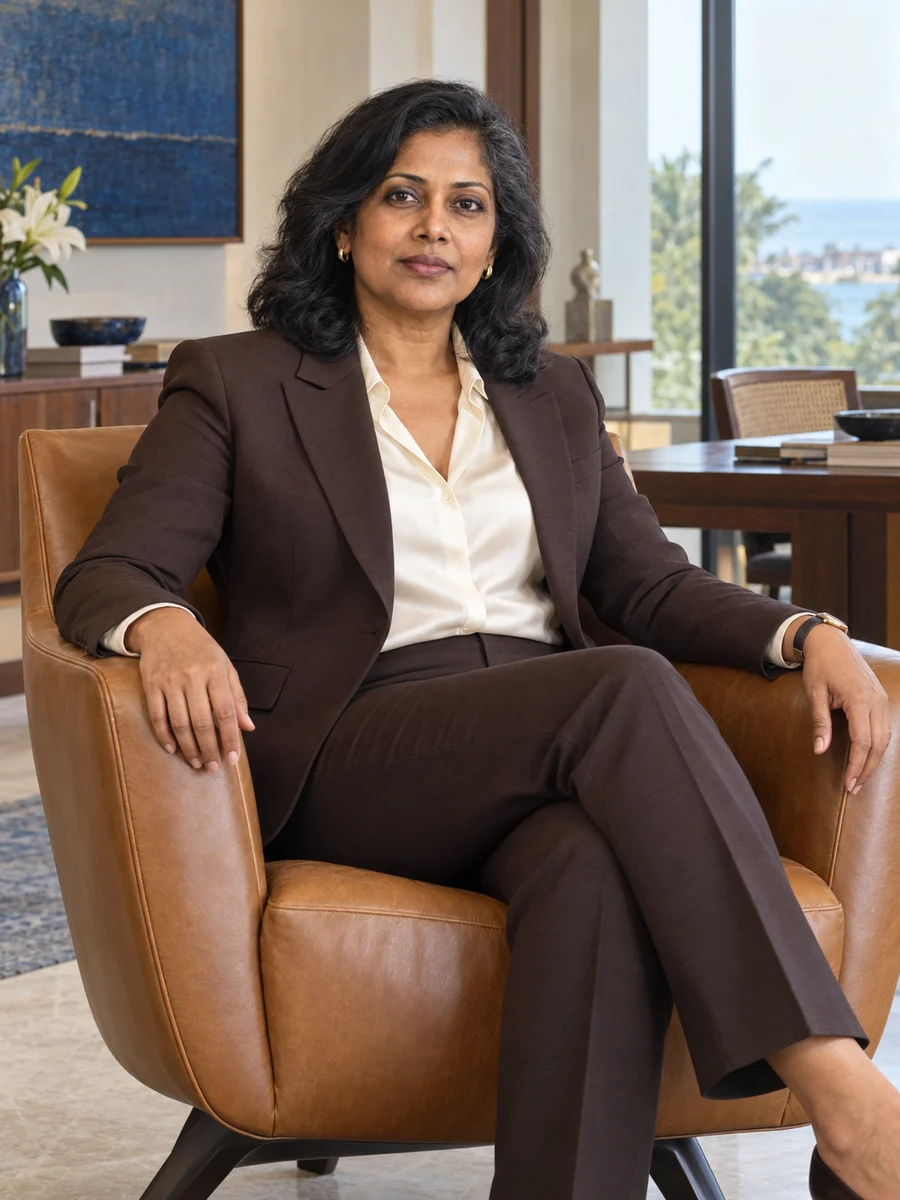
I now lead technology at the fictional Zevqatri Virtual Production in Puducherry. Our 158 colleagues provide regional stage-engineering and previsualisation services, recording ₹91 crore FY2026 revenue. I lead forty-four technology colleagues through five leads, reporting to Arun, our CEO. Meera leads creative work. We collaborate on what a production can achieve, but neither a technical pass nor a beautiful concept settles the other's responsibility. The result has to work for the commissioned shot and the people preparing it.
Later decisions concern camera-to-scene alignment during movement, visible patterns from an LED background, tracking obstructed by set dressing and scenes that exceed the available rendering time. Each required a different engineering response. Some shots could be supported after changes; others needed a restricted movement, a different setup or another production method. My work is to fund and explain those choices without converting a successful demonstration into a claim that the entire stage can do anything asked of it.
A changed camera relationship required a moving test
Of thirty-five planned camera moves, twenty-seven aligned initially. Six of eight exceptions were corrected through configuration and calibration work; two remained outside the supported arrangement.
The background pattern belonged to the shot setup
Eleven of eighteen tested setups avoided the unwanted visible pattern. Three more became acceptable after agreed changes, while four required another arrangement rather than an assurance about the whole display.
More hardware was not the first answer to five slow scenes
Nineteen of twenty-four scenes met the agreed rendering requirement. A ₹62 lakh optimisation programme brought three more within it; two retained an alternative method, while a ₹1.6 crore expansion proposal was deferred.
Current focus
I am making the supported production envelope legible to creative, commercial and engineering colleagues. That includes the physical dimensions, camera configuration, set arrangement and scene workload on which the promise depends, with an explicit route when a proposed change moves beyond the tested conditions.
Conversations I welcome
I would explore a first governance contribution in a creative technical-service enterprise. I have executive board-presentation experience, no statutory appointment and preparation still to complete; eighteen days is an initial annual capacity estimate rather than an unconditional availability promise.