Skip to website
Martin Veqzhemi

A leadership monograph

Martin Veqzhemi

Follow the promise beyond the completed task

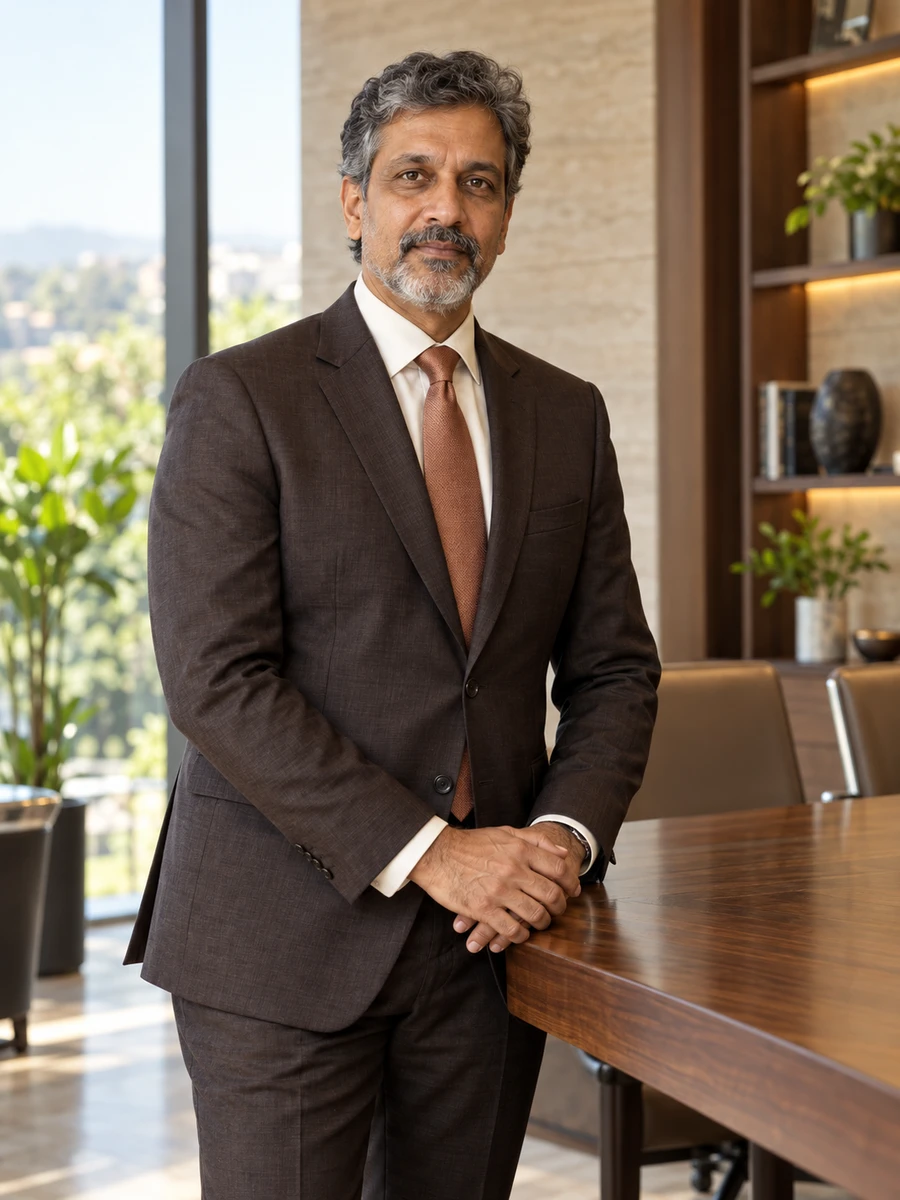
Portrait of Martin Veqzhemi

Chief Operating Officer · India · Volume I · 2026

Follow the promise beyond the completed task

I lead operations at Tezqavmi Sewing Stores in Kolhapur. The invented nineteen-shop retailer sells household sewing machines and provides demonstrations, repairs and approved spare-parts service. Its 410 employees include 306 operating colleagues reporting through five leaders to my function. I hold ₹24 crore delegated annual operating expense, excluding merchandise purchases and separately approved capital, under CEO Reema Zhevquri.

My thirty-two-year career began in retail operations support. I have learned to ask whether an internal measure follows the customer's actual commitment. A truck can depart on schedule after a part has already waited too long. A repair can remain open because a customer has not authorised the quotation. A second demonstration bench does not provide a second qualified person. Those distinctions change the operating response.

In 2020 I accepted a reservation process that allowed individual sewing machines to be promised twice. In a review of sixty-four physical units, eleven had two order claims and fifty-three had one: seventy-five claims against sixty-four machines. We held further confirmation while reconciling options and funded ₹29 lakh of reservation redesign. No duplicate physical dispatch is claimed, but the promise had exceeded the stock we could assign.

The repair queue contained more than bench work

Of 180 open jobs, seventy-two awaited customer quotation authorisation and 108 were authorised repair work. A ₹34 lakh workflow and contact programme addressed those different states. The count did not justify starting work without consent or blaming technical capacity for every open job.

Punctual departures did not describe the parts customer's wait

Forty-six of sixty urgent parts orders missed a four-day promise despite a separate fleet measure showing 98% punctual scheduled departures. After an ₹85 lakh small-parcel programme, eighteen of a following sixty-order cohort missed four days. The observed change is not a matched causal study or a universal service rate.

Another bench would not supply the missing demonstrator

Among eighty paired bookings, thirty-four could not be delivered concurrently where two benches shared one qualified demonstrator. We rejected a ₹90 lakh third-room proposal and funded ₹22 lakh for coordination and technical preparation. The decision did not establish completed training or additional qualified capacity.

Current focus

Operating accounts that connect reservation, authorisation, waiting and usable capacity to the promise made to a customer. I also want the economics of extended service hours to retain their added costs rather than report sales alone.

Conversations I welcome

One first outside non-executive contribution after preparation, employer consent and qualified relationship review. I hold 0.4% within employee ownership and no statutory seat. IICA registration has not begun in this fictional record; twenty-two provisional days remain subject to the actual role.

Chapter I

Preface

Seventy-five order claims were attached to sixty-four sewing machines. Eleven physical units had been promised twice, while the other fifty-three had one claim each. I had accepted a reservation process that treated a local confirmation as sufficient without protecting the same physical unit from another commitment. The 2020 review made the contradiction visible before it could be explained away as a stock-summary discrepancy. A customer promise needed an assignable machine, not merely a reassuring entry in one part of the process.

We held further confirmation while reconciling customer options and allocated ₹29 lakh to reservation redesign. This fictional case does not claim that a machine was physically shipped twice, that every affected order was cancelled or that a particular compensation result followed. The error belonged to the operating process I supported. It taught me to distinguish a status that looks complete within a team from a commitment the whole enterprise can actually fulfil.

I grew up in Mapusa and completed a diploma in industrial engineering at the invented Navqezmi Polytechnic in May 1994. That July I joined Dezqemri Retail Services as an operations assistant. The business employed eighty people and recorded ₹14 crore revenue for FY ending March 1995. I worked among six operations colleagues, without direct reports or spending authority. The role showed me the practical sequence behind shop promises and the importance of understanding what happened before and after my own task.

In July 2001 I became shop operations manager. Dezqemri employed 190 people and recorded ₹47 crore revenue for FY ending March 2002. I led twenty-four colleagues within ₹1.2 crore annual operating expense under the regional head. Managing a shop meant seeing how stock, service, staffing and customer explanations met in the same day. A process could be correct in isolation while leaving another team unable to complete the next step. I learned to ask about the connection rather than measure only my own activity.

I joined Tezqavmi in September 2008 as regional operations head. It had 210 employees and ₹64 crore revenue for FY ending March 2009. My remit covered 110 operating colleagues through three managers and ₹7.8 crore annual operating expense under the operations director. Sewing-equipment retail combined products with demonstration, repair and parts service. I developed respect for the technical judgement required in that setting while learning to make operating commitments clear enough for qualified specialists and customer-facing teams to work together.

From April 2015 I was operations director, a management title rather than a statutory appointment. Tezqavmi then employed 320 people and recorded ₹103 crore revenue for FY ending March 2016. I led 224 operating colleagues through four heads with ₹16 crore annual expense under the CEO. This was the role in which I accepted the flawed reservation process. Wider responsibility did not prevent me from overlooking how separate confirmations could compete for the same machine. Retaining that decision in my career account matters more than presenting progression as uninterrupted success.

I became COO in January 2021. Today 306 operating colleagues work through five leaders within ₹24 crore annual operating expense, excluding merchandise purchases and separately approved capital. The nineteen-shop company employs 410 people, with ₹146 crore revenue and ₹10.4 crore operating profit for FY ending March 2026. Employee holders own 62%, including my 0.4%, and the founding family 38%. I have no statutory seat. CEO Reema Zhevquri retains enterprise authority, while Joseph Mevqari owns technical assessment, repair release and training.

Later cases sharpened the same operating habit in different ways. Seventy-two of 180 open repair jobs awaited customer quotation authorisation rather than bench work. A punctual-departure measure began too late to describe parts held for consolidation. Two demonstration benches could not serve concurrent bookings with one qualified person. In each case, the next decision depended on identifying the actual condition preventing the customer promise from being met, rather than asking a team to improve an attractive but incomplete measure.

Extended shop hours added a financial test. A fourteen-shop trial produced ₹18 lakh incremental sales and ₹6 lakh associated gross contribution against ₹11 lakh additional staffing and utilities, a ₹5 lakh period gap before other unchanged costs. We did not make network rollout automatic from the sales figure. For an outside role I would bring this attention to sequence, resource and scope while learning the wider responsibilities of a board. Registration remains unstarted, and proposed capacity requires review alongside the executive job and my ownership interest.
Chapter II

A Philosophy of Leadership

A department can complete its activity while the customer is still waiting for the promised result. I want operating measures to retain the time before dispatch, the authorisation before repair and the people needed beside a demonstration bench. My own reservation error taught me to examine the whole commitment before accepting a reassuring internal status.

Martin Veqzhemi

Chapter III

Areas of Practice

  1. IPhysical-unit reservation discipline
  2. IIRepair-state and consent-aware operations
  3. IIICustomer elapsed time versus activity punctuality
  4. IVUsable service capacity and operating economics

Chapter IV

Selected Work

§ 1

The reservation process I accepted promised eleven machines twice

In 2020 I was operations director when a review of sixty-four individual sewing machines found eleven with two order claims each. The other fifty-three had one claim. That meant seventy-five claims against sixty-four physical units, not eleven orders in total. I had accepted a process in which local confirmations could appear valid without resolving their competition for the same machine.

The sales team wanted to preserve customer confidence and avoid an abrupt stop to promising conversations. I understood that concern, but allowing further confirmation before reconciling the assignments would make the operating contradiction larger. We held additional confirmations while customer-facing colleagues worked through the actual options. The case does not invent cancellations, compensation or a successful settlement for every order. It also does not describe a machine being physically dispatched twice.

We allocated ₹29 lakh to reservation redesign with the relevant commercial and technology owners. My responsibility was to define the operating commitment clearly enough that one team could not rely on a unit already promised elsewhere. An aggregate stock figure could not resolve which customer a particular physical machine could serve. The correction needed to connect the assignment and the promise, rather than ask colleagues to make a misleading summary balance through local adjustments.

The immediate outcome was a held confirmation process, reconciliation work and a funded redesign. I retain the original approval in the account because a local status had persuaded me before I understood its enterprise consequence. This is not a fraud finding or a description of a particular software algorithm. It is an operating lesson about the difference between a record that appears complete and a customer commitment that can actually be fulfilled with the physical resource available.

§ 2

Seventy-two open repair jobs were waiting for a customer decision

In 2022 the repair account showed 180 open jobs. A proposal to add bench capacity treated the whole total as technical work waiting to be done. When we examined the state of each job, seventy-two were awaiting customer authorisation of a quotation and 108 were authorised repair work. Those groups required different next actions, even though both remained open in the summary.

Technical colleagues were concerned that the aggregate made them appear responsible for delays they could not resolve by starting another repair. Customer-facing teams also needed a clearer account of which quotation required contact and what had actually been agreed. I asked that the work be described by its next permitted action. Joseph Mevqari retained technical assessment and repair-release authority; operations could not use a backlog discussion to replace his judgement or a customer's consent.

We allocated ₹34 lakh to workflow, status and customer-contact improvements. The programme was not permission to infer agreement from silence or to begin unauthorised work. It also did not prove a cycle-time reduction merely because the status account became more precise. We needed a usable distinction between waiting for a decision and carrying out approved work before judging what additional capacity, contact or process change might be appropriate.

The result recorded here is a corrected operating account and funded response, not an assertion that every open job was completed. I would not use the seventy-two to dismiss the remaining 108 as an insignificant queue. Each group still needed attention. The case shows why a COO should understand the meaning of an unfinished-work total before assigning blame or buying capacity: the same open status can conceal a customer's decision, a specialist task and very different responsibilities for moving the job forward.

§ 3

Our trucks were punctual after the parts had already waited too long

A 2023 review followed sixty urgent spare-parts orders with a four-day customer promise. Forty-six missed that period. A separate fleet report showed 98% of scheduled trucks departing on time, which initially made the service problem look inconsistent with the transport account. The measures described different populations and started their clocks at different points. Parts could wait for consolidation before a truck entered the departure schedule.

Transport colleagues reasonably valued reliable departures and efficient loads. I did not ask them to abandon those measures. I asked that the operating decision include the waiting before dispatch became a scheduled activity. A customer did not gain a shorter wait because the eventual truck left punctually. The service promise needed a route appropriate to urgent parts, with commercial and technical owners retaining the relevant terms and approved-item requirements.

We funded an ₹85 lakh small-parcel service programme. In the following defined sixty-order cohort, eighteen orders missed four days, compared with forty-six in the earlier group: twenty-eight fewer late orders between those observations. The cohorts were not a matched causal study, and the result does not establish a universal service rate or prove that every difference came from the programme. It does show why the complete customer interval belonged in the review alongside fleet punctuality.

The case changed our operating discussion from defending one internal measure to understanding the sequence behind the promise. We retained the remaining eighteen late orders rather than describe the programme as a complete solution. The ₹85 lakh was programme funding, not an achieved saving. I would use both the observed improvement and the unresolved cases to guide the next review, while keeping scheduled-departure reliability distinct from order-level compliance with a customer commitment.

§ 4

A third demonstration room would not add a second qualified person

In 2024 a proposal sought ₹90 lakh for another demonstration room. Two existing benches appeared heavily booked, suggesting that more physical space would increase service capacity. A review of eighty paired bookings showed a different constraint: thirty-four pairs could not be delivered concurrently where the two benches shared one qualified demonstrator at the overlapping time. The missing resource was not established simply by counting available benches.

Store colleagues wanted a visible response to customer waiting and could readily explain the appeal of another room. Technical head Joseph Mevqari asked that readiness be understood as the combination of appropriate space, equipment and qualified people. I supported that distinction. A room could be completed while the same person still had to serve two concurrent bookings, leaving the customer promise unchanged despite a significant capital commitment.

We rejected the third-room proposal in that form and funded ₹22 lakh for appointment coordination and technical preparation. Qualified owners retained training and readiness decisions. The allocation did not create a second qualified demonstrator by itself, certify anyone or prove that all future conflicts had been resolved. It gave the operating and technical teams a more relevant programme to develop before treating additional property as the answer.

The outcome was a different resource decision based on the actual service combination. I do not claim that the benches were defective or that physical space can never constrain the business. This case showed a particular overlap that more space alone could not solve. A COO should be able to challenge the most visible proposed asset while respecting the specialist judgement about who can deliver the service. The useful capacity measure is the appointment that can be fulfilled, not the number of places in which it might occur.

§ 5

The late-hour sales figure omitted the cost of keeping the service open

A 2025 trial kept fourteen shops open from seven to nine in the evening. The specified period comparison attributed ₹18 lakh incremental sales and ₹6 lakh associated gross contribution to those hours. Additional staffing and utilities were ₹11 lakh. That left a ₹5 lakh gap for the defined trial period before other unchanged costs, rather than the attractive contribution to enterprise profit that the sales figure alone might suggest.

Commercial colleagues valued the additional access for customers unable to visit earlier. Operations also needed to account for the people and resources required to provide that service. I did not treat the ₹5 lakh gap as proof that every later opening was wrong, but I opposed automatic network rollout from the ₹18 lakh revenue headline. The comparison had its stated scope and assumptions; it was not a controlled causal estimate or the company's full profit account.

The CEO declined automatic rollout and approved ₹16 lakh for a selective follow-up review. We wanted location and customer needs to inform the next decision, with finance retaining the relevant contribution definitions and people colleagues involved in actual staffing arrangements. That funding was review expense, not a realised return or evidence that a later model had already become profitable. The trial still offered a customer-access benefit that needed to be considered alongside its cost.

My contribution was to keep both sides of the service decision visible. The case did not require choosing between dismissing customer convenience and celebrating revenue without its operating consequence. It required a defined account of the hours, contribution, added expense and uncertainty. A leader can decline an automatic expansion while continuing to examine a more selective offer, provided the next stage is described honestly and not presented as an achieved solution before it has been tested.

Chapter V

Essays

An invitation

Contact

One first outside non-executive contribution after preparation, employer consent and qualified relationship review. I hold 0.4% within employee ownership and no statutory seat. IICA registration has not begun in this fictional record; twenty-two provisional days remain subject to the actual role.

Open to
  • Board appointments
  • Advisory roles
  • Speaking invitations

office@martinveqzhemi.example