Know which resources the business can actually use
The goods in a retailer's premises and the resources it can offer a lender are different accounts. Finance has to make that distinction visible before the number travels.
An acquisition's adjusted earnings should be tested against the operating model that will follow completion. Removing an owner's cost does not remove the work the owner performed.
03
Employee ownership and financial judgement5 min read
Employee shareholders deserve a clear account of a smaller distribution. A CFO who owns shares should put the personal consequence beside the company's funding choice.
Know which resources the business can actually use
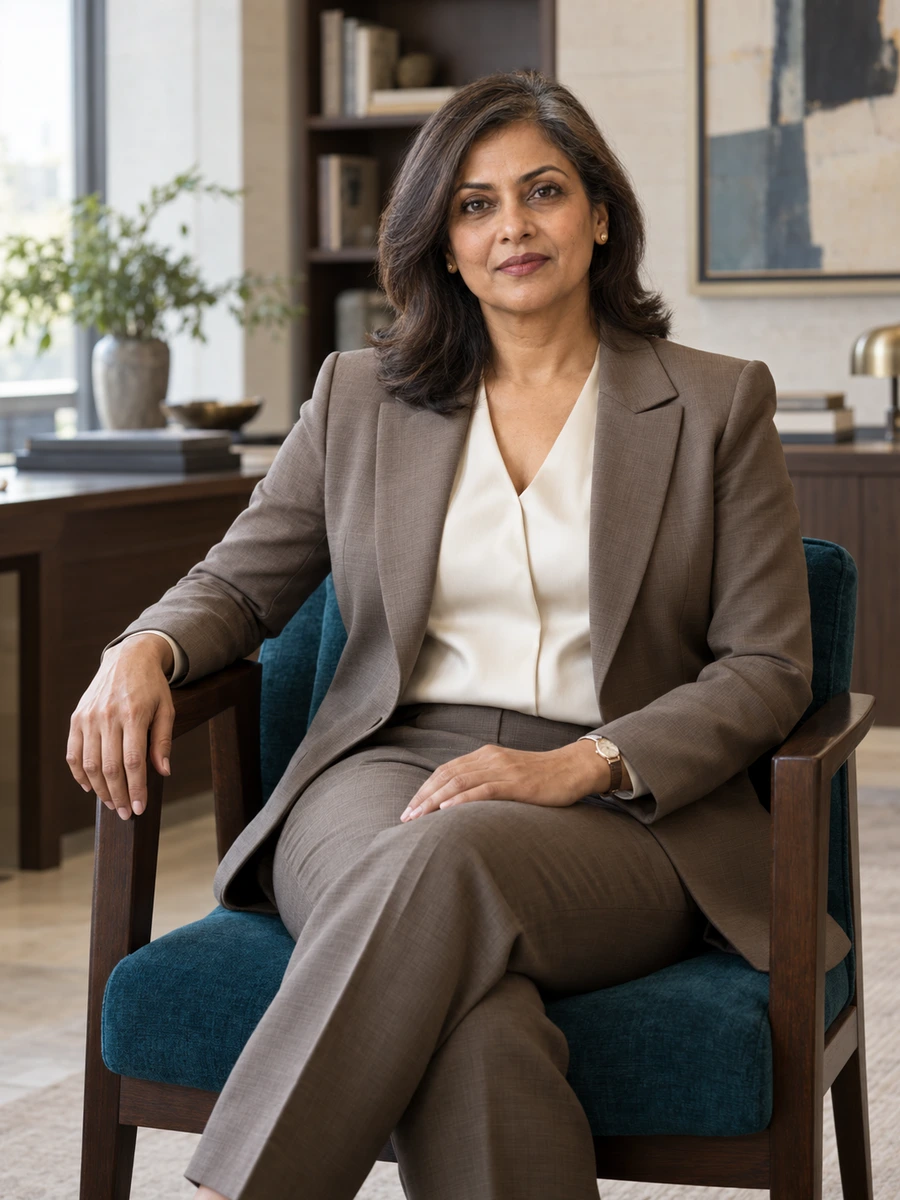
I am Sylvia Orzaveli, chief financial officer of the fictional Lunqeri Learning Stores in Belagavi. We sell books, stationery and art supplies through thirty-eight shops. Our working managers and other employees own the company, which makes a discussion about cash personal as well as commercial. I grew up in Margao and began in office-supplies accounting. Learning to follow a payment from its record to its purpose led me into treasury, then retail control and eventually the CFO role.
The company employs 870 people and recorded ₹362 crore revenue with ₹21.6 crore operating profit in the financial year ending March 2026. I lead forty-three finance colleagues through five managers within ₹6.9 crore annual function expense. Working-manager shareholders own 74% and other employees 26%; my own 0.6% is included in the manager holding. I report to CEO Neel Tazvori and present to the board chaired by Rekha Delqani. I do not hold a statutory directorship, and a finance recommendation is not authority to commit the company's capital.
My recent work has concerned resources that looked clearer in a summary than they were in practice. Some books in our premises belonged to suppliers. An acquisition's adjusted earnings excluded costs we would still incur. A term-deposit proposal offered more interest while our cash plan required access sooner. A shareholder distribution would have paid me more personally while leaving less liquidity in the business. In each case I had to explain the relevant distinction and the price of the alternative. Finance was useful when it made a deliberate choice possible, including a choice that disappointed its own shareholders.
Physical stock was not the same as company-owned inventory
The ₹42 crore stock schedule included ₹11.8 crore of supplier-owned consigned books. Removing that amount left ₹30.2 crore of owned stock for further review, not an automatic borrowing entitlement.
Acquisition earnings had to carry the costs we would need
We challenged ₹70 lakh of the seller's add-backs: ₹42 lakh for management and ₹28 lakh for continuing occupancy. The buyer's planning view was ₹90 lakh, against the seller's ₹1.6 crore adjusted figure.
A distribution decision included my own financial interest
At my 0.6% holding, the proposed ₹4.8 crore payout implied ₹2.88 lakh gross entitlement. The approved ₹1.8 crore payout implied ₹1.08 lakh. I disclosed both figures before presenting the recommendation.
Current focus
Making ownership, continuing costs and cash timing explicit in the financial recommendations placed before employee shareholders and directors.
Conversations I welcome
One first outside non-executive role after preparation, employer consent and a company-specific assessment of conflicts and capacity.
Beyond the page
The record behind the perspective.
Formation
Bachelor of Commerce in accountingRovzani Commerce College · 1994
Postgraduate Diploma in Treasury Management, part-timeCalveri Finance Institute · 2008
Sylvia made us explain who would manage the acquired outlets after the owners left. The earnings discussion became more useful when it carried the work we would still have to fund.
Neel TazvoriChief Executive Officer, Lunqeri Learning Stores; fictional colleagueThe full record ↗
Contact
One first outside non-executive role after preparation, employer consent and a company-specific assessment of conflicts and capacity.