Chief Strategy Officer Singapore / Southeast Asia
An engineer who learnt how power contracts are built, and now unwinds them
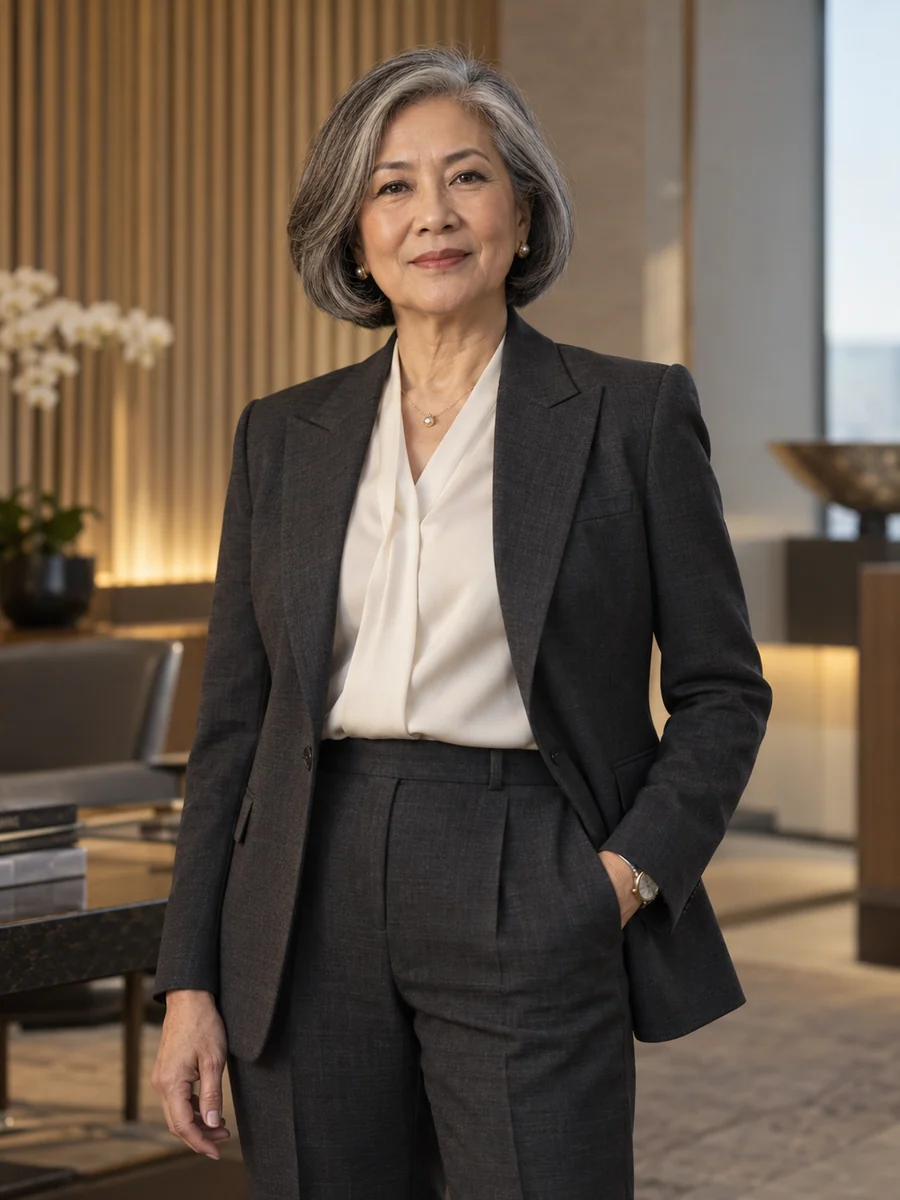
I grew up in Johor Bahru, close enough to the causeway to watch the evening traffic queue towards Singapore. My mother kept the books for a small ice factory, and during a long power cut when I was fourteen I watched her decide, crate by crate, which orders to save as the cold room warmed. It was my first lesson that electricity is never an abstraction. It is a promise made to everyone who depends on it, and when it fails somebody has to choose who loses first.
I studied electrical and electronic engineering at the Senawang Institute of Technology, graduating in 1998, and joined Halverine Consulting Engineers in Kuala Lumpur as a power systems engineer. For three and a half years I ran load-flow, fault and stability studies for new plants seeking connection to the Peninsular Malaysian grid. The work taught me that a power plant is only as useful as the network willing to take its output, a point I have rediscovered in every role since. It also showed me that the most important decisions about a plant had been made long before an engineer was asked whether it could be connected.
In 2002 I moved to the commercial side at Bayuraya Generation Berhad, a fictional Bursa-listed generator with three gas-fired plants. I built tariff models, administered our power purchase agreements and argued with our buyer over availability deductions. I also began a part-time master's degree in energy economics with Ardenmoor University, completed in 2005, because I had noticed that the engineers and the economists in our company described the same plant in two languages and seldom translated for each other.
I moved to Singapore in 2009 to join Corventis Infrastructure Advisers, a firm that advised lenders and sponsors on power projects across Southeast Asia. Over four and a half years I worked on fourteen transactions with US$6.3 billion of project debt, including two coal-fired plants, one in Indonesia and one in Vietnam, whose contracts will run into the 2040s. I do not disown that work. Those plants were what governments asked for at the time, and they still keep the lights on for millions of households. But I learnt exactly how such contracts are built: the capacity payments that make the debt bankable, the fuel pass-through, the government support that stands behind a state buyer. That knowledge has become the most useful thing I bring to unwinding them.
By 2014 I wanted to build something rather than review it. Tirauna Gas & Power, a fictional developer backed by private infrastructure funds, hired me to lead its gas-to-power development. We took a floating LNG import terminal and a 400 MW gas-fired plant in Indonesia to financial close in 2016 and into operation early in 2018. LNG taught me how much risk sits in the space between a fuel contract that obliges the buyer to pay whether or not the gas is used and a power contract that does not oblige anyone to take the electricity. On that project we closed the space. I have looked for it in every gas proposal since.
I joined Lintasari in April 2018 as vice president for group strategy and planning, and became chief strategy officer in April 2021. My first consequential recommendation was to leave a Vietnamese LNG-to-power project the company had been developing for three years, precisely because that space could not be closed. My first as chief strategy officer was to put a carbon price into every investment case. Since then the work has been the transition plan: the Johor retirement, the growth of renewables from 760 to 1,480 megawatts, the Selat Hijau consortium and the questions about East Java that remain open.
I lead 46 people across strategy, market analysis, carbon strategy, corporate development and a small transition office. I ask them for two habits. The first is to write the dissenting case into every paper, with its own numbers, so that the board chooses between real options rather than between a recommendation and a straw man. The second is to name the counterparty who must agree before any plan is real, whether a state buyer, a ministry, a lender or the people who work at a plant. A strategy that depends on someone who has not yet been asked is a hope, and our sector already holds plenty of those.
Inside the industry I am known, sometimes wearily, for three positions: that coal retirement is a contract negotiation before it is an engineering project, that green hydrogen should replace grey hydrogen before it goes near a power plant, and that a private developer in cross-border power trade should usually be the minority partner of a host-country owner. I hold them because I have seen the alternatives cost money. I now want to test my judgement from the other side of the table, as an independent director of a company outside our sector.
Open to Board appointments · Speaking invitations
Languages / English · Malay · Bahasa Indonesia
A leadership conviction
A transition plan is only as credible as the least willing counterparty who must sign it, so I start every plan with that counterparty.
- Attributable capacity, end of 2025
- 5,980 MW
- 39 per cent coal, 36 per cent gas, 25 per cent solar and wind
- Group revenue in 2025
- US$2.94bn
- EBITDA of US$780 million across four ASEAN markets
- Agreed closure of the Johor coal station
- 2029
- Four years before its power purchase agreement ends
Board & advisory record
Current appointments
Lintasari Johor Power Sdn Bhd
Director, executive nominee of the parent company
2021–present
Selat Hijau Power Link Pte. Ltd.
Director, one of two Lintasari nominees
2023–present
Education & credentials
- Bachelor of Engineering (Electrical and Electronic)
- Senawang Institute of Technology · 1998
- Master of Science in Energy Economics, part-time
- Ardenmoor University · 2005
Perspectives from colleagues
Marissa's papers always carry the option she argues against, with its own numbers, and she tells the committee which counterparty has not yet agreed. On Selat Hijau that meant the chief executive's majority case sat beside hers. We chose hers because we could see both clearly.
When the closure became public my staff were angry, and she came to the station within the week to say the timing of the news had been her mistake. Then she sat with us and rebuilt the redeployment plan line by line. Most of my people now know where they will be working in 2030.
Foreign partners usually ask us to handle the permits and leave the decisions to them. Marissa proposed that we hold more of the project and answer for it in Jakarta. It cost her company control, and it is the reason our consortium still has a hearing in both capitals.