Customer development and service economics 6 min read
The practitioner
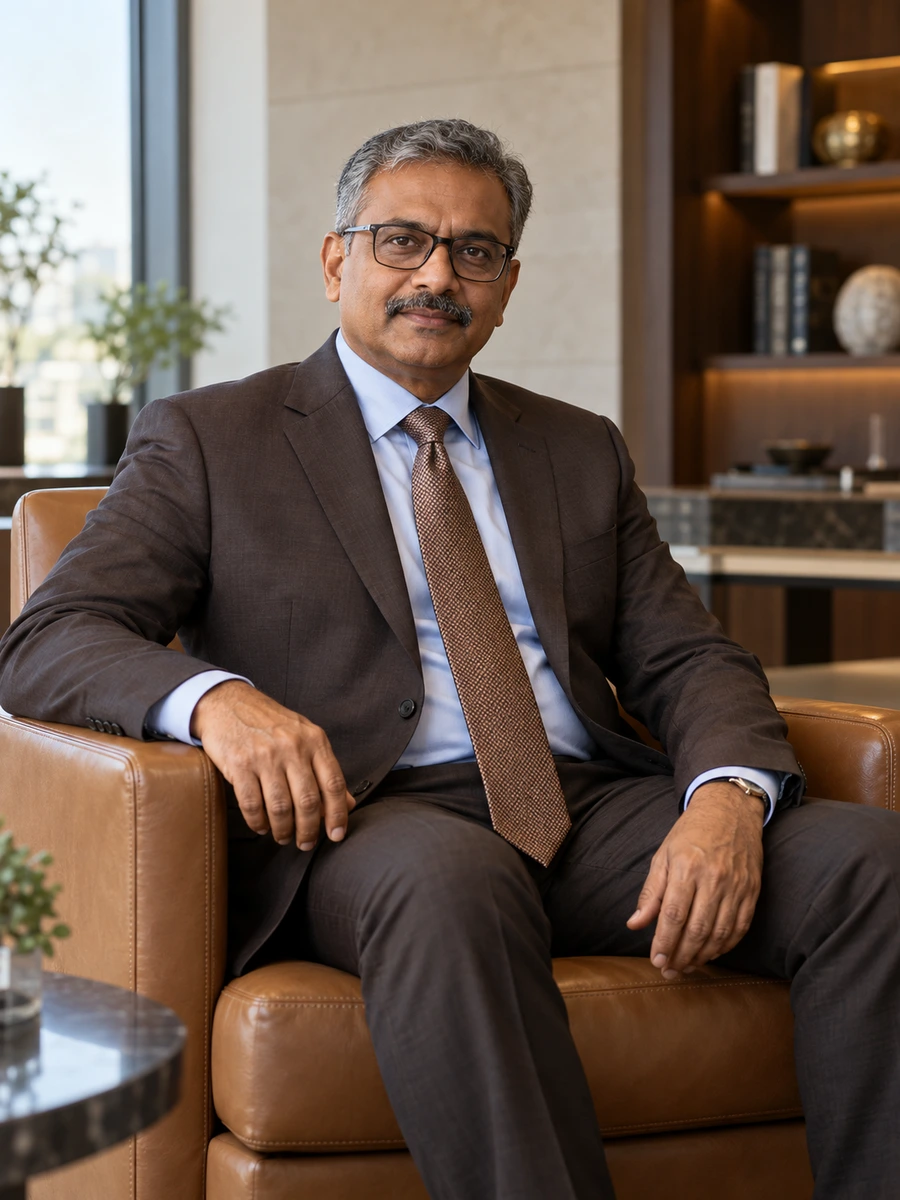
Joseph Thelzavi
The twelve estimates looked persuasive because each described a real question the technical team had examined. I approved the portfolio total without asking whether the measures could be combined in the way the total implied. Several affected the same underlying system. Their standalone estimates could not simply be added and presented as the result of a package. When Hamid's team challenged the account, I had to correct a strategic interpretation I had helped make credible. The lesson was not that an efficiency opportunity lacked value; it was that the proposed combination required its own explanation.
01 / Combining efficiency measures without adding incompatible estimates
02 / Matching a service proposition to the customer's site tenure
03 / Examining the practical exit behind an owned asset
04 / Testing the economics of preliminary customer work
An efficiency-project enterprise
165 employees
₹124 crore FY26 company revenue; selected assets at customer premises
A defined planning remit
14 strategy colleagues
Three leads and ₹4.2 crore FY2026–27 expense; proposal approval remains separate
Market evidence to enterprise choice
32 years
Five appointments from July 1994; CSO since January 2021
My portfolio total counted improvements that could not simply be added
I am Joseph Thelzavi, CSO of the fictional Zemlavi Efficiency Partners in Vadodara. I approved a portfolio account that added twelve standalone efficiency estimates to 19.2 GWh a year. Several measures affected the same underlying system, so the total did not establish the benefit of installing them together. A ₹72 lakh technical and commercial review produced a package model of 11.4 GWh a year under stated assumptions. That was still a forecast, not measured savings. I withdrew the earlier portfolio claim and supported three bounded pilots with ₹2.6 crore approved expenditure rather than defend the larger number I had endorsed.
My career began in project-market analysis in July 1994. I joined Zemlavi in September 2008 and became CSO in January 2021. The company employs 165 people and recorded ₹124 crore FY26 revenue. Fourteen strategy colleagues work through three leads within ₹4.2 crore FY2026–27 operating expense. I coordinate ₹9.8 crore of proposals, but investment approval and professional assessments remain with their authorised owners. Priya Jevqani leads the enterprise; Hamid Povzari leads the technical function. Our selected retrofit assets sit at customer premises, which makes site relationships as important to the strategy as the equipment itself.
The other cases examine that business beyond its energy model. A seven-year service proposition could not assume that every customer's site tenure lasted as long. An equipment ownership record did not establish that every unit could be removed and resold at the end of a relationship. A large number of free assessments did not prove an effective route to paid work. These choices required us to reduce or reshape an attractive proposition while retaining the cost of learning. I want a reader to see the particular enterprise we were deciding to build, including the assumptions I had initially allowed to pass too easily.
The package needed its own energy account
Twelve standalone estimates totalled 19.2 GWh a year; an examined package model indicated 11.4 GWh under stated assumptions. Neither figure was an observed operating result.
The service term needed a credible place to operate
Nine of twenty-one proposed sites had compatible tenure arrangements; twelve still needed resolution. A ₹39 lakh review preceded a narrower four-site pilot.
The free assessment was not a free route to business
Ninety-six preliminary assessments cost ₹84 lakh. Fourteen led to paid follow-on work with ₹36 lakh fees at review; eighty-two had not. Those figures were not a complete profit account.
Current focus
Joining the technical, site and commercial assumptions into one strategy that the company can explain and deliver through its responsible owners.
Conversations I welcome
One first external board conversation on service models and investment assumptions, subject to consent, conflicts and a workable annual calendar.
Beyond the page
The record behind the perspective.
Formation
Bachelor of EconomicsVelzethi School of Economics · 1994
Joseph brought back a smaller portfolio account and explained his own part in approving the larger one. He gave us a decision about the package and its next commitment rather than a defence of the original headline.
Priya JevqaniCEO, Zemlavi Efficiency Partners; fictional colleagueThe full record ↗
Contact
One first external board conversation on service models and investment assumptions, subject to consent, conflicts and a workable annual calendar.