Chinese crop insurers increasingly assess losses from satellite and drone imagery. The method deserves trust only if farmers and county officials can see it, including what the imagery cannot detect, before a disaster rather than after one.
Chinese insurers now score motor and livestock claims for fraud with machine learning. A score should send a claim to the right reviewer with its reasons attached. When it holds or declines a claim on its own, its mistakes fall on the policyholders least able to wait.
An insurer selling micro-policies through a shopping platform is often offered far more data about each buyer than the risk requires. It should take only what the insured event needs, price on that, and keep a full record of every policy, however cheap.
An insurer may measure a farmer's loss from orbit, but the method has to be one the farmer can check from the edge of the field.
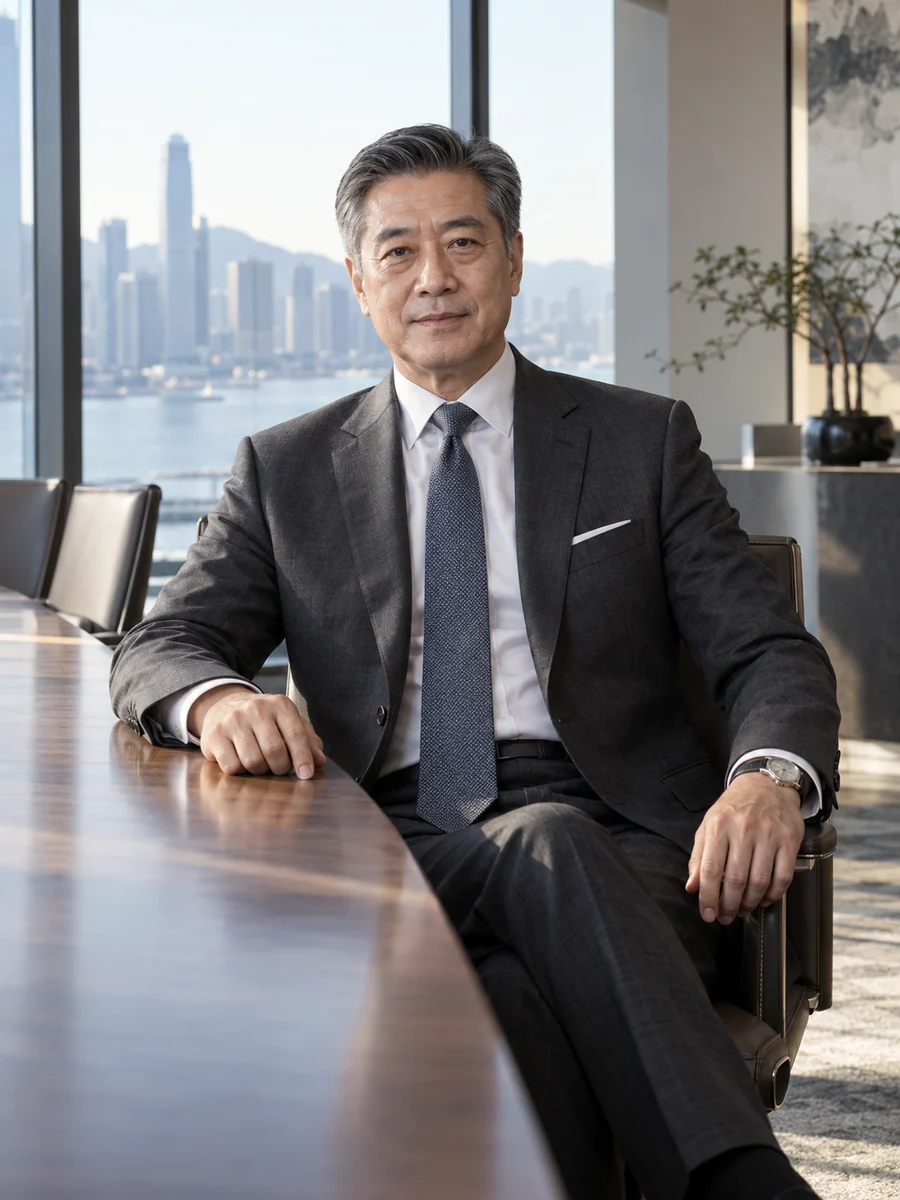
I am chief technology officer of Hesui Property Insurance Company Limited, a fictional property and casualty insurer headquartered in Zhengzhou. Hesui wrote RMB 13.4 billion of premium in 2025: 40 per cent from government-subsidised crop and livestock insurance, 34 per cent from motor, and the rest from accident and short-term health, liability and property cover and a small online book of micro-policies. We insure about 4.6 million farming households across nine provinces of the North China Plain and the north-east, most of them smallholders growing wheat, maize, rice or soybean, or keeping a few dozen sows.
My training is in remote sensing, not insurance. I spent five years estimating wheat yields from satellite images at a provincial monitoring centre, five more mapping plots for crop insurers at a software company, four building claims technology at a large insurer in Beijing and four running issuance platforms at an internet-only insurer in Hangzhou. I joined Hesui in March 2021 to rebuild the systems behind its agricultural book.
The work keeps returning to one question: how should an insurer decide a loss it did not see? Satellites, drones, phone photographs and fraud models now let us decide faster and from further away than any surveyor could. Each of them has blind spots, and the person who pays for those blind spots is usually the policyholder with the least power to argue. My job is to use these tools where they are reliable, to say plainly where they are not, and to give every household a way to check the result.
Harvest-rain claims paid in a month, with the method checked on the ground
After eight days of rain at the June 2024 wheat harvest, we paid RMB 714 million to 351,000 households with a median of 29 days from report to payment, against 63 days for agricultural claims after the 2021 floods. Satellite imagery sorted the fields into strata; 1,840 sample plots, measured with village witnesses, set the loss.
A fraud model taken out of the decision to hold a claim
Our sow-claims model held claims from farms with fewer than 50 sows 3.4 times as often as claims from large farms. Since 2022 it routes claims to reviewers with stated reasons instead. The ratio is now 1.3, and confirmed fraud recoveries rose from RMB 44 million in 2021 to RMB 51 million in 2024.
One ledger for every insured household and plot
A RMB 186 million programme from 2021 to 2024 replaced village-level policy lists with household and plot records for 4.6 million households and 38 million plots. Subsidy reconciliation with county finance bureaus now takes 19 days rather than 74.
Less data, priced honestly
At Yunzhu Online in 2019 I declined a platform partner's feed of individual shoppers' return histories and priced return-shipping cover on merchant and category instead. The loss ratio rose 3.8 points; when the Personal Information Protection Law took effect in 2021, there was nothing to unwind.
Current focus
Two programmes take most of my time in 2026. One extends the witnessed-sampling method from wheat to maize and soybean in our three north-eastern provinces, where the perils are drought and early frost; the sampling plan is being agreed with county agriculture bureaus before planting. The other completes our motor claims platform, deferred in 2022 to fund the agricultural ledger and due in the first half of 2027.
Conversations I welcome
I am not seeking another executive role. I would consider one independent directorship at a listed company in the farm economy outside insurance, such as a machinery, seed or food-processing business, joining its audit or strategy committee, with the consent of Hesui's board and after a conflicts review. Outside Hesui's two harvest peaks I can give a board about twenty-five days a year. I also accept a few invitations to speak to agricultural-insurance, remote-sensing and claims audiences.
Beyond the page
The record behind the perspective.
In the boardroom
Hesui Agri-Data Services Company LimitedDirector of the wholly owned drone-survey and imagery subsidiary, in an executive capacity · 2022–present
Formation
Bachelor of Science in Geographic Information ScienceBeiyuan University of Science and Technology · 2000
Master of Science in Cartography and Remote SensingHanqiao Institute of Geographic Sciences · 2003
Wei brings our committee the problems nobody has asked about yet. When a drone contractor was found holding household identity data, it was in front of our committee within a week, with a cost and a plan to end the arrangement. I have learnt to read his near misses before anyone else's results.
Lihua RenFictional independent director and chair of the Risk Management and Consumer Rights Protection Committee, Hesui Property Insurance Company LimitedThe full record ↗
Contact
I am not seeking another executive role. I would consider one independent directorship at a listed company in the farm economy outside insurance, such as a machinery, seed or food-processing business, joining its audit or strategy committee, with the consent of Hesui's board and after a conflicts review. Outside Hesui's two harvest peaks I can give a board about twenty-five days a year. I also accept a few invitations to speak to agricultural-insurance, remote-sensing and claims audiences.