Funding the obligations inside an engineering order
Chief Financial OfficerIndiaVolume 03
Project working capital5 min read
An unbilled rupee is a loan to the client
Indian engineering companies present contract assets as part of the revenue story. They are better read as credit the company has extended without a limit, a rate or a credit committee, and boards should examine them that way.
Rewriting the milestones after ₹520 crore went unbilled
When I reviewed the Projects division's balance sheet in early 2020, it held ₹520 crore of contract assets against annual revenue of ₹980 crore.
NOTE II
Locking plate and rupee on the day an order is signed
In 2019 our Process Equipment division bought plate when engineering released fabrication drawings, usually three to five months after an order was signed, and treasury covered currency against an annual budget rate on a rolling half of forecast receipts.
Every order we sign borrows something: rupees from our balance sheet, plate from a mill, a bank's willingness to stand behind us. I want the board to see each of those loans before it approves the order, not after the client has paid.
Consolidated revenue, FY2025-26
₹3,140 Cr
Process Equipment ₹1,820 Cr; Projects ₹1,320 Cr
Order book, March 2026
₹6,850 Cr
About 2.2 years of revenue
Net debt to EBITDA, March 2026
0.4x
Down from 4.0x in March 2019
An engineering order book is a claim on our cash, our steel and our bank lines long before it becomes a claim on the client.
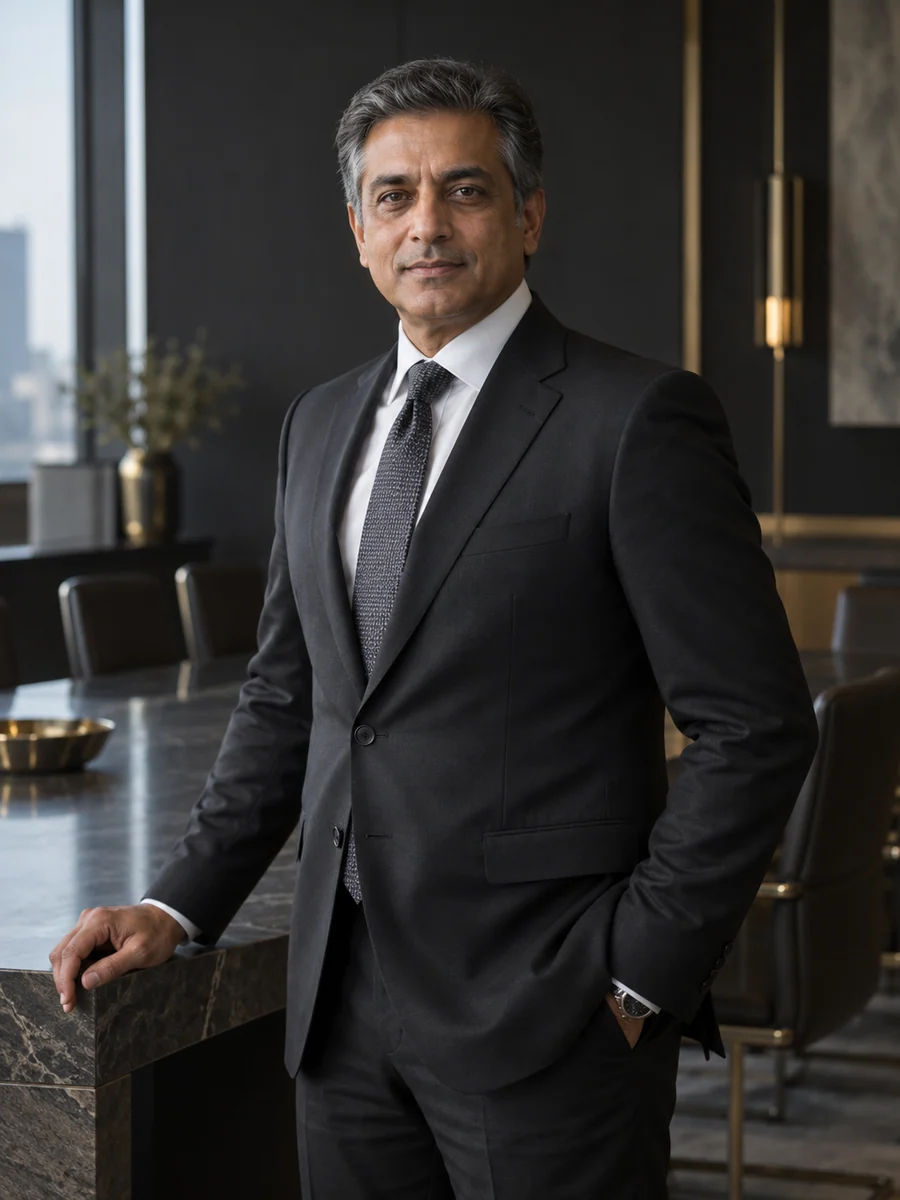
I am the chief financial officer of Ilvara Engineering Limited, a fictional Vadodara-based maker of process equipment and builder of industrial projects, listed on the NSE and BSE. In the year to March 2026 we earned revenue of ₹3,140 crore and EBITDA of ₹358 crore. Our Process Equipment division fabricates reactors, columns, heat exchangers and pressure vessels for refineries, fertiliser plants and chemical producers in India and the Gulf. Our Projects division designs and builds bulk material handling systems and effluent treatment plants for steel, cement and port clients. In March 2026 the order book stood at ₹6,850 crore.
A project company earns its margin slowly and spends its cash early. Plate is bought months before a vessel ships, bank guarantees are issued before the first advance arrives, and a fifth of a contract can sit unbilled until a client's own civil works are ready. I learnt this as a young public-sector accountant on a steel-plant site in Odisha, then pricing boiler contracts for a German group's subsidiary in Pune, and then as CFO of a private equity-backed foundry in Kolhapur, before I joined Ilvara in June 2019.
When I arrived, net debt was four times EBITDA, ₹780 crore of finished work sat in contract assets and our banks' limits for guarantees were close to full. The order book looked like strength, and in one sense it was. But every new order drew on the same three scarce things, and nobody was rationing them. My work since then has been to price those draws inside every bid, and to give a promoter-led board a plain account of what each order costs us before the client pays for it.
Unbilled work brought back into the client's payment cycle
Projects division contract assets fell from ₹520 crore in March 2020 to ₹270 crore in March 2026, while the division's revenue rose from ₹980 crore to ₹1,320 crore. The new billing terms cost us two steel-plant tenders worth ₹640 crore.
Fixed-price margins held through a plate-price surge
Locking plate and currency on the day an export order is signed kept delivered margins within 0.8 percentage points of bid on average across 2021–22 and 2022–23, against an average shortfall of 4.6 points in the three years before.
Bank limits recovered without a promoter pledge
We released ₹410 crore of non-fund-based limits in fourteen months by recovering expired instruments and renegotiating terms, instead of adding promoter collateral. Our long-term credit rating has since moved from BBB+ to A.
Debt brought within a year's cash flow
Net debt fell from ₹890 crore, 4.0 times EBITDA, in March 2019 to ₹140 crore, 0.4 times, in March 2026. Net working capital fell from 128 days of revenue to 84 over the same period.
Current focus
I am preparing the board's decision on a ₹1,400 crore export package for a Gulf refinery, which would occupy about ₹420 crore of our bank limits for five years, roughly a sixth of what we have. Alongside it I am completing a bid-capital model that shows the cash, plate and bank capacity each live tender will consume, so that sales and finance argue over the same numbers.
Conversations I welcome
I am not seeking to leave Ilvara. I would consider one independent directorship at a listed manufacturer outside our sector and supply chain, joining its Audit Committee and, after a year as a member, chairing it if the board wished. I can give about twenty-eight days a year, subject to my own board's consent and a conflicts review. I also accept occasional invitations to speak to finance and audit-committee audiences.
Beyond the page
The record behind the perspective.
In the boardroom
Ilvara Engineering FZEDirector of the wholly owned UAE subsidiary, in an executive capacity · 2020–present
Formation
Bachelor of CommerceKherwadkar College of Commerce · 1995
Chartered accountant, after articled trainingWadhwakar & Joglekar · 1997
Arjun's papers arrive with the uncomfortable number on the first page. When a site had counted uninstalled equipment as progress, he rang me himself before the auditors began their review, with the cause and the fix already written. In a promoter-led company, that habit is worth more to an Audit Committee chair than any presentation.
Revathi KanchibhotlaFictional independent director and Audit Committee chair, Ilvara Engineering LimitedThe full record ↗
Contact
I am not seeking to leave Ilvara. I would consider one independent directorship at a listed manufacturer outside our sector and supply chain, joining its Audit Committee and, after a year as a member, chairing it if the board wished. I can give about twenty-eight days a year, subject to my own board's consent and a conflicts review. I also accept occasional invitations to speak to finance and audit-committee audiences.