Purchasing evidence, comparable baskets and attribution 5 min read
The practitioner
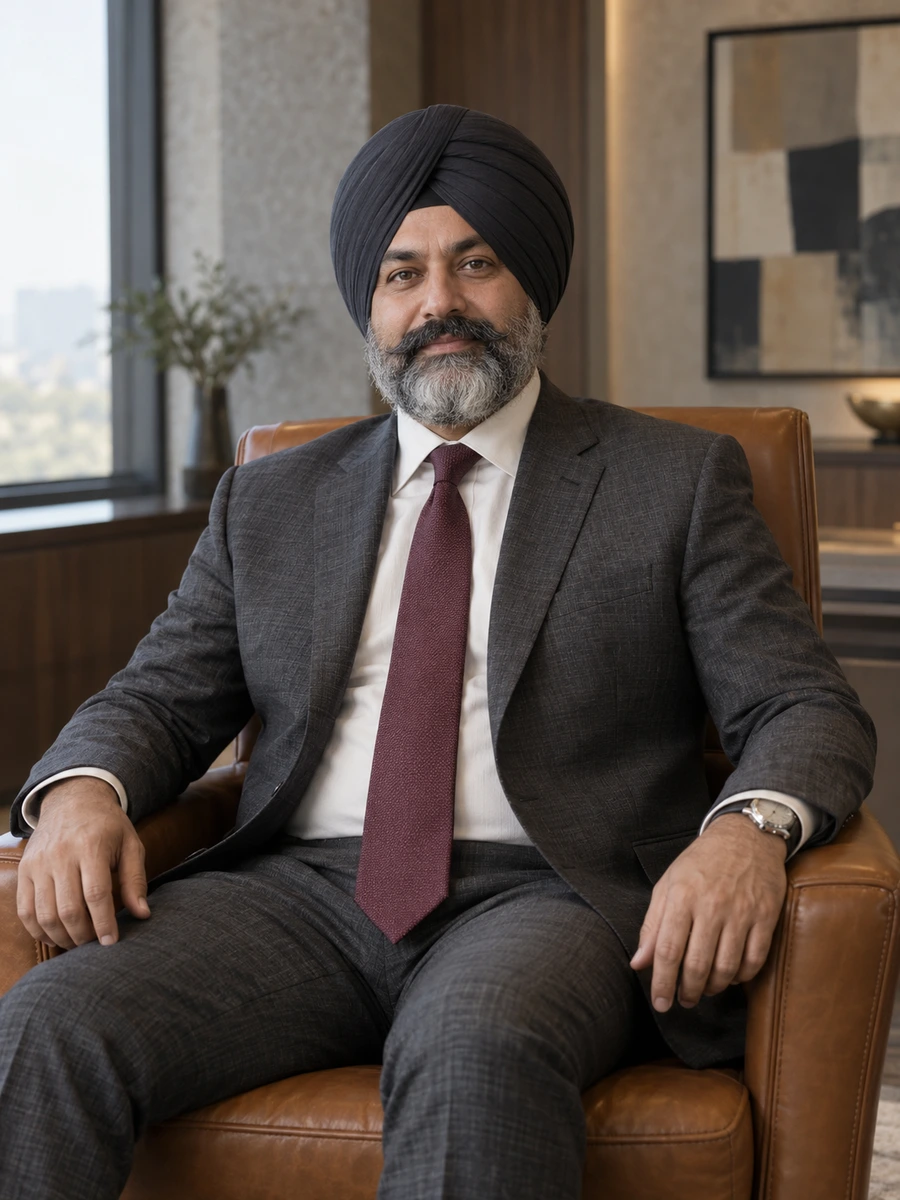
Arjan Sondhira
The commercial director asked which conversion figure he should use. Twenty-eight per cent counted every quotation in the cohort. Forty point eight per cent counted only those whose outcome we knew. Both calculations were correct; neither answered his question about where the whole cohort would finish. Of 350 offers, 110 were still unresolved. Some involved long customer purchasing cycles. I had let the dashboard make an unfinished commercial process look like a completed statistical one, and the distinction mattered because a capacity proposal was waiting behind it.
I am Arjan Sondhira, chief data officer of the fictional Zelvani Industrial Brushes in Jamshedpur. We manufacture brushing components for non-food industrial applications. My route into leadership began in commercial research, counting enquiries and listening to the people who followed them. I still spend more time asking how an observation entered a dataset than admiring how quickly it can be displayed. An unanswered quotation is not necessarily a rejected offer; an invoice average is not automatically a supplier's price increase.
Our company employs 720 people and recorded ₹286 crore revenue with ₹24.1 crore operating profit for the financial year ending March 2026. A regional holding company owns 44%, working management 28% and an employee trust 28%. My data function has forty-four colleagues and five managers, ₹7.2 crore annual expense and a separately approved ₹1.3 crore capital programme. CEO Meera Talsher carries executive responsibility for the business. Commercial director Dev Drelzavi owns the customer offer. My team makes the evidence behind their choices open to examination.
Recent work has meant resisting four premature conclusions. A quotation cohort had 110 unresolved decisions; a distributor experiment had too few independent groups to support the confident expansion claim being made; a purchased-material average combined price and buying mix; and an on-time report silently used revised promises. We paid for the investigations and sometimes postponed a decision. Those costs belong in the account. I do not regard every delay as prudent or every reservation as insight. The useful result is a better-defined choice, with the limits of its evidence still visible.
One hundred and ten quotations had no final answer
Of 350 quotations, 98 were won and 142 lost at review, leaving 110 unresolved. Neither 28% of all quotes nor 40.8% of resolved quotes established the eventual success rate.
Sixteen catchments did not become hundreds of independent tests
A ₹54 lakh distributor-offer trial assigned eight catchments to each route. Eleven buyers crossed routes; the observed 8.6% sales difference was retained as a description, not proof of an effect.
The promise date changed the service account
Among 420 orders, 330 met their original date and 382 met the latest date. Eighty-six dates had changed; fifty-two of those changes altered the on-time classification.
Current focus
Building commercial evidence that distinguishes pending outcomes, changed buying mix and revised commitments before they become confident operating conclusions.
Conversations I welcome
A first board contribution in an industrial business that wants careful scrutiny of analytical claims, with further preparation and employment consent.
Beyond the page
The record behind the perspective.
Arjan corrected the interpretation of a quotation report his own team had approved. He gave us a way to revisit the capacity assumption without pretending that deferral was the same as saving the capital.
Meera TalsherChief Executive Officer, Zelvani Industrial BrushesThe full record ↗
Contact
A first board contribution in an industrial business that wants careful scrutiny of analytical claims, with further preparation and employment consent.