The procurement paper called the material waste, and that word made the proposed expansion look simpler than it was. Our plant needed more feedstock. The twelve-village review appeared to offer 40,000 tonnes. When local uses were examined, 18,000 tonnes already supported fodder or bedding, 14,000 could enter the proposed arrangements and 8,000 remained unresolved. The issue was not whether agricultural residues could ever support an energy business. It was whether our particular proposal had treated the factory's demand as though it displaced every other use of the same material by definition.
01 / Procurement that recognises competing uses of a material
02 / Commercial quantity bases aligned with technical meaning
03 / Seasonal operating plans that include workforce continuity
04 / Environmental claims bounded by their actual evidence
A producer-linked fuel business
3 plants
286 permanent employees and 220 seasonal workers separately counted
FY 26 shipments
96,000 tonnes
₹86 crore company revenue; not a verified energy or emissions result
Engineering, procurement and enterprise leadership
34 years
Five appointments from July 1992; executive director since January 2019
The residue already belonged in someone's livelihood
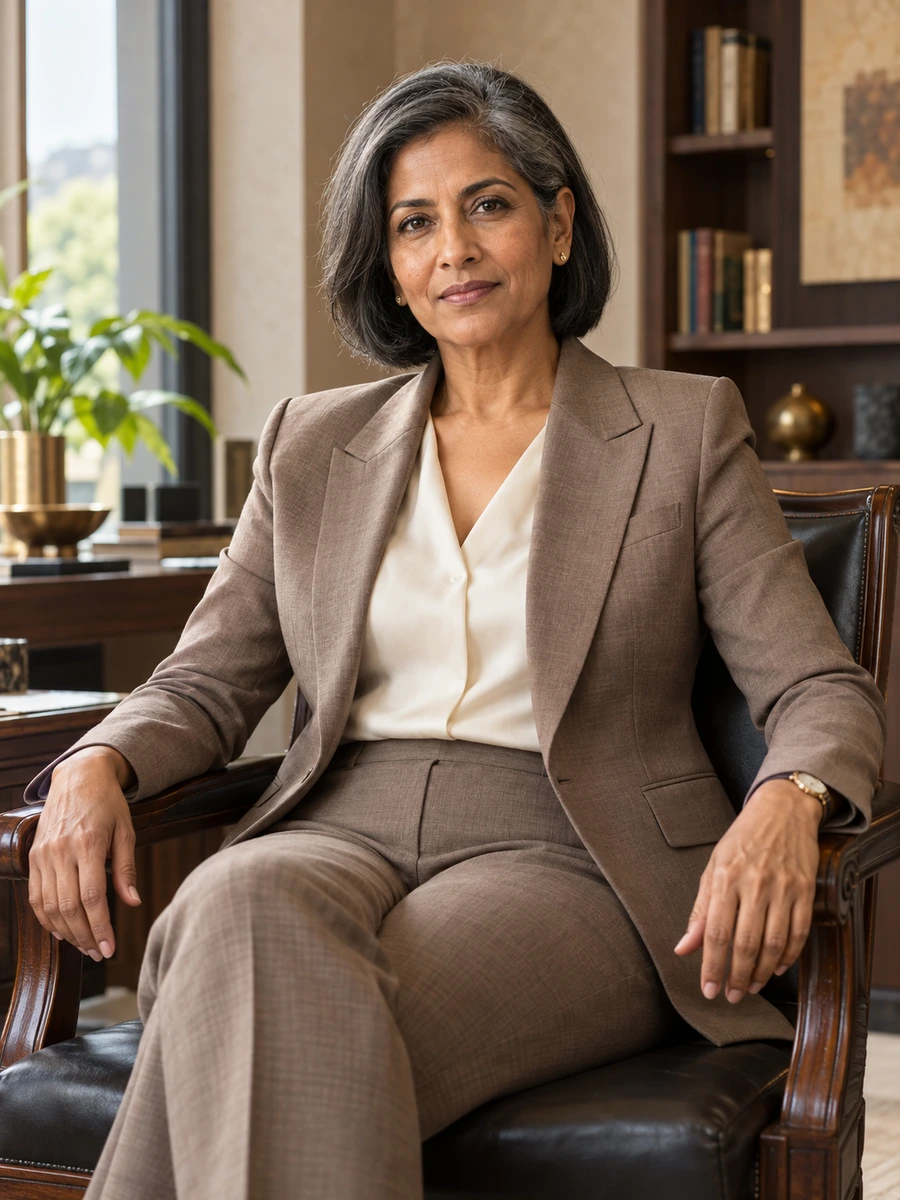
I am Sushmita Drelqari, CEO of the fictional Zemquri Bioenergy in Kota. A procurement proposal once described 40,000 tonnes across twelve villages as an available residue opportunity. Eighteen thousand tonnes already supported fodder or bedding uses. Fourteen thousand could enter the proposed programme under the reviewed agreements, while 8,000 remained unresolved. Calling all of it waste had made the plant's requirement look like the only purpose the material could serve. I chose a smaller programme rather than let that description become a supply commitment.
I grew up in Bhubaneswar and began in rural-processing engineering in July 1992. Plant and procurement roles taught me that a useful production plan depends on relationships and material conditions beyond the factory gate. Today Zemquri operates three plants with 286 permanent employees and 220 seasonal workers counted separately. FY26 shipments were 96,000 tonnes and revenue ₹86 crore. Seven executives report to me, with a ₹74 crore board-approved FY2026–27 operating envelope and a separate ₹12 crore capital programme. I serve as an executive director under a separate chair.
My cases connect the enterprise promise with those practical conditions. We revised the treatment of moisture in incoming-material agreements, reduced a residue programme to a supported scope, funded paid off-season work and preparation for a defined group, and withdrew a carbon-neutral headline I had wanted to use. Each decision retained a cost or unresolved result. Qualified technical owners decide acceptance and safe work, and customers retain operation of their equipment. Supplying a biomass fuel does not give our company authority to claim the complete energy or emissions outcome of every use.
A smaller procurement scope preserved existing uses
The 40,000-tonne review separated 18,000 already used locally, 14,000 supported by the reviewed arrangements and 8,000 unresolved. The board approved a ₹4.8 crore programme for the narrower scope.
A gross tonne did not settle the dry-material comparison
Seventy-two deliveries were reviewed; eighteen had disputed moisture-basis treatment. A ₹38 lakh programme resolved twelve through the agreed process and kept six pending.
An environmental headline outran the evidence
We withdrew an unqualified carbon-neutral claim and spent ₹48 lakh on assessment. Six of nine feedstock-source groups had the required traceability evidence; three remained incomplete, with no verified emissions result asserted.
Current focus
Building a fuel business whose procurement, workforce and public promises remain compatible with the evidence behind them.
Conversations I welcome
One external board discussion about industrial supply commitments and stakeholder tradeoffs, after consent, conflicts review and further appointment preparation.
Beyond the page
The record behind the perspective.
In the boardroom
Zemquri BioenergyExecutive Director · January 2019–Present
Formation
Bachelor of Technology in Mechanical EngineeringDazqeri Engineering College · 1992
Sushmita accepted that the source review could narrow the environmental statement she had wanted to use. The board saw the cost, the unfinished groups and the status of the enquiries together, without being asked to treat traceability as a completed emissions conclusion.
Arvind JelqethiChair, Zemquri Bioenergy; fictional colleagueThe full record ↗
Contact
One external board discussion about industrial supply commitments and stakeholder tradeoffs, after consent, conflicts review and further appointment preparation.