Reader research and commercial inference 5 min read
The practitioner
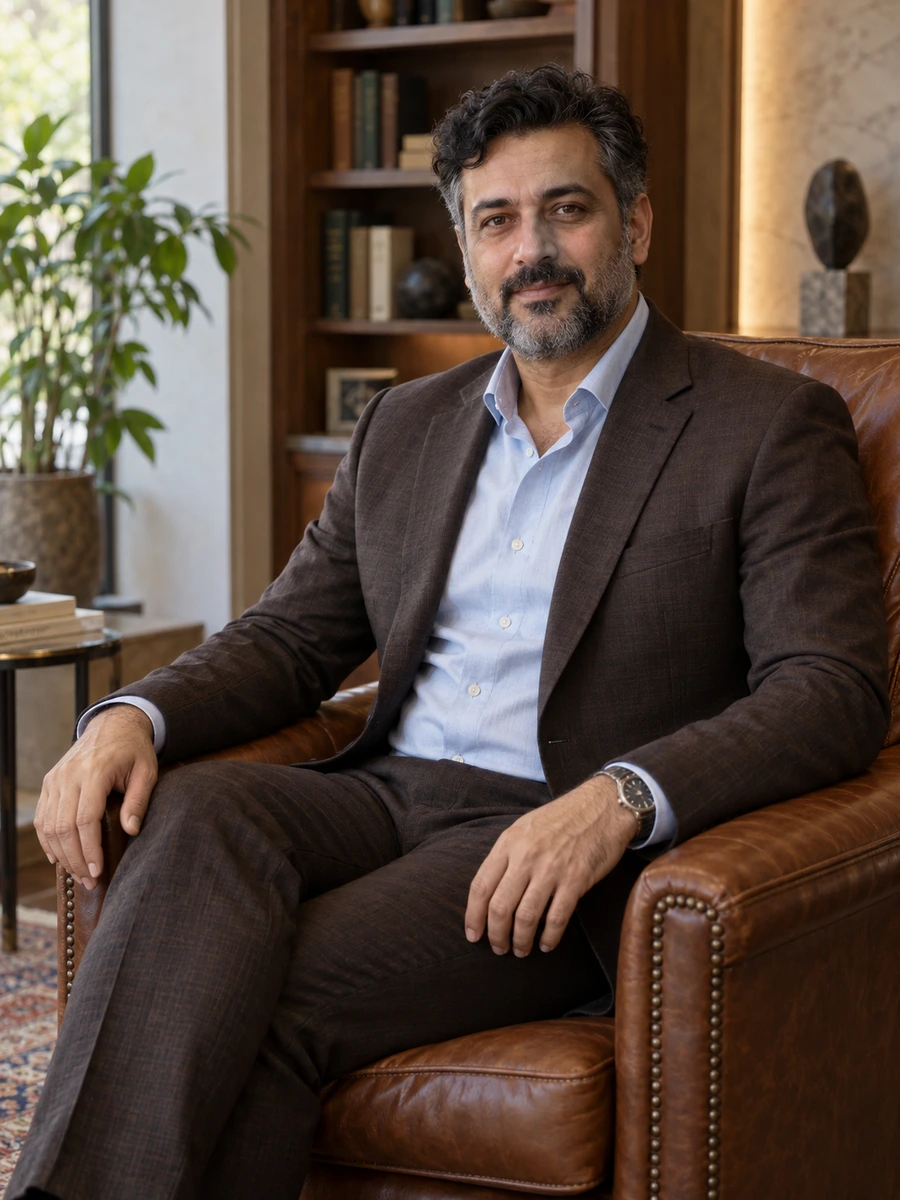
Farhan Qelvani
The proposed catalogue merge looked like a sensible clean-up. Several records shared a title and author, and colleagues wanted the reader to see one confident result instead of a page of apparent repetition. When we opened the books, some were revised editions, some were abridged and others were translations. The records were related, but the purchase choices were different. I had supported a similarity rule that was more confident than the evidence behind it. We needed to preserve the relationship without making one edition stand in for another.
01 / Bibliographic identity and edition relationships
02 / Multilingual discovery evaluation
03 / Reader research and response limits
04 / Editorial provenance in catalogue structures
Book retail estate
34 shops
Online catalogue and 620 company employees
Data and research function
26 colleagues
Four leads;₹6.4 crore function expense and separate₹1.9 crore catalogue programme
Catalogue and evidence work
24 years
From July 2002 analysis to CDO in January 2023
Let the reader see the difference
I am Farhan Qelvani, chief data officer at the fictional Nerzavi Book Rooms in Bhubaneswar. I grew up in Srinagar and began my working life checking catalogue records. A title can remain familiar while its language, translator, abridgement or edition changes. Much of my work concerns the point at which a helpful simplification hides a choice the reader actually needs to make. I want data to support the bookseller's judgement without pretending that every meaningful relationship is an automatic substitution.
Our business has thirty-four shops, an online catalogue and 620 employees. Revenue was ₹186 crore and operating profit ₹9.2 crore for the year ending March 2026. A founding-family trust holds 55%, working management 30% and an employee vehicle 15%; I have no holding. Twenty-six data colleagues work through four leads within ₹6.4 crore FY2026–27 function expense and a separately approved ₹1.9 crore catalogue programme. That is my delegated scope, not the retailer's profit account. Buying, editorial decisions, technology operations and financial reporting retain their own owners.
The cases here show why a clean record is only a starting point. We separated revised and abridged editions from duplicate listings. We made multilingual search evaluation account for more than the easiest queries. We declined to treat volunteers answering a reading survey as a representative account of every shopper. We also distinguished publisher-stated series sequence from an editor's suggested reading order. Each decision made the catalogue less deceptively simple, while leaving colleagues with a practical way to help a customer.
Related editions kept separate product identities
A review of 1,204 records in 217 proposed merge groups retained 364 as distinct editions or translations instead of collapsing them into duplicate listings.
Search quality was examined across language paths
An 800-query evaluation kept four equal query groups visible. A candidate's stronger aggregate score did not erase weaker results for transliterated requests.
Respondents did not become the whole customer base
Of 900 invited adult customers, 450 completed a reader survey. A preference among those respondents did not become a forecast for all shoppers.
Current focus
Making catalogue relationships, search evaluation and research populations explicit enough for commercial and editorial colleagues to use responsibly.
Conversations I welcome
A first non-executive discussion where evidence quality and customer understanding would complement the board's existing experience.
Beyond the page
The record behind the perspective.
Formation
Bachelor of Science in StatisticsZorqavi Statistics College · 2002
Postgraduate Diploma in Applied Computing, part-timeVaqzeli Computing Institute · 2011
Farhan kept the subscription paper useful without allowing its strongest percentage to speak for customers who had never answered. We could consider a next step with the missing evidence still visible.
Nandita VezrathiCEO, Nerzavi Book Rooms; fictional colleagueThe full record ↗
Contact
A first non-executive discussion where evidence quality and customer understanding would complement the board's existing experience.