Chief Operating Officer Australia
An engineer who learnt operations from the control room outwards
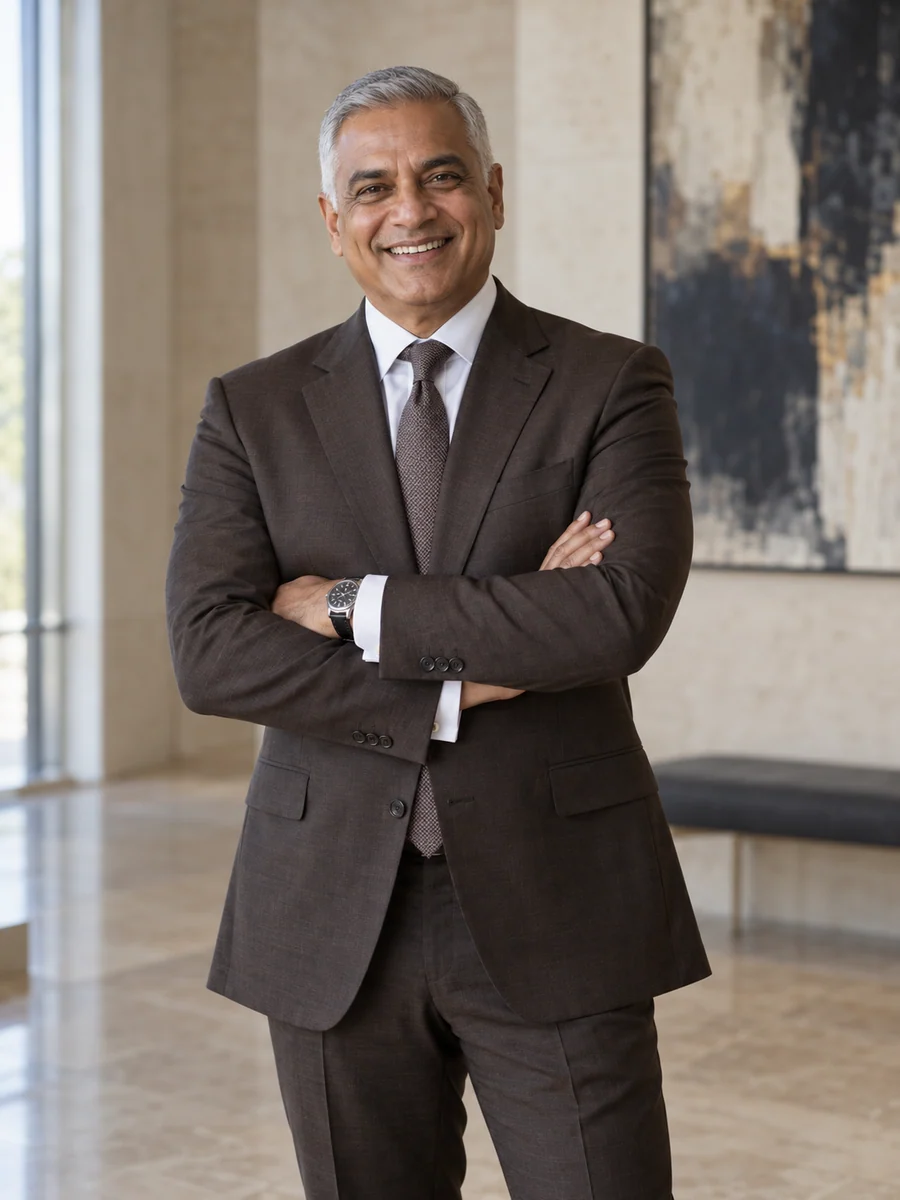
The first instruction I received at Bellcarrick Power Station, in February 1993, was to learn every isolation point on Unit 2 before I touched anything electrical. The shift electrician who gave it to me had worked there since the unit was commissioned in 1970, and he walked me through the switchboards twice before he let me sign a permit. I was twenty-one, with an electrical engineering degree from Kelsworth University and the confidence that came with it. He thought, correctly, that the confidence was the hazard.
Bellcarrick was a four-unit, 1,320-megawatt coal station in the Hunter Valley, owned in those years by the state's generating authority and from 1996 by Corrabin Generation, the state-owned corporation formed when the authority was divided. I spent my first eight years there as graduate engineer, electrical engineer and then shift operations superintendent. In 1996 a fitter came within seconds of opening a breaker cubicle that our paperwork said was isolated and the switchboard said was live. Nobody was hurt. I rewrote our switching procedures with the operators who used them, and I learnt that a procedure written by engineers for operators is often a procedure written for the wrong people.
In December 1998 the station began bidding into the new National Electricity Market. Our control room started receiving dispatch instructions every five minutes, and a unit's availability became something traders in Sydney watched as closely as we did. It was my first experience of an operation answering to rules set outside the company, and the market operator's instructions have shaped my work in one form or another ever since.
From 2001 I was engineering and maintenance manager at Mount Tenby Power Station, Corrabin's newer and larger station further up the valley. We moved maintenance from fixed intervals towards inspection and condition, and cut average major overhaul time from 58 days to 41. I studied part-time for an MBA at Halstow Business School between 2003 and 2006, mostly on the train and late at night, and chose every assignment I could about contractor management, because the overhaul contractors were where our safety record was weakest.
I returned to Bellcarrick as station manager in April 2007. The station was by then in its late thirties and suffering repeated boiler-tube failures. We spent four years on a tube inspection and replacement programme that lifted equivalent availability from 79% to 87%, and we reduced lost-time injuries from eleven a year to two. In 2013 the state agreed to sell Corrabin to Telmora Energy, an ASX-listed generator and retailer, and in January 2014 I became the station's general manager under its new owner.
Telmora's board then had to decide what to do with a station whose oldest unit was forty-six years old. Traders wanted to keep options open. Finance wanted the two oldest units closed quickly. I argued for a single closure date for all four units, set years in advance and held, with a fund for retraining and a commitment that nobody would be made redundant before the station closed. The board announced 30 April 2018 in September 2015. That date held through the price rise of 2017, when keeping two units open for longer would have been profitable. The hardest moment came near the end, when I realised that about 160 resident contractors had been left outside most of what we had promised.
I left generation in July 2018 for Wyndarra Power Networks, as general manager of network operations. Eighteen months later fire burned through much of our area. During the 2019–20 season we lost about 2,100 poles and 380 kilometres of line, and one of the fires in our area was found to have started where conductors clashed in strong wind on one of our spans. I have spent the years since on what that season taught us: fire-day protection settings, vegetation contracts, the control room and the question of when to switch a feeder off altogether.
I became chief operating officer in July 2021, when the role was widened to bring vegetation management and emergency management under the same executive as field crews and network control. Since then we have published a rule for de-energising 47 high-risk feeders on Catastrophic-rated days, changed how we pay vegetation contractors and changed how we estimate restoration after storms. Each change has a cost, and I report it to the board beside the benefit.
I lead by writing things down before they are needed. Our fire-day rule, our restoration priorities and our contractor standards are documents that the board, the shareholding ministers' departments and the communities we serve can all read. I spend at least one day in most weeks at a depot or on a job site, and I ask crews what the documents get wrong. People who have worked with me would say I am slow to change a published rule, quick to report a bad number and unwilling to let a good safety statistic pass unexamined.
Open to Board appointments · Advisory roles · Speaking invitations
Languages / English
A leadership conviction
I judge an operation by what it can do on its worst day with the people and equipment it already has. On a rural network that day is usually forecast: a Catastrophic fire rating, a storm front, a heatwave at the end of a long feeder. The decisions that matter were made in winter, in a contract, a protection setting or a list of pumps that need backup power. My job is to make those decisions early, write them down where the board and the community can read them, and keep them when the day arrives.
- Customer connections
- 418,000
- Wyndarra Power Networks, June 2026
- Overhead line in operation
- 74,000 km
- Including 21,000 km of single-wire earth return to isolated farms
- Annual operating and capital spend in my remit
- A$935m
- 2025–26: A$395m operating expenditure and A$540m capital delivery
Board & advisory record
Current appointments
Bellcarrick Futures Trust
Director; chair of the grants committee
Grants (chair from 2021); finance and audit
July 2018–present
Education & credentials
- Bachelor of Engineering (Electrical)
- Kelsworth University · 1992
- Master of Business Administration (part-time)
- Halstow Business School · 2006
Perspectives from colleagues
Simon brought my committee a safety figure two-thirds worse than the one we had been reading, with three years of data so we could test his reasons. Every switch-off day since has been reported to us the following week, including the fires that started on lines outside his list.
When the closure was announced, Simon came to every shift meeting himself and gave us a date. Some of us did not like the date. All of us could plan around it, and when the traders wanted another year he told the board no.
I was not convinced about publishing no restoration times for the first day of the 2024 storm, and I told him so. He showed me what our estimates had done to farmers three years earlier. He was right, and he made sure the call centre had more people for that first day, not fewer.