Chief Operating Officer India
Twenty-seven years on the side of insurance customers meet when things go wrong
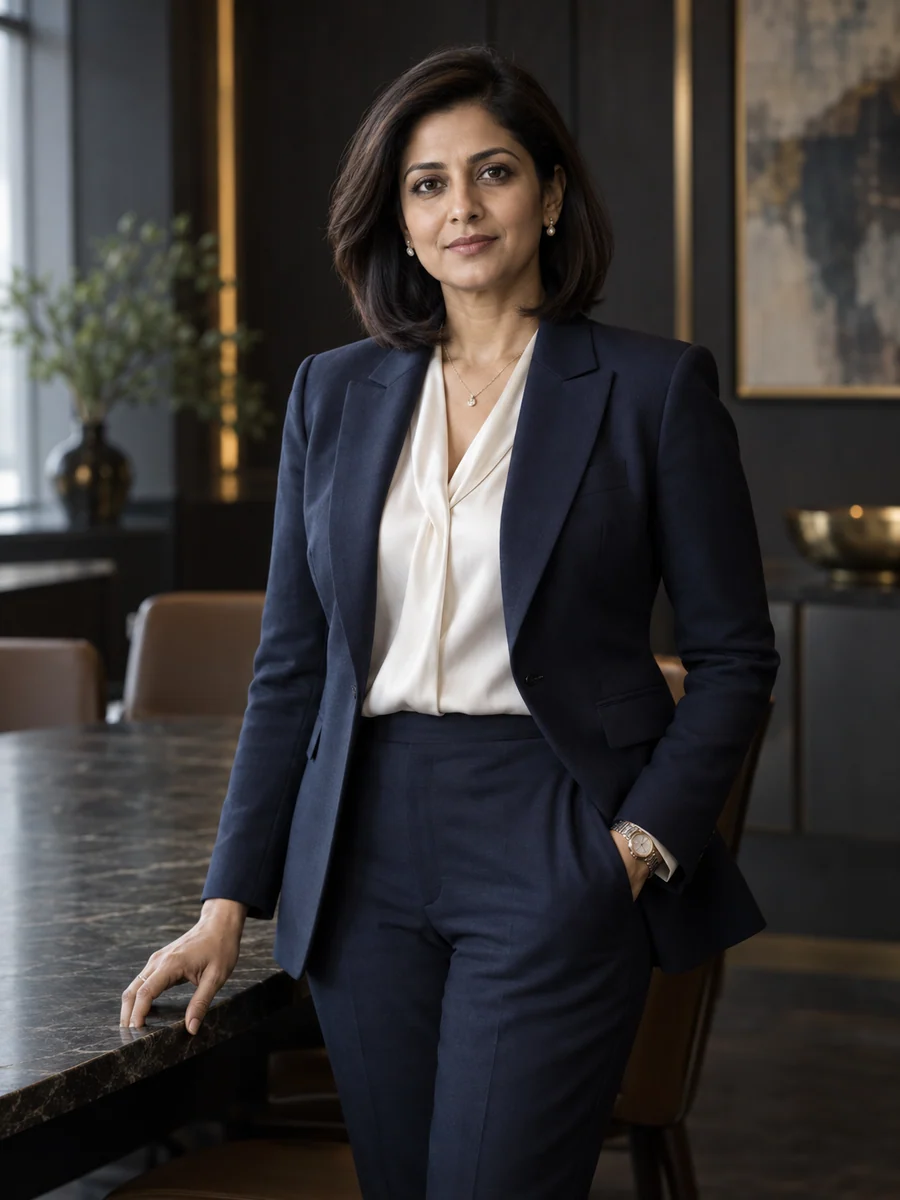
The first claim I ever rejected was correct, and I handled it badly. In 2000, as a young administrative officer in Visakhapatnam, I turned down a fire claim from a trader who stored dried fish for export near the fishing harbour. His policy covered stock in a named godown; after a fire, we found the stock had been moved to an unscheduled shed next door. The wording was clear and my manager agreed. The trader came to our office four times, and each time someone read the clause to him again. Nobody explained it in words he could take home to his family. I have been trying to make the explanation as good as the decision ever since.
I grew up in Visakhapatnam, where my father was a clerk at the port and my mother taught mathematics at a girls' school. I studied statistics at Vedavalli College of Science, graduating in 1997, and completed an MBA at Dhruvatara Institute of Management in Pune in 1999. A course on risk, taught by a retired insurance officer who brought claim files to class, persuaded me that claims were where an insurer's promise was tested. That year I joined Deshbandhu General Insurance Company Limited, a fictional public-sector insurer, as an administrative officer in its Visakhapatnam divisional office.
Four years there taught me the craft: reading a surveyor's report critically, visiting the warehouse rather than trusting the file, reconciling a claims register by hand. In 2003 I moved to the regional office in Bhubaneswar as an assistant manager, later deputy manager, responsible for claims across a region that covered Orissa, as Odisha was then called. I inherited 2,600 motor and health claims more than six months old. Clearing them showed me that delay is rarely a decision. It is usually an absence of ownership.
In 2007 I left the public sector for Nirmayam Health TPA, a fictional third-party administrator in Bengaluru that processed group health claims for several insurers. I ran its claims operations for four and a half years. An administrator sits between the hospital, the insurer and the patient, and is blamed by all three. I built a medical-audit team of doctors, cut the median cashless authorisation from about nine hours to just over three, and learnt how a hospital billing desk actually works. I also learnt the limit of the model. We processed decisions that belonged to someone else, and when an insurer's instructions were unclear, the patient waited while we asked.
In October 2011 I joined Pratyusha General Insurance, a fictional private insurer, as zonal head of motor and property claims for the south and east, based in Chennai. On 12 October 2014 Cyclone Hudhud made landfall at Visakhapatnam. My parents' building lost its water tank and every window on the seaward side. Within a fortnight we had 4,800 motor and 2,100 property claims from the city, and roads our surveyors could not use. We settled 82 per cent within forty-five days, which was considered good. I thought it was not. After the Chennai floods of 2015, when our median motor settlement was thirty-one days, I wrote the catastrophe protocol I still use: surveyor pools agreed in advance, salvage yards on call, and a rule that the first payment matters more than the perfect one.
Nilakhya hired me as chief claims officer in July 2016. I built an in-house fraud investigation unit, brought motor settlement times down from nineteen days to eleven, and ran our response to the Kerala floods of 2018 and the pandemic waves of 2020 and 2021, when hospitals and insurers argued daily about what treatment should cost. In April 2021 the managing director asked me to become COO and bring claims, servicing, provider networks and grievances under one leadership. I now lead about 4,100 employees and oversee another 2,300 contract staff through outsourcing partners.
I run operations from a few measures that a policyholder would recognise: how long a decision takes, measured at the slowest tenth as well as the median; how often a decision is revised on complaint; and how many customers had to contact us twice about the same thing. I present them every quarter to our board's policyholder protection committee, and I ask my managers to bring me the worst number first. I do not decide what we insure or at what price. That belongs to our underwriting and actuarial colleagues. My part is to make sure the promise they price can be kept.
Inside the industry I am probably known for three positions: that an insurer can outsource paperwork but not a refusal, that a grievance team should be able to overrule the claims team, and that after a catastrophe it is better to pay quickly and audit afterwards than to make families queue for a surveyor. Each has cost money. I now want to take what I have learnt about service at scale to one board outside insurance, as an independent director.
Open to Board appointments · Speaking invitations
Languages / English · Telugu · Hindi · Odia
A leadership conviction
A claim decision is finished only when the person who receives it can understand why, and could have predicted it from the policy they bought.
- Gross direct premium, year to March 2026
- ₹9,420 Cr
- Motor 38 per cent, health 34 per cent, crop 14 per cent, commercial lines 14 per cent
- Median cashless decision, FY2025-26
- 41 min
- Down from 3 hours 10 minutes in FY2021-22, after authorisation moved in-house
- Grievances per 10,000 policies, FY2025-26
- 14
- Down from 31 in FY2021-22, after the grievance panel could revise decisions
Education & credentials
- Bachelor of Science (Statistics)
- Vedavalli College of Science · 1997
- Master of Business Administration
- Dhruvatara Institute of Management · 1999
Perspectives from colleagues
Ananya brings our committee the measure that makes her own function look worse. When she put the slowest tenth beside the median, our figures deteriorated for two quarters, and we finally understood which patients we had been failing. I have rarely seen an executive ask to be judged more strictly.
After Hudhud, most of my zonal heads wanted more surveyors. Ananya wanted fewer decisions waiting for surveyors and more made by people who could pay. She wrote our catastrophe protocol in a month, and argued with me about the first payment until I conceded she was right.
When the hub opened, Ananya sat with our medical officers on night shifts to see how long a discharge really took. Her rule that every rejection carries a doctor's signature and a plain reason made our work slower for a month and better ever since.