Aftermarket demand and planning assumptions 6 min read
The practitioner
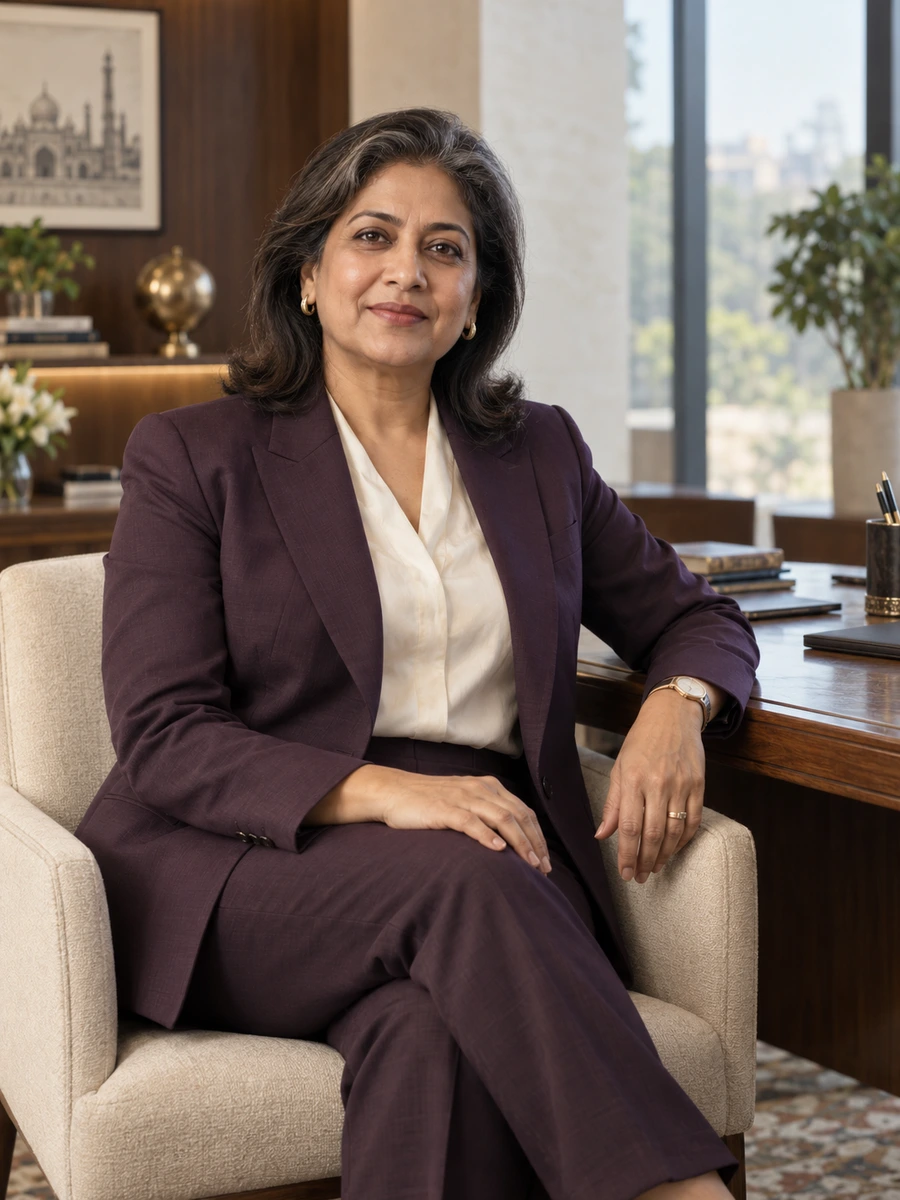
Zoya Vezqani
The pilot paper showed seven lakh rupees of direct contribution. I had supported the service idea and wanted it to work. Reema, our CFO, asked where the setup expenditure had gone in the summary. It had not disappeared from the records; it had disappeared from the sentence people were repeating. Eight customers had paid forty-six lakh rupees, direct delivery had cost thirty-nine lakh and setup seventy-one lakh. On that defined account, the programme was sixty-four lakh short. I could defend a limited continuation, but I could not defend calling the pilot profitable.
01 / Economics of recurring industrial planning services
02 / Stock ownership inside a route-to-market choice
03 / Replacement demand separated from equipment growth
04 / Business boundaries around specialist field work
Industrial commercial and strategy career
32 years
Order planning began July 1994
Strategy colleagues
14
Three managers; separate from the division previously led
Annual strategy expense
₹4.6 crore
No independent investment approval
Price the work that follows the recurring fee
I am Zoya Vezqani, chief strategy officer of the fictional Nalvzeri Industrial Screens in Kanpur. We make woven screening meshes for non-food industrial materials handling. Before strategy, I ran our aftermarket and replacement businesses. That experience left me suspicious of a recurring-revenue presentation that says little about the recurring work. A customer who renews has bought another period of responsibility from us. I want to know what that responsibility contains before treating the fee as a different and automatically better kind of income.
Nalvzeri employs 1100 people and recorded ₹348 crore revenue and ₹29.4 crore operating profit for the year ending March 2026. A regional industrial holding company owns 55%, working management 35% and an employee trust 10%. I lead fourteen strategy colleagues through three managers, with ₹4.6 crore annual expense authority. CEO Ishaan Delzhavi and the authorised investment bodies decide commitments; CFO Reema Zalveri retains financial reporting. My role is to make the commercial direction and its consequences understandable, including a pilot whose promising direct contribution did not cover its setup cost.
Our recent choices concern the business around the replacement product. We tested a paid planning service without promising uninterrupted equipment operation, chose a narrower prepaid stock arrangement over a wider supplier-funded consignment proposal, revised a replacement-demand scenario and declined to build a bundled installation offer from nine trials. The decisions required more than a view of market size. They asked what the customer was paying for, which capability we actually possessed and what the chosen route left outside the business. I would rather defend those limits explicitly than allow an attractive category name to decide our obligations for us.
The pilot had two different contribution accounts
Eight customers paid ₹46 lakh against ₹39 lakh direct delivery and ₹71 lakh setup expense. The ₹7 lakh direct contribution did not erase the ₹64 lakh overall pilot deficit on that defined basis.
A smaller stock route with a different commitment
We chose eight prepaid customer allocations with ₹2.2 crore opening stock over a proposed eighteen-location consignment route requiring ₹5.6 crore. The differing scope prevents a simple savings claim.
The replacement scenario became less ambitious
Sixty eligible completed intervals had a twenty-two-month median, against a blanket fourteen-month planning assumption. The same cohort's three-year revenue scenario moved from ₹56 crore to ₹39 crore; neither figure was realised sales.
Current focus
Understanding where a replacement manufacturer can responsibly earn from continuing planning work, and where the proposed obligation belongs with a different specialist business.
Conversations I welcome
One carefully assessed first non-executive role alongside current employment and further governance preparation.
Beyond the page
The record behind the perspective.
Formation
BA in EconomicsQerzavi Commerce College · 1994
Master of Business AdministrationNorqeli Strategy Institute · 2006; part-time
Zoya had sponsored the planning service, so the harder decision was to limit its expansion after renewal interest arrived. She kept the programme deficit beside the direct contribution and explained why a useful pilot was not yet a profitable business.
Ishaan DelzhaviChief Executive Officer, Nalvzeri Industrial ScreensThe full record ↗
Contact
One carefully assessed first non-executive role alongside current employment and further governance preparation.