Chief Marketing Officer Singapore / Southeast Asia
A pharmacist's refusal and what followed
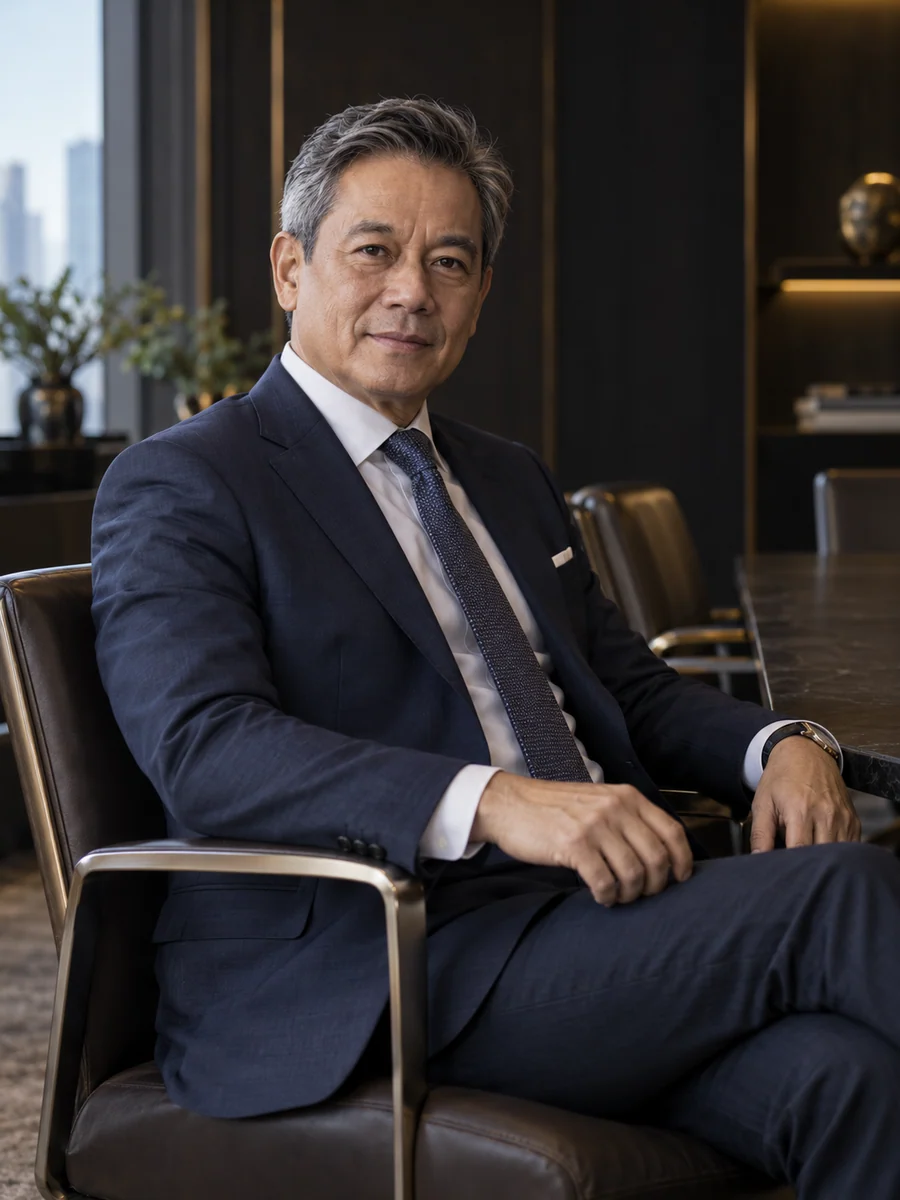
In 1996 I was a marketing executive at Merivane Pharmacy, a Singapore chain of thirty-eight stores, and part of my job was writing the shelf cards that sat beside over-the-counter products. One afternoon a pharmacist at our Tampines outlet told a customer she would not recommend a herbal tonic for the purpose my card described. She was polite, specific and right: the card implied a benefit that nobody had shown. I rewrote it that evening. I have treated healthcare claims as promises made on someone else's behalf ever since.
I had joined Merivane in August 1995, two months after completing a business degree with a marketing major at Pelangi Bay University, which I began after National Service. The pharmacy taught me how people buy health products when they are worried, tired or embarrassed, and how much they rely on the person at the counter. It also taught me that a promotion which embarrasses a pharmacist will not survive contact with the customer.
In 1999 I moved to Halvenor Consumer Health as a brand manager for analgesics, cold remedies and a range of traditional herbal products sold in Singapore and Malaysia. Medicine advertising in both markets is controlled, and our Malaysian advertisements went through a pre-publication approval process. I learnt to write copy that a regulatory affairs colleague could defend line by line, and to accept that the most persuasive sentence was often the one we could not use. When a claims review removed our strongest line for a herbal range, I rebuilt the campaign around dosage clarity instead, and sales held.
From 2004 I was an account director at Kestavon Health Communications, a Singapore agency serving hospitals, drug companies and consumer-health brands. I managed the hospital accounts and the medical review of their material. I saw how often a hospital's ambition outran its evidence: rankings nobody had awarded, outcomes nobody had measured, patient stories chosen because they moved an audience. I also saw the internal pressure behind those requests. A marketing head who refuses everything is replaced; one who agrees to everything exposes the doctors. The useful work was finding a claim that was true, specific and still interesting.
Serindah hired me as group marketing manager in July 2009. The group then had two hospitals in Malaysia and was planning a screening centre in Singapore. I led the launch of the Novena centre in 2012 and wrote the first package descriptions that explained what each test could and could not detect. In 2014 I became director of international patient services and marketing. Indonesian patients from Sumatra were already a large share of our Penang and Melaka activity, mostly arriving through independent facilitators. I opened our Medan information office in 2016 and began publishing typical bill ranges for common procedures in 2017, because patients were comparing hospitals on headline prices that bore little relation to their final invoices.
I became group chief marketing officer in January 2019. My first decision removed testimonial videos and superlative labels on doctor profiles, which both markets' advertising rules restrict and which our own doctors had begun to question. In 2021, while Malaysia's borders were closed, we redesigned the facilitator arrangements so that nobody we paid would earn more from a larger bill. In 2023 I took sales incentives off add-on screening tests after our screening doctors showed me the follow-up referrals some of those tests produced. Each decision cost revenue or reach in the short term, and each needed the medical director's authority as much as mine.
I work closely with Dr Shaharin Mokhtar, the group medical director, and with the three hospital chief executives. Clinical content on our channels is approved by a medical review panel he chairs, and I do not decide which test, procedure or doctor a patient needs. My responsibility is what patients are told and the commercial arrangements around those decisions: what we say, whom we pay and how we invite a patient to choose.
I present to the Serindah board as an executive and report to its risk committee on advertising compliance and facilitator arrangements. I have not held a directorship. A board seat would ask me to judge decisions I did not frame, in companies whose rules and customers I would need to learn. I would bring a practical sense of where healthcare marketing creates commercial risk, and a habit of asking who has checked a claim before it reaches the public.
Open to Board appointments
Languages / English · Mandarin · Malay
A leadership conviction
Healthcare marketing borrows trust it has not yet earned. The patient decides to travel, to book a screening or to see a specialist on the strength of what we said, and only later meets the clinicians who must honour it. I therefore want every claim, price indication and payment arrangement around our hospitals to be something a doctor would sign and a patient could check.
- Group revenue
- S$452m
- 2025; three Malaysian hospitals and two Singapore screening centres
- International admissions
- 11,600
- 2025, mainly from Indonesia; 11,200 in 2019
- Colleagues in my remit
- 74
- Marketing, international patient services and the Medan and Pekanbaru offices
Education & credentials
- Bachelor of Business Administration (marketing)
- Pelangi Bay University · 1995
Perspectives from colleagues
Adrian came to me with the cost of ending facilitator commissions before anyone asked for it, and he reported the slower recovery to the board every half-year without softening it. That is why the board trusted the decision when admissions were still below plan.
Adrian has never asked me to approve a claim he had not already checked himself. When our screening doctors raised the tumour-marker referrals, he changed his own team's incentives within weeks and left the clinical guidance entirely to us.
He insisted our office give families the same written estimate and the same answers whether or not they came through a facilitator. Some facilitators were angry with us for a year. The families noticed the difference.