₹310 crore deposits
The March 2026 balance describes customer funding at a date. I also show concentration and maturity patterns so that a larger total is not automatically treated as more dependable funding.
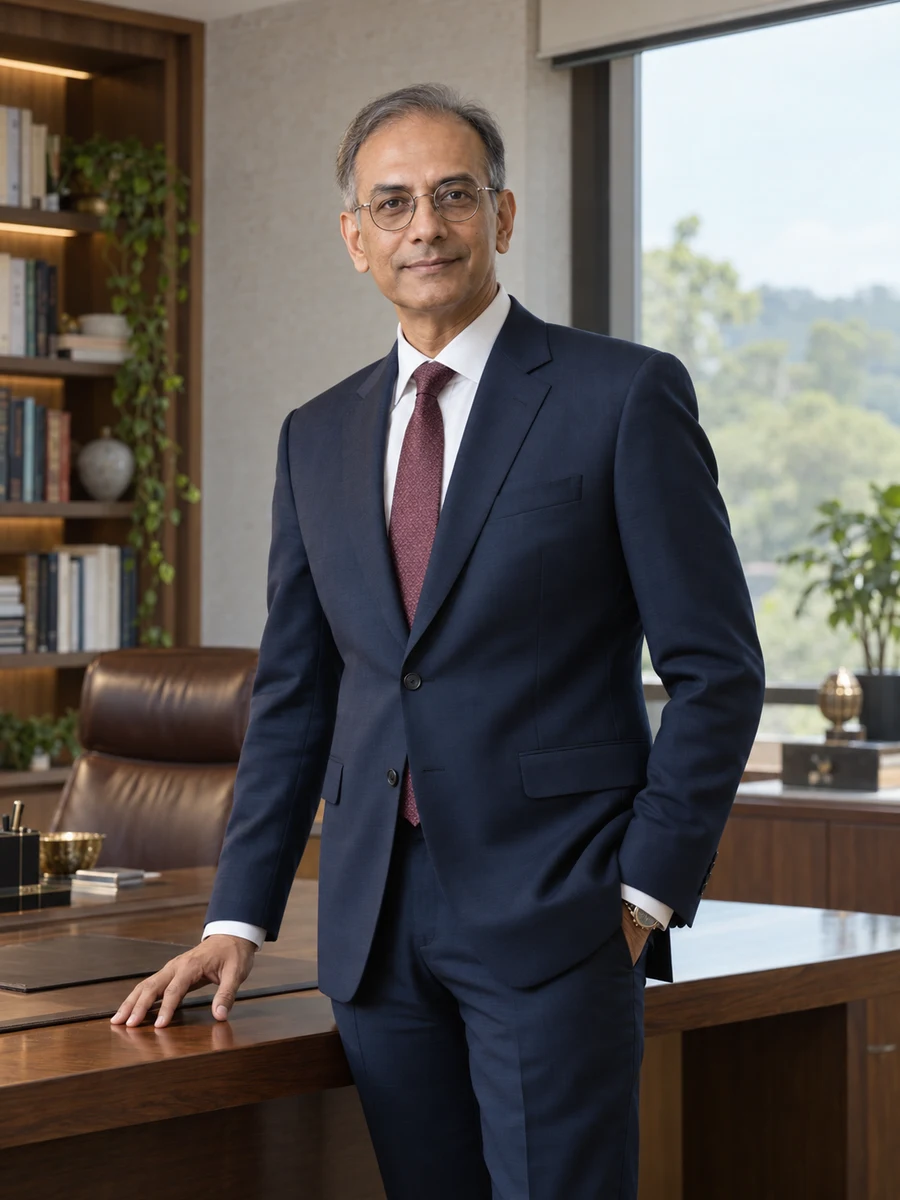
An introduction
The price of a deposit is only part of its cost.
IndiaOpen to Board appointments · Executive opportunities
Start a conversationMy approachI want a funding proposal to explain who can withdraw, when a balance may reprice and what assumption the bank is making about renewal. An attractive quarter-end total can conceal an expensive dependency. My finance team should make that dependency visible while there is still time for the authorised committee to choose another course.
During a 2022 funding review, fourteen deposit maturities totalling ₹22 crore were included in a broader forecast using the bank's recent average renewal experience. Branch managers knew the relationships well and expected most balances to remain. Treasury colleagues were more concerned about timing because several depositors had similar business payment cycles. The disagreement was being expressed as competing confidence levels rather than as a testable set of assumptions.
I asked finance to separate the fourteen events from the aggregate forecast and record the contractual maturity, the latest customer contact and the basis of any expected renewal. We did not contact customers to seek informal commitments that their contracts did not require. Instead, branch colleagues reviewed the factual position through their normal relationship process. Four observations were older than the finance model suggested, and two balances had been linked to a business event that was no longer expected to occur on the original date.
I presented three funding scenarios to the asset-liability committee, including a lower-renewal case with concentrated timing. The committee chose to retain an additional ₹4 crore in short-term liquidity for the review period rather than allocate the entire amount to planned lending. That decision had an estimated ₹5 lakh income opportunity cost over the period, which we showed explicitly. Lending colleagues accepted a revised disbursement sequence, with credit approvals remaining under their established authority.
Eleven of the fourteen deposits ultimately renewed, totalling ₹17.5 crore. The actual outcome did not prove that the extra cushion had been necessary or that the forecast had predicted behaviour. It showed why a single average was an incomplete explanation of the decision. I would now ask how recently each supporting observation was checked at the first review, rather than discovering stale assumptions after the disagreement had already reached committee.
A proposed seventh branch reached the planning review in 2024 with a ₹1.6 crore initial investment estimate and an attractive three-year contribution forecast. The location had supporters because it appeared to improve access for an established customer catchment. The forecast, however, counted several deposit relationships as new business even though they were already held elsewhere in the bank. It also assumed that existing staff could provide relief cover without affecting service at their home branches.
I asked the business sponsor to separate transferred balances from genuinely incremental funding and to identify the operating arrangement for leave, training and unexpected absence. The sponsor argued that the central model underestimated local goodwill and that a delay could lose the site. I accepted that risk but recommended deferral of the investment decision. The chief executive agreed to a limited validation exercise before taking a revised proposal through the appropriate governance and permission process.
We spent ₹7 lakh on the additional demand and operating assessment. Branch colleagues reviewed the proposed catchment through existing customer conversations, and operations developed a staffing plan that included relief capacity. The revised model reduced the three-year cumulative contribution estimate by ₹24 lakh and moved the expected break-even point nine months later. These were planning estimates, not actual losses or a claim that the bank had saved the original investment amount.
The sponsor retained the service-access argument and returned with a smaller premises option. By the review date, the proposal remained uncommitted and subject to the bank's approval process and applicable permissions. My role was to improve the financial account of the choice, not to decide that a branch should never open. I would involve operations at the earliest site discussion next time. Their staffing evidence changed the case more than another refinement to the deposit growth percentage.
In the FY2025–26 outlook, a ₹1.2 crore recovery associated with an old impaired account materially improved the expected annual result. Its accounting treatment was reviewed through the bank's normal finance, credit and audit processes. During budget discussions, a proposal emerged to use the stronger result as support for a recurring ₹38 lakh expansion in central administration. The proposed roles addressed real workload, but the argument treated the year's improvement as though it were recurring capacity.
I prepared a bridge from the reported forecast to the underlying management comparison, showing the recovery separately and preserving the actual accounting result. I did not replace statutory profit with a new public measure. The chief executive asked whether finance was using an exceptional-item label to avoid funding a necessary service. That was a fair challenge. I therefore asked each sponsor to identify the work, the consequences of leaving it undone and whether a permanent role was the only credible response.
Management approved two permanent roles with an annual cost of ₹17 lakh and a six-month project assignment of ₹8 lakh, while deferring the remaining proposal. The board reviewed the budget on that basis. The project addressed a defined backlog, and its completion did not automatically convert the assignment into continuing employment. We retained responsibility for monitoring whether deferred work was accumulating elsewhere rather than describing the lower commitment as an uncomplicated saving.
The final budget had a clearer relationship between recurring expense and the business expected to support it. The recovery remained visible in the annual result, and the operational need did not disappear merely because its original funding argument was weak. My lesson was to pair an earnings explanation with a practical staffing alternative. A CFO who only removes the optimistic assumption leaves colleagues with the same workload and a less useful conversation.
The leadership record
Sachin did not stop at telling us the recovery was unusual. He helped distinguish the workload we had to fund from the permanent cost we could responsibly accept.
I am open to a future finance leadership remit in a regional financial institution and an initial board discussion with a non-competing services company, subject to consent and eligibility assessment.