Skip to website
Sanjana VelnqeriChief Executive Officer
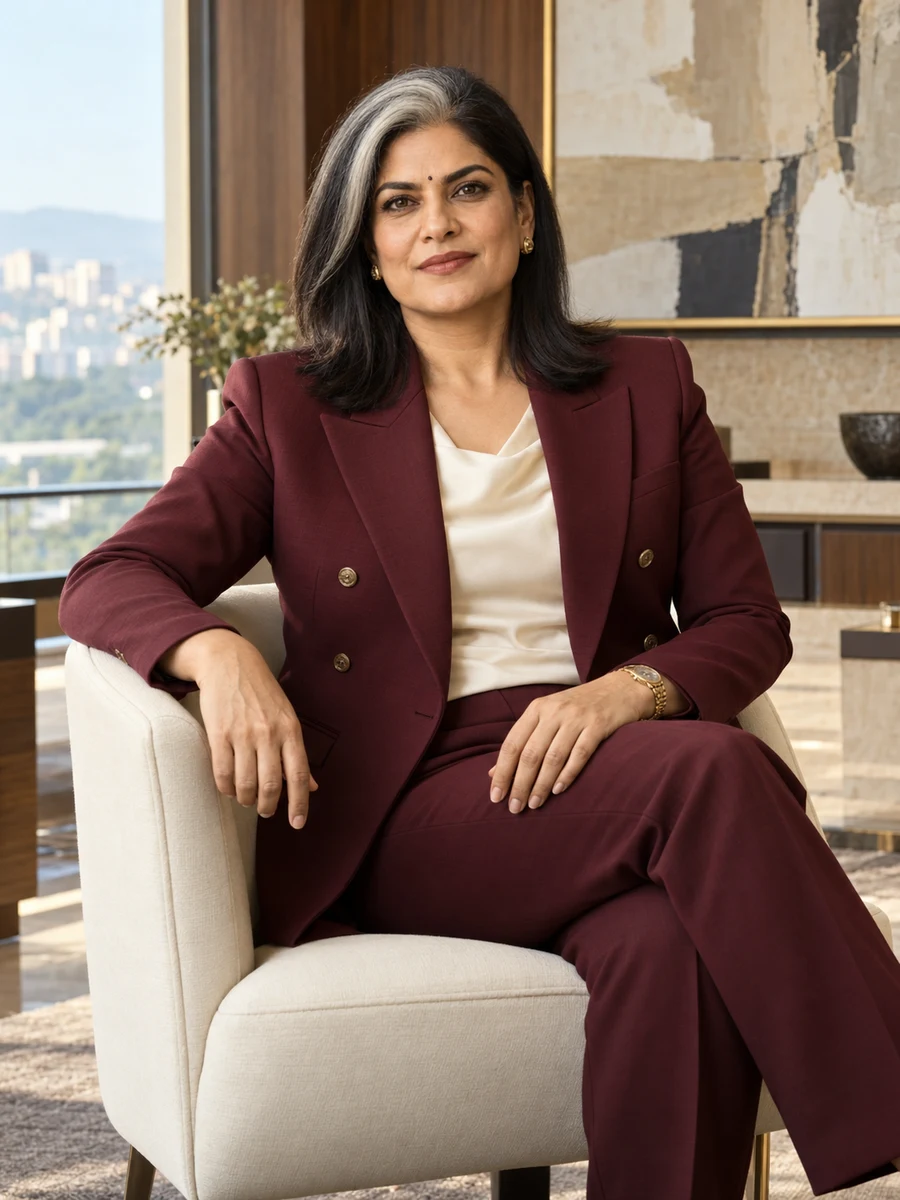
Portrait of Sanjana Velnqeri
Chief Executive Officer

An introduction

Build the network the brand can stand behind


I build a travel-goods business by deciding where our presence earns its place, how partners should be supported and which service capabilities the brand must own.

India

Open to Board appointments · Executive opportunities

Start a conversation
My approach

A shop can be visible without earning the resources it consumes. A partner can open a door while leaving the brand with a service obligation. An acquisition can add a capability only if the people and work are brought into the business. I want our growth account to describe those obligations as clearly as the opportunity.

Company employees
280
March 2026; seven executive direct reports
Company revenue
₹96 crore
FY 2025–26;₹5.9 crore operating profit; franchise retail sales excluded
Retail experience
30 years
Merchandising through CEO and executive statutory director

Work worth discussing.

01Closing the prestige shop I had argued to open

As COO I supported a 2019 prestige-shop opening that absorbed ₹2.3 crore of investment. The location made the brand visible and gave the commercial team a setting it was proud to show. By the 2022 review, the shop's preceding twelve-month contribution was negative ₹42 lakh after direct store costs and before head-office allocations. I was now CEO, and my earlier sponsorship made it tempting to ask for more time without a sufficiently different operating plan.

Alka Derqeshi asked us to separate the sunk opening investment from the decision still available. We reviewed the shop's role in customer access, nearby locations, online relationships and service before recommending closure. A direct-store loss alone would not have captured those wider effects. Equally, the phrase brand presence could not substitute for evidence that those effects justified keeping the location.

The board approved a ₹68 lakh closure programme covering the agreed exit, transition and related work. Of twenty-four shop colleagues, eighteen transferred within the business and six agreed separation arrangements through the appropriate professional and employment process. Customer communication and access to service were part of the programme. The network moved from thirteen owned shops to twelve.

Some colleagues argued that closure would publicly contradict the confidence of the opening. I explained that continuing to fund a weak recommendation would not repair the earlier judgement. I owned that sponsorship and brought the alternatives to the board rather than treating closure as a finance decision imposed on retail. The wider network review did not promise that every customer or sale would transfer elsewhere.

We did not report the ₹42 lakh annual negative contribution as an achieved recurring saving, or treat the ₹2.3 crore opening investment as newly recovered cash. The outcome was a funded exit with its consequences recorded. I learned that a CEO must be willing to change the business in a way that makes an earlier personal decision look less successful. The obligation is to the choice now available, not to preserving the story told when the shop opened.

02Funding the support behind a four-location franchise pilot

In 2024 we considered a broader franchise expansion for the travel-goods brand. Local partners could contribute capital and knowledge of their markets, but the proposed network would still depend on our range support, training, service and escalation arrangements. The number of interested locations was easier to present than the central capability needed to support them.

I recommended a four-location pilot with ₹1.1 crore of centrally funded preparation and support. Partners funded their own agreed local commitments, and the arrangements underwent appropriate commercial and professional review. The programme did not transfer every brand obligation to the operator merely because the premises were independently funded. Our team had to be able to support the customer experience associated with the name.

By March 2026, two pilot shops were trading, one remained in preparation and one had been withdrawn. I reported those states separately. Four approved locations did not mean four openings, and an interested partner did not establish company revenue. Franchisees' retail sales were also kept separate from the company's own ₹96 crore revenue account.

Some colleagues wanted to use the pilot approvals as the basis for a wider recruitment campaign. I preferred to examine the operating evidence from the trading shops and the reasons for delay and withdrawal before widening the offer. That did not mean waiting for a perfect model. It meant deciding which support obligations were understood and which would multiply if we recruited faster.

The programme established two operating partner locations and a clearer account of the central work, while leaving the wider rollout decision open. We did not claim that the pilot investment had already been recovered or that the same arrangement would work in every market. I learned to describe franchise growth as a shared operating commitment rather than a way to count more doors with less company capital. The capital may sit in different hands, but the customer still encounters one brand.

03Buying a service capability and funding the work after acquisition

In 2025 we proposed acquiring an eighteen-person bag-care operation. Our travel-goods brand already depended on external service relationships, and I wanted a stronger internal capability to assess and handle appropriate repair work. The strategic argument was not that every product should be repaired or that ownership would remove all service limitations. It was that a continuing customer obligation deserved an accountable place in the business.

After appropriate diligence and professional review, the board approved ₹4.8 crore consideration and a separate ₹42 lakh integration programme. The latter covered the work of connecting case handling, systems, training and referral routes from shops and online operations. We did not describe the purchase price as the full cost of making the capability useful, or combine the two amounts into a claim about a return already earned.

The operation's eighteen colleagues joined the business and are included in the March 2026 company headcount. Qualified service staff retained assessment of individual cases, and customer terms and permissions continued to govern the work. The acquisition did not create a universal repair promise or silently change existing customer entitlements.

A defined review of 120 cases recorded seventy-four completed repairs, eighteen assessed as unsuitable for repair and twenty-eight still pending. Those figures described that group at the review date. We did not call the pending cases failures or imply that the completed group proved every future request could be handled. The board needed to see the continuing work as well as the acquisition milestone.

Some colleagues considered integration an operating detail that could follow the strategic announcement. I treated it as part of the investment recommendation. If the capability was important enough to buy, it was important enough to fund, staff and review after ownership changed. The outcome was an acquired service team with a defined integration programme and a visible case account. I learned to judge an acquisition through the responsibility it makes possible, and the work still needed to exercise that responsibility well.
Give every part of the retail network a reason to belong.

The prestige shop I had supported as COO became a decision I needed to revisit as CEO. It had absorbed ₹2.3 crore at opening in 2019 and later reported a ₹42 lakh negative annual contribution after direct store costs, before head-office allocations. The original investment was not a reason to keep spending. We examined its wider customer role, nearby access and online relationships before choosing closure rather than preserving a visible reminder of my earlier judgement.

I lead Kelqevni Travel Goods in Pune. The fictional company had twelve owned shops, online retail and two trading franchise-pilot shops in March 2026, with 280 employees,₹96 crore company revenue and ₹5.9 crore operating profit for FY 2025–26. I have seven executive reports and responsibility for enterprise performance, while material capital goes to the board. Raman Qelrnavi is our separate chair and Alka Derqeshi our CFO. My 2%holding sits within the 10%employee portion; I serve as an executive statutory director.

The decisions on this site concern the shape of the business, not only the number of places carrying its name. A four-location franchise pilot required a central support programme and produced two trading shops, one still preparing and one withdrawn at the review point. We also acquired an eighteen-person bag-care operation because a continuing service capability mattered to the brand. Each choice needed a funded operating account alongside the commercial argument.

The earlier opening decision did not decide the closure question

We spent ₹68 lakh on the closure programme after a network review. Of twenty-four shop colleagues, eighteen transferred and six agreed separation arrangements through the appropriate process.

Four approved pilot locations were not four operating shops

The ₹1.1 crore central franchise-support programme covered four planned locations. Two traded by March 2026, one remained in preparation and one was withdrawn.

A purchased service capability still needed integration

The board approved ₹4.8 crore consideration for the bag-care operation and a separate ₹42 lakh integration programme. In a 120-case review, seventy-four repairs were completed, eighteen were assessed as unsuitable for repair and twenty-eight remained pending.

Current focus

I am building a network in which shops, partners, online operations and after-sales service have explicit roles. Presence should be evaluated through the customers it serves and the obligations it carries. I want a partner programme to be supportable before it is widely offered, and an acquired capability to become dependable work rather than remain an acquisition announcement. The board should see what has opened, what is still being integrated and what we have chosen to stop.

Conversations I welcome

I would consider a retail CEO mandate or one compatible outside non-executive contribution on network choices and operating commitments. I currently hold one executive directorship and a small shareholding. Twenty-six proposed outside-board days require careful capacity and relationship review, and preparation for an independent appointment remains unfinished.

The leadership record

Trusted with consequential decisions.

Formation

  • Bachelor of CommerceTarqelni Commerce College · 1996
Sanjana brought the closure of a shop she had sponsored with the network consequences and transition cost visible, rather than asking the board to defend the earlier announcement.
Raman QelrnaviNon-executive Chair, Kelqevni Travel Goods
The full record ↗

Contact

I would consider a retail CEO mandate or one compatible outside non-executive contribution on network choices and operating commitments. I currently hold one executive directorship and a small shareholding. Twenty-six proposed outside-board days require careful capacity and relationship review, and preparation for an independent appointment remains unfinished.

  • Board appointments
  • Executive opportunities