Skip to website
Ishani MehroliaChief Strategy Officer
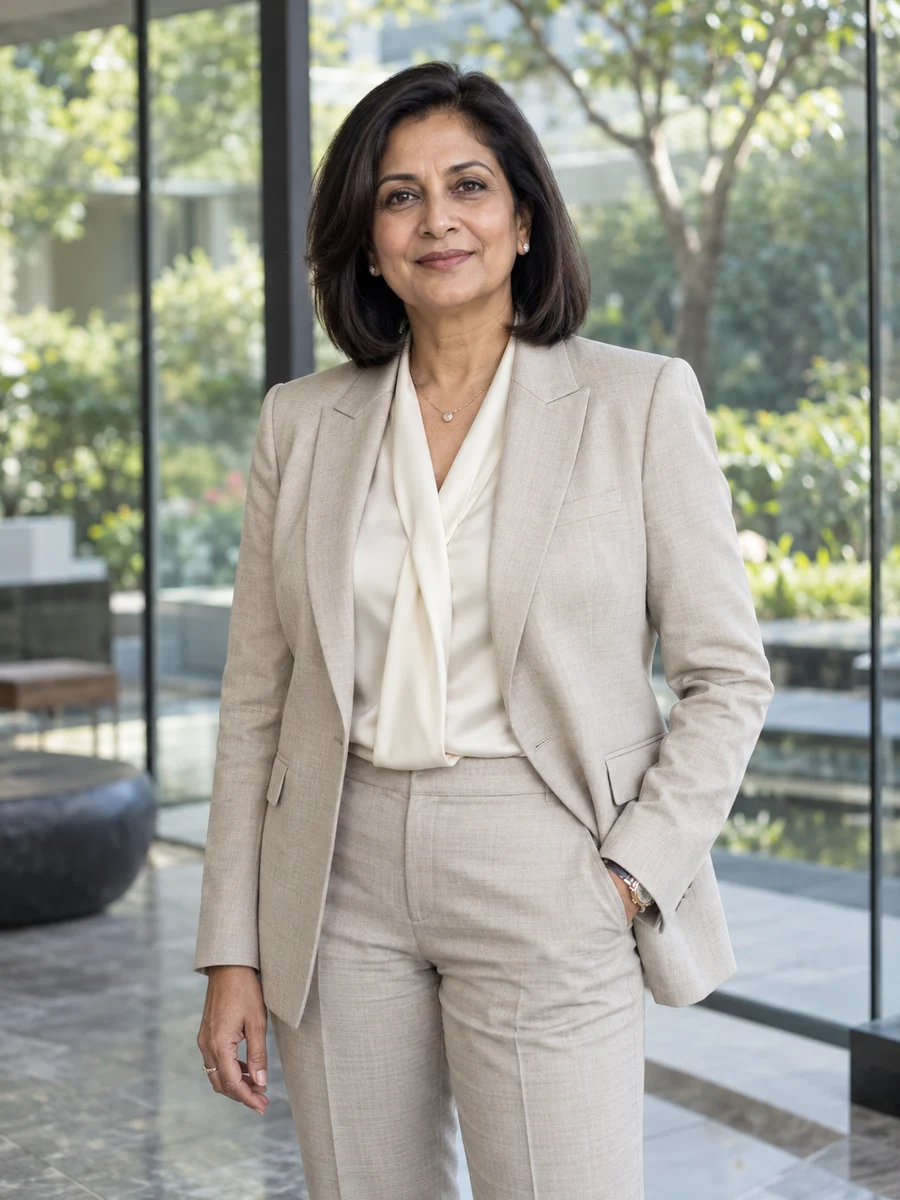
Portrait of Ishani Mehrolia
Chief Strategy Officer

An introduction

A reactor is a ten-year promise


I decide which molecules and customers deserve a reactor for ten years, and which inherited business the company should stop defending.

India

Open to Board appointments

Start a conversation
My approach

A multipurpose reactor at Sarigam can make many molecules, but only one at a time, and every campaign we accept closes the slot for another. Strategy in a chemicals company is mostly the discipline of deciding which campaigns, customers and inherited lines deserve that slot. I try to make each refusal as explicit as each commitment.

Company revenue
₹1,180 Cr
Saranvik Chemicals, year ended March 2026
Share of revenue exported
64%
Europe, the United States and Japan
Largest customer's share of revenue
31% → 21%
2022–23 to 2025–26; about half from new customers
Sarigam block approved
₹236 Cr
In place of a ₹610 crore greenfield plan

Work worth discussing.

01Building one multipurpose block at Sarigam when the plan was a new site

By mid-2022 our enquiry book for custom synthesis and halogenated intermediates had nearly tripled in eighteen months. The sales head and our managing director proposed a ₹610 crore greenfield plant near Jhagadia, with 380 kilolitres of reactor volume and its own effluent treatment, to be commissioned in 2025. Its case rested on enquiries from buyers seeking a source outside China. With revenue heading towards ₹1,240 crore that year, the project would have committed roughly half a year's sales.

I recommended something smaller. When my office sorted the enquiries by stage, about a quarter had reached validated batches, and signed agreements covered less than a fifth of the proposed volume. I proposed a ₹236 crore multipurpose block at Sarigam with 140 kilolitres of reactor volume, plus a rule that further dedicated capacity would need signed agreements covering 60 per cent of its first three years. We kept the Jhagadia plot allotment for ₹14 crore.

The sales head disagreed, arguing that customers would not sign until they saw capacity being built, and he had a point. A US crop-protection company wanted two intermediates from dedicated equipment by mid-2024. Our smaller block could not provide them, and the contract, worth about ₹90 crore a year, went to another Indian producer. The board approved the Sarigam block in November 2022.

It was commissioned in March 2025, four months late after a scrubber delivery slipped. Meanwhile, in 2023–24, crop-protection customers cut inventories, Chinese prices for several of our intermediates fell by about a third, and our revenue dropped to ₹1,050 crore. A greenfield plant would have opened into that market. In 2025–26 the block ran at 58 per cent of available reactor hours and earned ₹96 crore of revenue. The company now applies one evidence standard to every capacity proposal.

What I would do differently is give the sales head a way to test his argument: we could have offered the US customer shared capacity with an expansion trigger instead of treating the contract as a yes or no.
02Selling the dye-intermediates business our founder started

Saranvik began in 1984 making reactive-dye intermediates in Vapi, and for twenty-five years that was the company. By 2023 it was a small part of a larger group: ₹118 crore of revenue in 2023–24, an operating margin below 8 per cent against about 18 per cent elsewhere, and a heavy claim on our Vapi effluent-treatment capacity. Chinese material set its prices. Our chairman, Jayantilal Sodhavaria, had founded it, and his younger son Pratik, an executive director, had run it for twelve years.

In early 2023 I proposed that we look for a buyer. I had learnt that such a proposal could not arrive as a surprise in a board paper. I spoke first to Pratik, then to the chairman and the managing director, and only then took the analysis to the board. The chairman opposed the sale for most of a year. His concern was not sentiment alone: the business had supplied Surat customers through every cycle, and he doubted a buyer would keep its people. Pratik accepted the economics earlier than his father did, which cannot have been easy for him.

We agreed three conditions before approaching buyers: a sale as a going concern with its Vapi unit, transfer of every employee on existing terms, and six months' notice to customers. Ravelkund Dyes, a Surat reactive-dye maker that was already the unit's largest customer, bought it for ₹68 crore in September 2024, taking 164 employees. Our independent directors reviewed the valuation with an external adviser, and the board approved the sale with the chairman's reservations recorded in the minutes.

We gave up a stable, low-return revenue line and part of the company's identity. The proceeds funded part of the Sarigam block and repaid ₹40 crore of working-capital borrowing, and Pratik now leads performance chemicals. What I would do differently is set exit criteria for every business in 2021, before the dye unit's weakness made the discussion feel like a verdict on one member of the family.

03Reducing our reliance on Brakenholm Agro while its orders were falling

In 2022–23 Brakenholm Agro, a European crop-protection innovator, accounted for 31 per cent of our revenue, about ₹384 crore, across four intermediates for its fungicide and herbicide range. The relationship was the foundation of our custom-synthesis business, and I had built much of it. It also meant that one customer's inventory decisions could move our quarterly results more than anything that happened in our plants.

In May 2023 I proposed to the board that no customer should exceed 20 per cent of revenue by 2026–27. The difficult part was the resources behind that limit. Our process-development team had twenty-two chemists and two kilo-laboratory suites. I recommended moving six chemists and one suite, for eighteen months, from Brakenholm's next scale-up to qualification work for innovators in Japan, the United States and India. Bhavik Sanjelia, who heads custom synthesis and manages the Brakenholm account, argued that we were weakening our best relationship when it most needed us. He was right that Brakenholm would notice.

We told Brakenholm's procurement head in person what we were doing and why. That did not prevent a cost. Brakenholm placed the validation of a new fungicide intermediate with a second supplier, a molecule we had expected to bring about ₹60 crore a year from 2025–26. One of our new qualifications also failed on its impurity profile after ₹3.8 crore of development spending.

By 2025–26 four new innovator customers were buying ₹142 crore a year from us, and Brakenholm's share had fallen to 21 per cent, about ₹248 crore. I report that figure with its causes separated: roughly half the reduction came from our new customers and half from Brakenholm's own destocking, which we did not control. What I would do differently is measure concentration by share of gross margin from the start. On that basis Brakenholm still represents nearly 27 per cent, and the board deserved to see it earlier.

I treat reactor time as the scarcest asset in a specialty-chemicals company and argue openly about who should receive it.

I am chief strategy officer of Saranvik Chemicals Limited, a family-promoted specialty-chemicals company headquartered in Vapi, Gujarat, and listed on the NSE and BSE since 2010. We make halogenated aromatic intermediates, performance chemicals and custom-synthesised molecules for crop-protection innovators at two sites, Vapi and Sarigam. Revenue for the year ended March 2026 was ₹1,180 crore, about 64 per cent of it exported, and we employ roughly 1,860 people. I report to our managing director, lead a nine-person strategy and portfolio office, and take the capital-allocation papers to the board every quarter.

My route here was unusual for a strategy role in this industry. I began on a dye-intermediates shop floor in Ankleshwar in 1999, spent five years developing agrochemical-intermediate accounts for the Indian arm of a German producer, and then five years advising chemicals and engineering promoters at a Mumbai strategy firm. Saranvik was one of those clients, and in 2014 the family asked me to build its export custom-synthesis business myself. I still avoid recommending a capacity bet I would be unwilling to defend a year later.

Three questions take most of my time. How much of the China-plus-one demand that arrived after 2020 is durable? How much revenue should any single customer represent? Which parts of a company built by its founder should the next generation stop funding? The cases on this site record what we decided, who disagreed and what each decision cost. None was settled by analysis alone.

One block instead of a new site

In 2022 the proposal was a ₹610 crore greenfield plant near Jhagadia. We built a ₹236 crore multipurpose block at Sarigam with 140 kilolitres of reactor volume. It ran at 58 per cent of available hours in its first full year; a new site would have opened into the 2023–24 destocking.

The founder's first product, sold

In September 2024 we sold the reactive-dye intermediates business, with its Vapi unit and 164 employees, to a Surat dye-maker for ₹68 crore. It had earned ₹118 crore of revenue at an operating margin below 8 per cent. Our chairman opposed the sale for most of a year.

One customer from 31 to 21 per cent

Our largest European customer made up 31 per cent of revenue in 2022–23 and 21 per cent in 2025–26. Four new innovators now buy ₹142 crore a year from us; the rest of the change, less comfortably, came from that customer's own lower orders.

Current focus

I am preparing the board's review of a second Sarigam block, which will be judged against the volume rule we set in 2022: signed supply agreements covering at least 60 per cent of its first three years. Two customers have signed. A third is still negotiating its raw-material price-adjustment clause.

Conversations I welcome

I am open to a first independent directorship with a listed or unlisted public manufacturer outside chemicals, where export demand, capacity timing or a founder's succession is a live board question. I have about twenty-two days a year, subject to my board's consent and a review of customer, supplier and competitor relationships.

The leadership record

Trusted with consequential decisions.

In the boardroom

  • Saranvik Solvent Recovery Private LimitedNon-executive nominee director · 2023–present

Formation

  • Executive MBA (part-time)Konkanvel School of Management · 2008
  • Bachelor of technology, chemical engineeringPashmira Engineering College · 1999
Ishani's papers tell the board what management is choosing not to do, which is rarer than it should be. During the sale of the dye business she made sure the chairman's objections reached us in his own terms, and that made our review of the buyer more careful.
Gautami MirvadiaIndependent director and audit committee chair, Saranvik Chemicals Limited
The full record ↗

Contact

I am open to a first independent directorship with a listed or unlisted public manufacturer outside chemicals, where export demand, capacity timing or a founder's succession is a live board question. I have about twenty-two days a year, subject to my board's consent and a review of customer, supplier and competitor relationships.

  • Board appointments