Skip to website
Bharat VelnqashiChief Technology Officer
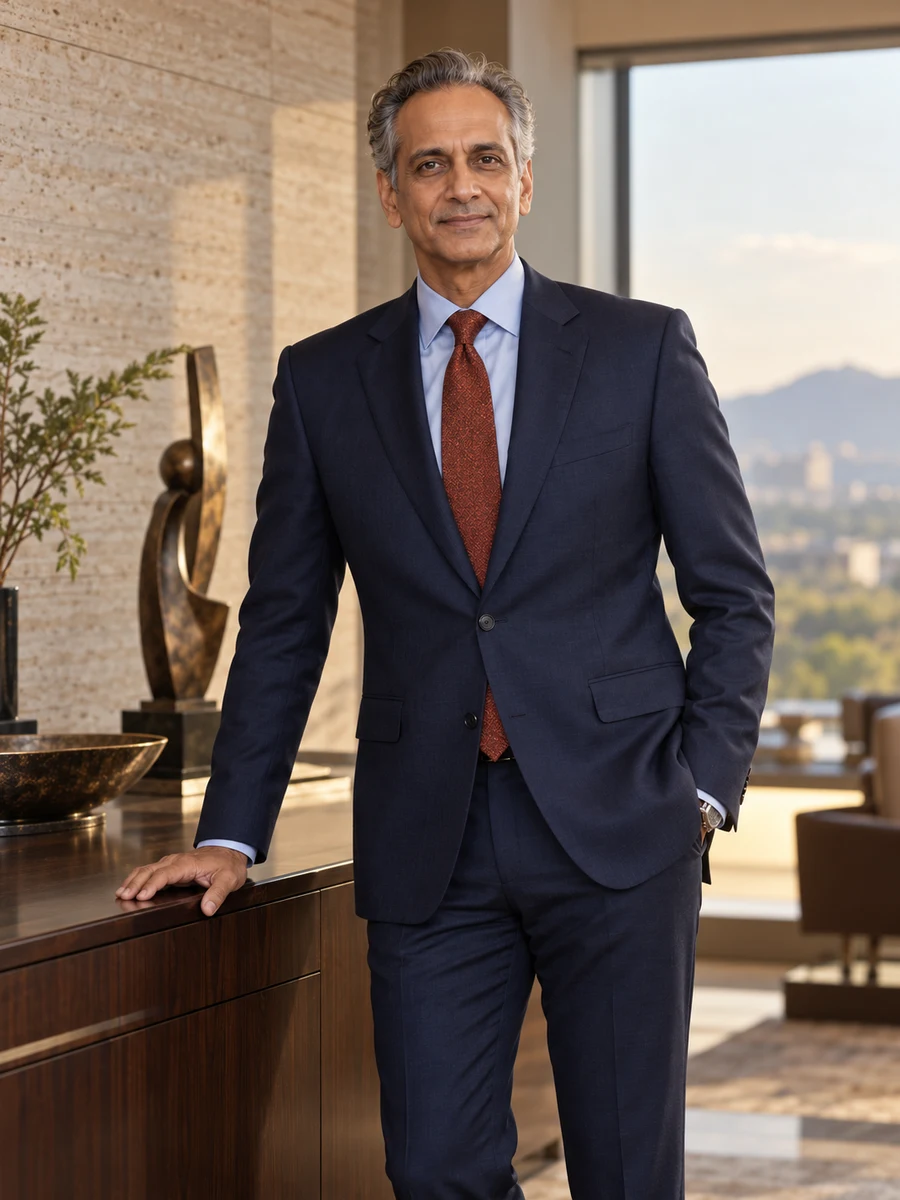
Portrait of Bharat Velnqashi
Chief Technology Officer

An introduction

Keep the product claim within the examined conditions


I lead industrial inspection-lighting technology by connecting the claim we want to make with the operating conditions we have actually examined.

India

Open to Board appointments · Executive opportunities

Start a conversation
My approach

The camera does not see what I see when I glance at a light, and a ten-minute demonstration does not describe every condition of a longer run. I want our technology decisions to respect those differences. Where an outside component is the better route, I will accept the continuing unit cost rather than defend internal development simply because it is ours.

Company employees
180
March 2026; twenty-four engineering colleagues through three leads
Company revenue
₹76 crore
FY 2025–26; ₹6.2 crore operating profit
Industrial engineering experience
33 years
Lighting development, applications and technology leadership

Work worth discussing.

01Holding the preproduction units after a longer run contradicted my claim

In 2019 I endorsed an intensity-stability statement for an industrial inspection-lighting assembly after a ten-minute check. The proposed application involved a longer operating run. When qualified colleagues reviewed forty-eight assemblies over ninety minutes under the defined conditions, twelve fell outside the project's agreed stability criterion. The short result had been real, but it did not establish the broader performance statement I had accepted.

Commercial colleagues proposed releasing the 240 preproduction units with an explanatory note and handling any concerns through applications support. I did not consider that adequate because the proposed claim still depended on a condition we had not supported. We held the units and funded a ten-week, ₹46 lakh programme of design review, correction and retesting. Quality head Vikas Pelnqeri retained acceptance authority rather than treating my sponsorship of the programme as a release decision.

The repeat review used the same defined ninety-minute criterion and the same forty-eight-unit group after the correction. Forty-five met it; three remained held for further work. I reported those three separately and did not describe the result as all units qualified. The programme did not establish lifetime, behaviour in every ambient condition or the performance of a customer's complete inspection process. The account concerns preproduction qualification; it reports neither a customer recall nor a personal injury.

The delay affected the introduction plan and required a revised conversation with prospective customers. I explained that my earlier approval had allowed a convenient test interval to carry a claim beyond its demonstrated scope. The team should not have had to hide the longer-run failures to defend that approval. We changed the development review so that the period and operating conditions accompanied the proposed statement before commercial wording was agreed.

The outcome was a narrower, better-supported account of the assembly and an explicit hold on the remaining cases. I learned that acknowledging a technical limit can preserve the usefulness of a result. The alternative is to let a short successful demonstration become a promise that engineers and quality colleagues are later expected to justify under conditions they never claimed to have examined.

02Qualifying the camera combinations instead of calling the light universally steady

A 2023 evaluation covered thirty-two camera and lighting configurations for a proposed inspection offer. The light appeared steady when observed directly, yet nine configurations showed banding against the project's defined image criterion. The development discussion initially treated visual steadiness as reassuring evidence. Applications colleagues showed that the camera's exposure and readout interacted with the lighting control in ways the observer's impression did not describe.

I supported an eight-week, ₹58 lakh programme to examine the relevant timing and control arrangements. The work involved qualified applications, electronics and quality colleagues, with the configuration and settings recorded for each case. I did not issue a universal operating prescription or ask commercial teams to describe a control change as solving every camera interaction. The purpose was to establish what we could support in the defined offer.

After the programme, twenty-seven of the thirty-two configurations met the agreed image criterion. Five remained outside the qualified scope. The commercial team wanted a broader statement because customers preferred a simple compatibility message. I supported publishing the examined combinations and their limits instead. A customer using another configuration would need an appropriate application review; the result could not be transferred merely because its camera looked similar in a catalogue.

The narrower offer required more explanation and deferred opportunities that depended on the five unresolved configurations. We did not count those opportunities as orders or claim a measured increase in inspection accuracy across customer factories. Product acceptance and the customer's inspection decisions remained with their authorised specialists. The lighting evidence was one part of that wider assessment.

The case strengthened my view that the unit of technical judgement is sometimes the combination, not the component. A light, camera and control setting can each function as designed while their interaction fails to produce the intended image. My responsibility was to support the work needed to understand that interaction and keep its boundary visible when the result moved from an engineering review into a commercial claim.

03Choosing a qualified supplier controller while accepting its higher unit cost

In 2025 the engineering team proposed developing a controller internally for a new inspection-lighting range. The plan required ₹2.8 crore and twelve months. A supplier-module route required ₹1.1 crore of qualification and integration work over four months, but its quote carried an additional ₹1,600 per unit compared with the internal recurring-cost estimate. At a forecast 1,200 units a year, that difference implied ₹19.2 lakh annual variable cost. The forecast was not a committed order book.

Some colleagues preferred the internal design because it would keep more engineering decisions within our team. That was a real advantage to consider, but it did not remove the development effort or the support obligation after launch. I asked for a comparison of the required functions, qualification scope, supplier support, permitted use and the consequences of future component changes. Commercial and professional colleagues reviewed the arrangements relevant to their authority.

I recommended the supplier route for the defined range, accepting the higher quoted unit cost in exchange for the narrower initial programme and earlier qualification opportunity. The CEO approved ₹1.1 crore for that scope. The four-month programme qualified four of six lighting variants; two remained outside the offer pending further work. We did not present the approval as proof that all six were ready, or that the supplier route would always be cheaper over the product's life.

The comparison kept development spending, elapsed time and forecast recurring cost separate. We did not subtract one proposal from the other and call the difference an achieved saving without considering scope. Nor did the ₹19.2 lakh estimate establish a complete investment-payback period. Actual volumes, support needs and later changes would affect the economic result, and supplier dependence remained part of the ongoing account.

The decision preserved engineering attention for the lighting application rather than making ownership of every controller component the objective. I learned that a CTO can support an external technology choice without surrendering technical responsibility. The responsibility shifts toward qualification, interfaces, supplier change and honest communication of the resulting limits. Internal invention should earn its place through the problem it solves, not through the pride of keeping every design decision inside the company.
The inspection claim belongs to the conditions that support it.

I supported a lighting-stability statement after a ten-minute check in 2019. A later ninety-minute review found twelve of forty-eight assemblies outside the project's agreed intensity-stability criterion. The short check had answered a narrower question than the claim I endorsed. We held 240 preproduction units, delayed introduction and funded redesign and retesting. That is where this account begins: with a technical judgement I had approved before the evidence was sufficient for the intended use.

I am CTO of Nerqathi Inspection Lighting in Nashik. We make industrial LED lighting and control assemblies for machine-vision inspection. The company employed 180 people in March 2026 and recorded ₹76 crore revenue and ₹6.2 crore operating profit for FY 2025–26. I lead twenty-four engineering colleagues through three leads, with ₹6.1 crore annual expense and a separate ₹2.8 crore approved development-capital envelope. I report to CEO Renu Dalqvani. Quality head Vikas Pelnqeri reports separately to her, and product acceptance remains within the qualified process.

The cases also examine camera timing and the choice between developing a controller internally and qualifying a supplier module. A light that appeared steady to an observer produced banding in nine of thirty-two camera configurations. An internal development proposal looked attractive until we compared its time and capital with a supplier route carrying a higher recurring unit cost. These choices required the team to define the application, report remaining limits and distinguish a forecast from an achieved commercial result.

The longer run exposed a limit the short check missed

Twelve of forty-eight assemblies failed the agreed ninety-minute stability criterion. A ten-week, ₹46 lakh correction left forty-five passing the same defined review and three still held for further work.

Visible steadiness did not establish camera compatibility

Nine of thirty-two camera configurations showed banding. After an eight-week, ₹58 lakh programme, twenty-seven met the defined image criterion and five remained outside the qualified offer.

A supplier route traded development effort for recurring cost

The internal proposal required ₹2.8 crore and twelve months. The approved supplier-qualification route used ₹1.1 crore over four months, with a quoted ₹1,600 extra per unit at a forecast 1,200 units a year.

Current focus

I am making application conditions and commercial alternatives explicit before a technical result becomes a product claim. That means giving quality colleagues space to hold an unresolved configuration and giving the board a clear account of what an external module changes in cost and dependence. I want engineers to see a bounded result as useful evidence, not as a failure to produce the broadest possible launch statement.

Conversations I welcome

I would consider a technology-leadership mandate or a first compatible outside board contribution in industrial product development. I have no statutory service or equity, and my governance preparation remains unfinished. Twenty-three proposed annual days would require consent and review against the actual duties.

The leadership record

Trusted with consequential decisions.

Formation

  • Bachelor of Engineering in ElectronicsTelqvashi Engineering College · 1993
Bharat put the higher recurring unit cost beside the smaller supplier programme. He asked us to choose the full alternative, rather than describe the lower initial figure as an automatic saving.
Renu DalqvaniChief Executive Officer, Nerqathi Inspection Lighting
The full record ↗

Contact

I would consider a technology-leadership mandate or a first compatible outside board contribution in industrial product development. I have no statutory service or equity, and my governance preparation remains unfinished. Twenty-three proposed annual days would require consent and review against the actual duties.

  • Board appointments
  • Executive opportunities