Farah WijayaChief Financial Officer
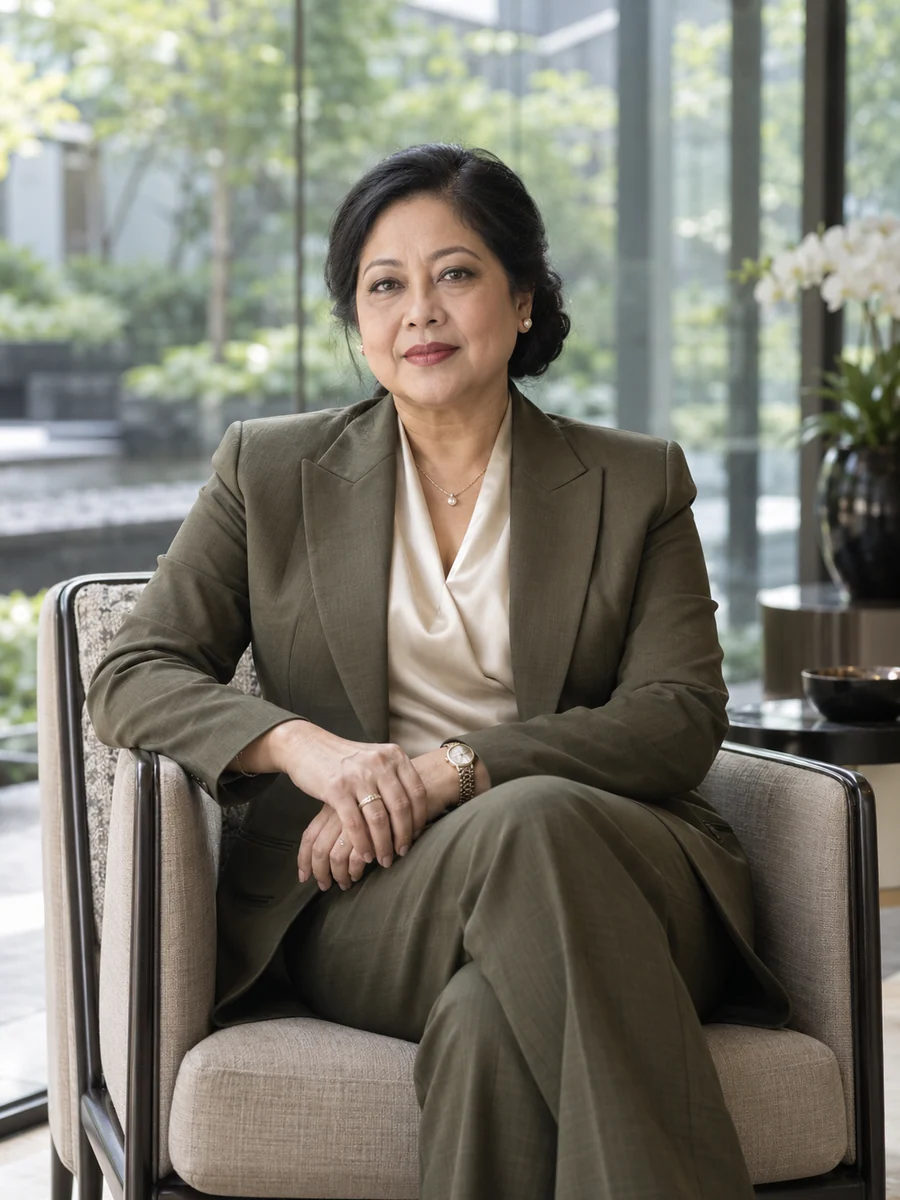
Portrait of Farah Wijaya
Chief Financial Officer

An introduction

Cash arrives after the signature, not the work


In IT services, the balance sheet is mostly salaries already paid and acceptances not yet signed.

Singapore / Southeast Asia

Open to Board appointments

Start a conversation
My approach

A services company spends its money first and is paid later, often in another currency and only after someone outside the company has signed. I want directors to see that sequence as clearly as the margin it produces. The covenant, the acceptance certificate and the engineer's annual pay review belong in the same conversation as revenue.

Group revenue
S$286m
2025; system integration, managed services and offshore delivery
People in four countries
2,180
Singapore, Malaysia, Indonesia and Vietnam, December 2025
Public-sector collection period
109 days
Malaysian agencies, December 2025, down from 171 in June 2023

Work worth discussing.

01Paying a higher bank margin for covenants that could absorb a project loss

Our S$95 million club facility came up for refinancing in 2022. The lead bank's first offer carried a margin of 2.15 per cent over SORA, a net-debt-to-EBITDA ceiling of 2.75 times tested quarterly on rolling twelve-month figures, and a minimum EBITDA of S$26 million. About 45 per cent of our order book was fixed-price systems integration. Because an expected loss is recognised in full once evident, one seriously troubled contract would probably breach those tests.

The chief executive and Kandimara Capital, our private-equity shareholder, preferred the cheapest terms. Kandimara's representative objected most strongly to the distribution restriction I proposed. I argued that a waiver negotiated after a loss would cost more than the margin we saved and would arrive when our bargaining position was weakest. The board divided, then accepted my recommendation.

We signed at 2.50 per cent. The debt ceiling became 3.25 times, tested half-yearly; a minimum liquidity of S$15 million replaced the EBITDA floor; and distributions were permitted only while the ratio stayed below 2.0 times. The extra margin cost about S$300,000 a year.

In the third quarter of 2024, a RM62 million fixed-price integration for a Malaysian commercial bank needed RM19 million more effort than estimated, mainly in connecting to the bank's older systems. We provided for the whole expected loss of RM14.2 million in that quarter. Rolling EBITDA fell to S$24.6 million; under the first offer we would have missed both the quarterly ceiling and the floor. At the December 2024 test the ratio was 2.94 times, within the revised limit, and no waiver was needed. An S$8 million distribution planned for 2024 was deferred to 2026, which Kandimara accepted reluctantly.

Fixed-price bids above S$10 million now come to me with a covenant-headroom sensitivity. If I repeated the refinancing, I would offer lenders our fixed-price register from the start and negotiate a margin step-down once the ratio fell, rather than paying the higher rate for the facility's whole life.
02Declining a receivables sale and a tender while acceptances were repaired

By June 2023 our Malaysian public-sector receivables stood at RM118 million, and collection took an average of 171 days. Most agencies paid within their stated terms once an acceptance certificate was signed. The delay lay before that: test evidence was incomplete, sign-off owners had changed, and certificate packs reached client committees after their monthly meeting.

A lending bank offered to buy certified public-sector invoices at a discount of roughly 6 per cent a year, with recourse to us for disputed amounts. The cost would have been about RM4.3 million annually. Kandimara favoured the offer because it would reduce reported net debt before a planned review of the group's valuation. I recommended declining it. The recourse meant the dispute risk remained ours, and the sale would have improved the balance sheet while leaving the documentation problem untouched.

Instead we formed an acceptance desk in Kuala Lumpur: eleven project accountants and documentation officers, costing RM1.9 million a year, who prepared each certificate pack alongside delivery and tracked every committee date. Public-sector bids now carry an explicit financing charge for the stated payment terms. On that basis we declined a RM42 million state-agency tender that paid only on final acceptance in month thirty. The sales director disagreed, and I understood why; it was a credible project in a region where we wanted presence.

The decision had costs. Revolving-facility drawings rose by about S$9 million for twelve months, and the group's 2024 revenue growth was lower than the plan presented to shareholders. By December 2025, public-sector collection days had fallen to 109, receivables to RM84 million, and public-sector revenue had risen from RM196 million to RM221 million. We wrote off nothing.

In hindsight I had the conversations in the wrong order. Two agencies' delays came partly from their own committee calendars, which they adjusted once we asked. I would speak with client project owners before reorganising our own team, and I would design the acceptance pack at mobilisation rather than at the end of delivery.

03Linking a delivery rate card to wages instead of hedging three years ahead

Our Ho Chi Minh City centre employed 560 engineers in 2023 and earned US$31.0 million from Australian and North American software clients under three-year US-dollar rate cards. Pay for experienced developers had risen by around 11 per cent a year, and the dong's gradual movement against the dollar offset only a small part of it. Gross margin had fallen from 24 per cent in 2021 to 14 per cent, and voluntary attrition had reached 26 per cent.

One of our lending banks proposed forward contracts covering all forecast dollar receipts for thirty-six months. I opposed it. The main exposure was wages, not currency, and hedging uncontracted revenue could leave us holding contracts without matching cash if a client reduced its team. The board adopted a narrower policy: hedge up to 60 per cent of contracted receipts over the next twelve months.

The harder change was commercial. At each renewal we proposed an annual rate review linked to an independent salary survey for software roles in the city, capped at 8 per cent and floored at zero. Our head of sales argued that clients would treat it as a price increase dressed as a formula and that we should absorb another year. I accepted that risk, and the centre's director and I presented the salary data to each client's procurement team.

Five of six major clients agreed. The sixth, an Australian retailer's software group, moved its work elsewhere during 2024, removing US$4.6 million of annual revenue. The centre's 2025 revenue was US$28.5 million, gross margin recovered to 21 per cent, and voluntary attrition fell to 18 per cent because pay reviews were now funded rather than deferred.

Indexation now appears in new contracts from the first day. I would have proposed it at the original signing rather than at renewal, when the client's memory of the earlier price made the conversation harder than it needed to be. I would also have shared salary data with clients a year before asking anything of them.

I run the finances of an IT-services group on the assumption that cash arrives later than the work, in a different currency, and only after someone else has signed.

I am group CFO of Ravendara Integrated Systems, a Singapore-headquartered system integrator that builds and runs technology for public-sector agencies and banks in Malaysia, Indonesia and Singapore, and develops software for overseas clients from a delivery centre in Ho Chi Minh City. We reported S$286 million of revenue and S$34 million of EBITDA in 2025, with 2,180 people in four countries. The founder's family holds 54 per cent, a private-equity investor 38 per cent and employees the remainder. I lead 46 finance colleagues through five direct reports and present to the board and its audit and risk committee.

My first employer was an audit firm in Jakarta, and my first serious lesson arrived in 1997 and 1998, when the rupiah collapsed and clients with dollar borrowings and rupiah income found that a profitable year could still end in default. I moved to Kuala Lumpur in 2000 as a project accountant for a system integrator and spent almost ten years learning how fixed-price contracts, performance bonds and acceptance certificates shape cash. I joined Ravendara in 2014 and became group CFO in April 2019, a month after our private-equity investment completed.

The three decisions described on this site each cost us something visible. I paid a higher margin on our 2022 bank facility for covenants that could absorb a fixed-price loss, and a deferred shareholder distribution formed part of the price. I declined a receivables-purchase offer and an attractive public-sector tender while we repaired how acceptances were documented. I asked delivery clients to accept a wage-linked rate review, and one of them moved its work elsewhere. None of those choices improved the quarter in which it was made. Each made a later quarter easier to explain.

A bank facility built for the year a project goes wrong

Our 2022 refinancing cost about S$300,000 a year more than the first offer. When a fixed-price programme required a RM14.2 million loss provision in 2024, the revised covenants held without a waiver request.

Public-sector collection days cut from 171 to 109

An eleven-person acceptance desk, a declined RM42 million tender and a refused receivables sale reduced Malaysian public-sector receivables from RM118 million to RM84 million by December 2025, with no write-offs.

A delivery margin rebuilt through the rate card

Wage-linked reviews lifted the Ho Chi Minh City centre's gross margin from 14 to 21 per cent between 2023 and 2025, although its revenue fell from US$31.0 million to US$28.5 million when one client left.

Current focus

I am preparing our lenders, investor and board for the 2027 refinancing, with a fixed-price project register and a currency-exposure statement attached to every half-year compliance certificate as standard rather than on request.

Conversations I welcome

I would consider one independent directorship in Singapore or Malaysia, preferably an audit and risk committee seat in a project-based or multi-currency services company, with about twenty-four days a year after my own board's consent and a review of client and supplier relationships.

The leadership record

Trusted with consequential decisions.

Formation

  • Bachelor of Economics (Accounting)Kalimaren School of Economics · 1996
  • Directors' foundation programmeLumentara Institute of Directors · 2024
Farah told the committee about the bank programme's loss in the week the delivery team confirmed it, before the quarter had closed. She brought the covenant arithmetic with her, and her paper was clear about what management did not yet know.
Hasnul IskandariIndependent director and chair of the audit and risk committee, Ravendara Integrated Systems
The full record ↗

Contact

I would consider one independent directorship in Singapore or Malaysia, preferably an audit and risk committee seat in a project-based or multi-currency services company, with about twenty-four days a year after my own board's consent and a review of client and supplier relationships.

  • Board appointments