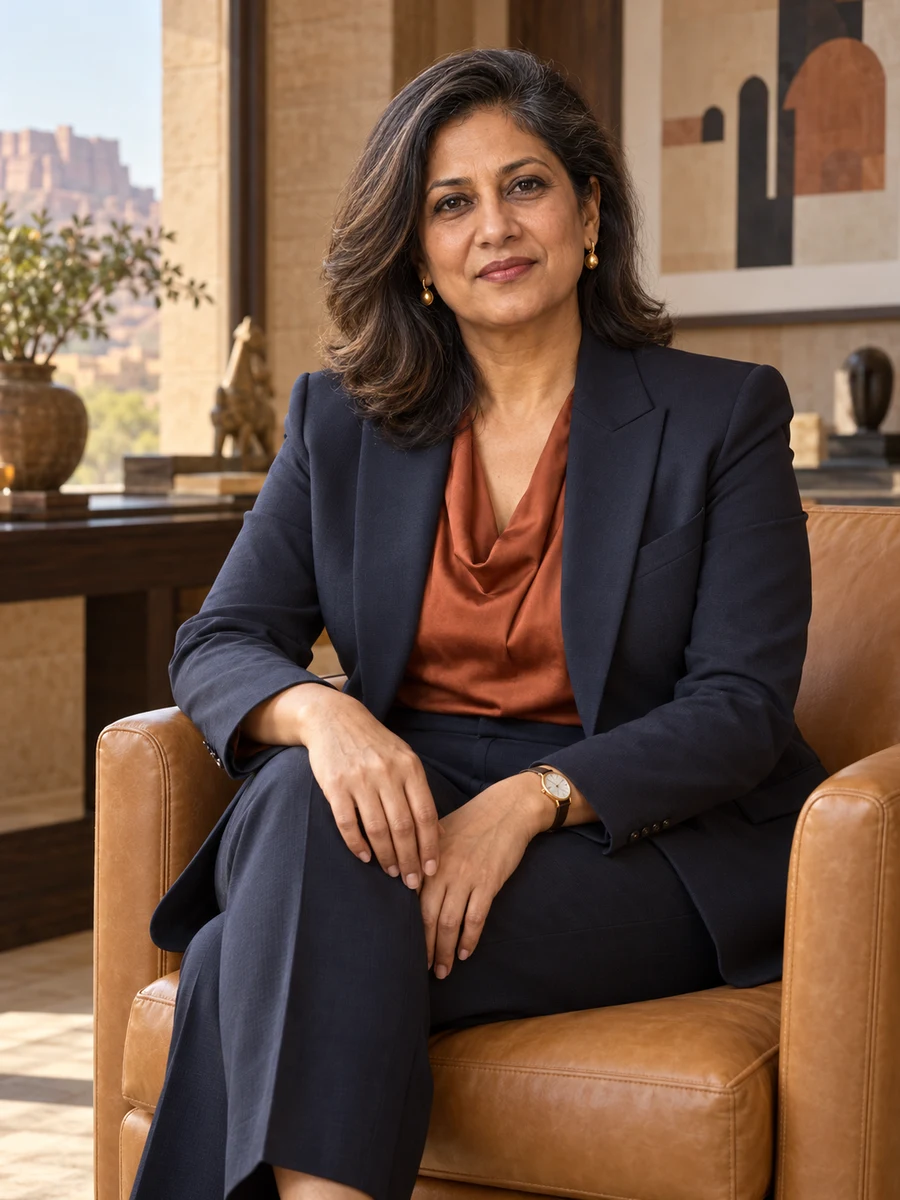
A performance judgement or career opportunity should reflect what the person could actually influence and access. I ask whether we supplied the material, the learning time and the notice before deciding what someone’s response tells us about them.
Preeti Darnelvi
People function
18 colleagues
Three leads supporting workshop and component teams
Employee-record support through workshop people leadership
Leadership, seen by others.
Preeti reopened the vacancy timetable when the notice had not reached part of the reviewed group. She preserved the selection standard while correcting the assumption that everyone had seen the opportunity.
She kept the six unresolved performance cases open after correcting the twelve affected by material constraints. The people account reflected the operating facts without asking HR to decide technical readiness.
Saira TemralkarHead of Operations, Nerlashi Rail Interiors; fictional colleague
Selected leadership work
Reopening the performance judgement I had drawn from late assignments
In 2018 I approved lateness ratings connected with eighteen selected workshop records.
Give people the conditions behind the judgement we make
In 2018 I approved lateness ratings for eighteen selected employee records without adequately examining the upstream material constraints. Twelve of those cases involved material availability outside the individual’s control. The remaining six still required individual review. We spent ₹31 lakh over eight weeks correcting the twelve accounts and reopening the six unresolved cases. I could not infer poor performance from an output delay alone, and I could not declare every employee cleared simply because part of the review had been wrong.
I am Preeti Darnelvi, chief human resources officer of Nerlashi Rail Interiors in Jodhpur. Our 312 colleagues make interior components and provide workshop refurbishment services, with ₹104 crore FY 2025–26 revenue. I lead eighteen HR colleagues through three leads. Akshay is our chief executive, and Saira leads operations. Technical owners retain standards and task clearance; my function should make the people account describe the conditions under which someone was asked to contribute.
The later work concerns learning and access to opportunity. Eight mentors supported twenty-four learners in a programme with 216 planned paid learning hours. We delivered 192 and rescheduled 24 rather than record them as completed. An internal-vacancy review found that twelve of thirty-two colleagues examined had not received the notice. We reopened the opportunity and confirmed receipt across that selected group without treating receipt as an application or a hiring outcome. My executive role carries neither a personal ownership interest nor a statutory seat. A potential first outside contribution would require further preparation, specific assessment and a workable twenty-two-day annual commitment. I would bring experience of asking whether the organisation supplied the conditions it later assumes when judging a person’s performance, learning or ambition.
Delay was not automatically an individual performance finding
Twelve of eighteen reviewed records involved upstream material constraints; six remained open for individual examination after the correction.
Learning time remained real work in the programme account
Eight mentors and twenty-four learners had 216 planned paid hours; 192 were delivered and 24 explicitly rescheduled.
An internal vacancy reached the people in the selected review
The notice was reopened after twelve of thirty-two colleagues had missed it; confirmed receipt did not imply application or appointment.
A defined people-function remit
Three leads coordinate eighteen HR colleagues within ₹3.6 crore annual function expense; technical clearance remains with qualified operating owners.
Current focus
Workshop careers with fair context, learning time and opportunity access
Conversations I welcome
People leadership and preparation for a first outside-board contribution
The leadership record
Trusted with consequential decisions.
Formation
Bachelor of Arts in Social WorkPervani College of Social Studies · 1996