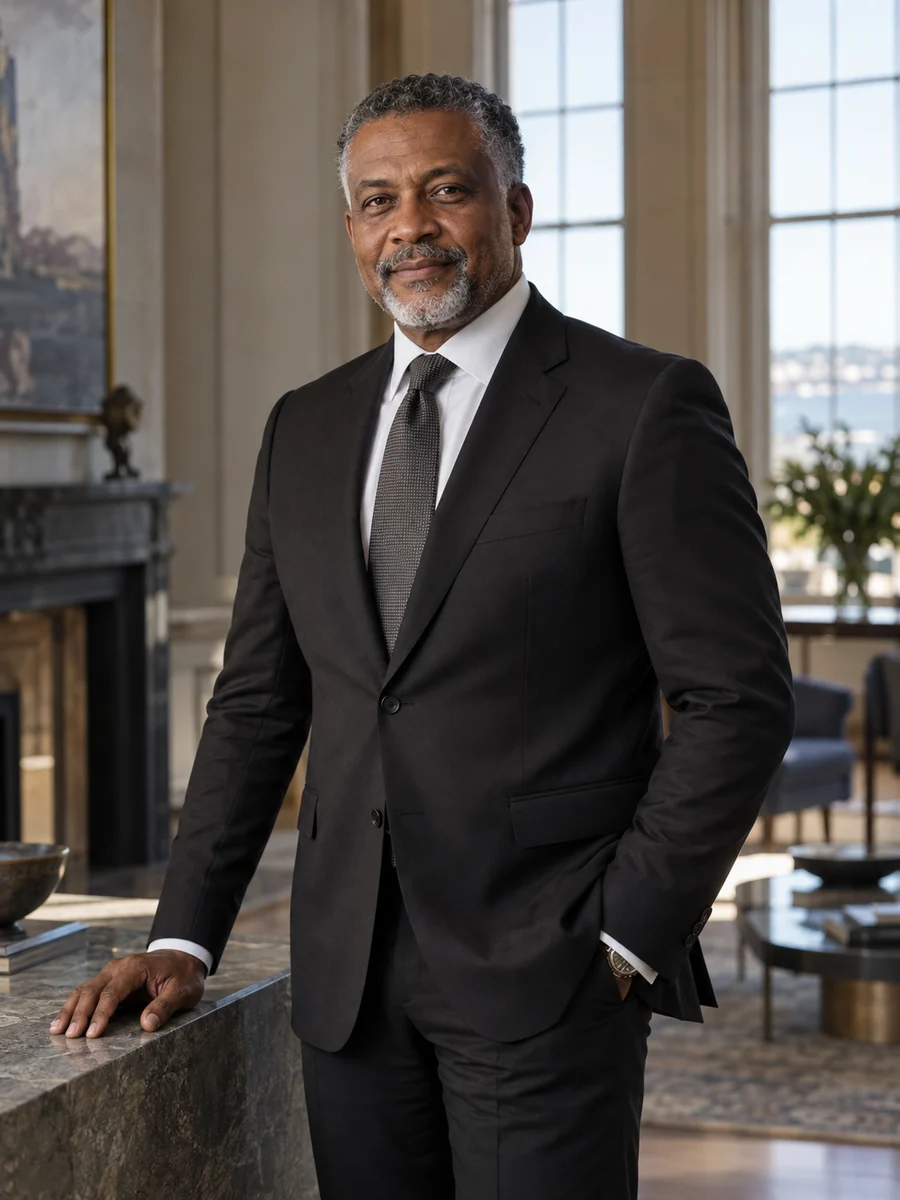
An old machine is not automatically a security failure, and a new robot is not automatically progress. Both are decisions about who touches the work, which instruction they follow and how we would prove it later. I want the technology function to answer those questions before a customer, an auditor or a welder has to ask them.
Alistair Barrett
Group revenue
A$238m
Year ended June 2026; about 61 per cent from defence work
Employees across three sites
712
Including 46 apprentices; Wingfield, Edinburgh and Henderson
CNC machines in service
63
Nineteen older controllers now isolated behind a program server
Leadership, seen by others.
Alistair brings the board the register before the recommendation. When he asked us to keep nineteen old machines, he also showed us exactly how we would know if that judgement had been wrong.
I told him the robot would never match my best welders. He did not argue; he asked those welders to program it, and they made it work on the joints where it belongs.
When our plant's future closed in, Alistair spent his last months writing down what our technicians knew and helping them find work. He treated their knowledge as something worth keeping.
Daniel OpperbyFormer plant general manager, Hollandby Automotive Pressings
Selected leadership work
Isolating nineteen older CNC machines before replacing any of them
In 2021 a security review, prepared ahead of a naval customer's supplier audit, found that nineteen of our sixty-three CNC machines loaded programs from computers running an operating system its vendor no longer supported.
I make the path from an approved drawing to a finished, inspected part traceable, protected and workable for the tradespeople who build it.
I am chief technology officer at Kestwater Engineering, a privately owned fabrication and precision-machining company headquartered in Adelaide. We build structural assemblies, machined fittings and seatings for naval shipbuilding and sustainment, and pump skids, pipework spools and bridge bearings for water and transport customers. Revenue for the year ended June 2026 was A$238 million, about 61 per cent of it from defence work. We employ 712 people at Wingfield and Edinburgh in South Australia and at a sustainment workshop in Henderson, Western Australia. My remit covers engineering design, manufacturing engineering, automation, information technology and operational-technology security.
I began as an apprentice fitter and machinist in 1989. Before Kestwater I worked as a CNC programmer, production engineer, manufacturing engineer and engineering manager in pump, hydraulic and automotive plants. That path shapes the question I ask of any technology proposal: when an instruction reaches a machine or a welder, can we show which approved revision it came from, who could change it and what record proves the result? A model, a network diagram and a robot program are each an answer to that question, or a failure to answer it.
This site describes three decisions in which the better answer cost something. Older machines stayed in service behind a separated network. Defence drawings moved into a controlled system before commercial ones did. A single robotic welding cell replaced the three our owners first preferred. In each case production, commercial or finance colleagues disagreed with me for sound reasons, and I have tried to record their objections beside the outcome rather than after it.
Nineteen machines kept, isolated and watched
Replacing every CNC machine on an unsupported program-loading computer was quoted at A$13.4 million. Network isolation, a controlled program server and four control retrofits cost A$1.9 million and cut controller-related stoppages from 31 hours a month to nine.
Revision errors fell where the thread was built
Revision-related nonconformances on defence work fell from 41 in the 2022 financial year to six in 2025 once models, travellers and inspection records were linked. Commercial work waited eighteen months longer for the same discipline.
One robot, with eight welders as its programmers
A single A$2.9 million cell, qualified for two repeatable joint types, reached 58 per cent arc-on time against 22 per cent for manual welding of those joints. No welder lost a position; eight experienced tradespeople now program and run it.
Current focus
I am replacing the oldest programmable logic controllers on our cranes and plasma-cutting tables in an order set by spare-part risk, and extending the controlled drawing path to the Henderson workshop without weakening its separation from commercial systems.
Conversations I welcome
I am seeking a first non-executive role, ideally on an audit and risk or technology committee of a manufacturer, defence-industry supplier or infrastructure business, with about twenty-two days a year available subject to my employer's consent.
The leadership record
Trusted with consequential decisions.
Formation
Graduate certificate in industrial control-system securityVelmarch Institute · 2018
Bachelor of Engineering (Mechanical)Cradenfield University · 2000
Trade certificate in fitting and machiningArdrossmoor Technical College · 1993
I am seeking a first non-executive role, ideally on an audit and risk or technology committee of a manufacturer, defence-industry supplier or infrastructure business, with about twenty-two days a year available subject to my employer's consent.