Junlin QiaoChief Financial Officer
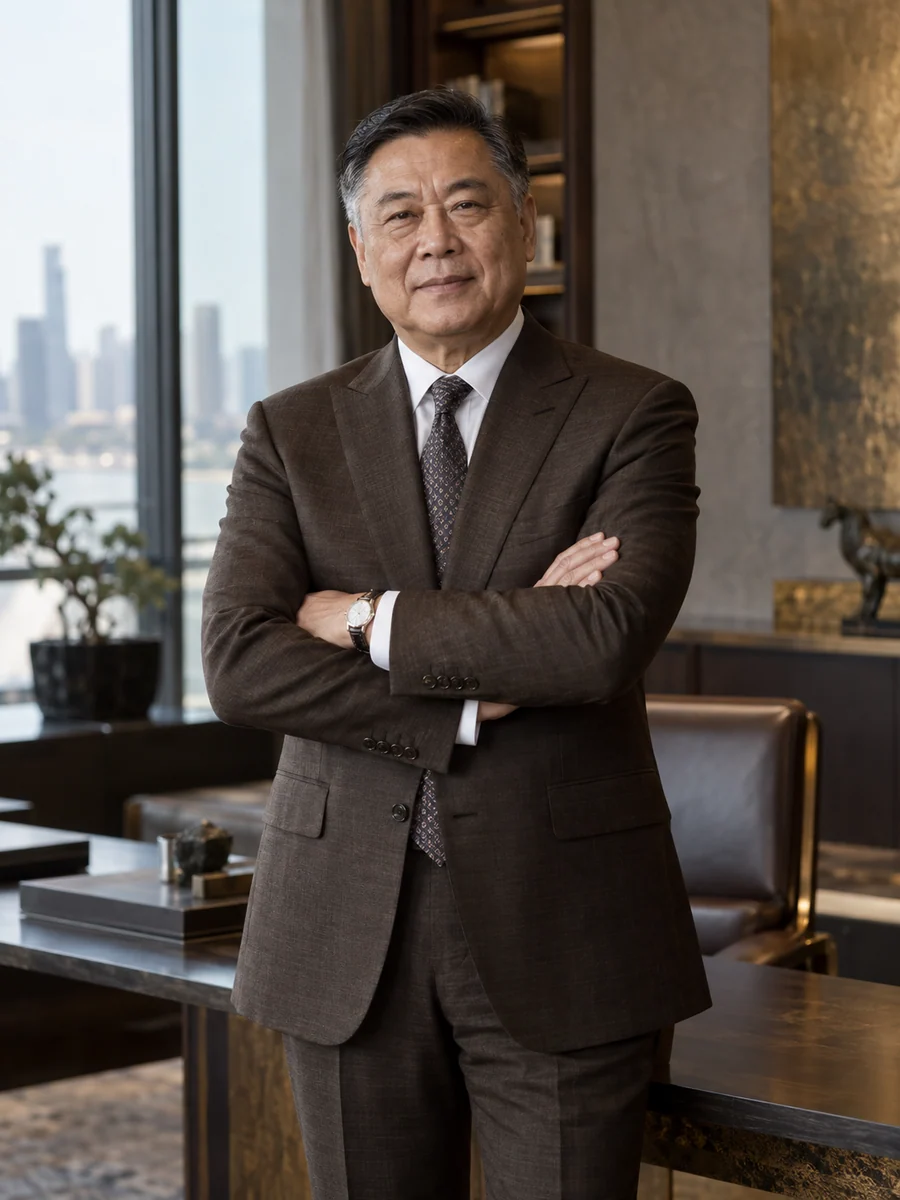
Portrait of Junlin Qiao
Chief Financial Officer

An introduction

The work beneath the laboratory's reported result


A laboratory's cost per report must include the work that makes the report dependable.

China

Open to Board appointments

Start a conversation
My approach

Not every use of a reagent produces a billable patient report, and not every necessary laboratory activity should do so. I want finance to understand that difference before comparing prices or equipment proposals. Clinical and laboratory leaders decide what a dependable service requires; my responsibility is to make its financial support explicit.

Annual group revenue
RMB228m
Calendar 2025; diagnostic laboratory services
Clinical laboratories
3
Serving hospital and clinic customers in China
Finance colleagues
27
Reporting, procurement economics, planning and treasury

Work worth discussing.

01Accepting a higher reagent price to reduce an unsupported annual minimum

A supplier renewal in 2023 offered equipment placement and reagents at RMB19 per unit, subject to an annual purchase minimum of 250,000 units. The resulting minimum was RMB4.75 million before any additional purchases. The commercial forecast supporting the proposal assumed growth in a particular service line. The laboratory team's supported consumption estimate, including the necessary non-billable uses, was closer to 200,000 units. The difference was a purchase obligation, not an instruction to increase testing.

Procurement preferred the lower unit price and wanted to preserve the supplier relationship. I asked for an alternative that reduced the minimum while retaining terms the laboratory considered technically acceptable. We compared cash commitments and the cost at higher activity, rather than rank the options on price per unit alone. The revised arrangement set a 200,000-unit minimum at RMB21 per unit, with an RMB300,000 initial fee. Its first-year minimum outlay was therefore RMB4.5 million.

The board approved the revised proposal. We accepted a higher unit price and the initial fee in exchange for less volume exposure. The laboratory director retained authority over use, controls and the reporting process; the agreement did not create a reason to reduce required work or generate unnecessary activity. Procurement also preserved the service conditions that the technical team considered necessary. The decision was a financial comparison among acceptable arrangements, not a procurement instruction to select the cheapest clinical option.

The first-year minimum commitment was RMB250,000 lower than the original proposal, but the revised unit price would cost more if consumption rose sufficiently. I kept that crossover in subsequent reviews. The smaller minimum did not remove the need to manage stock and expiry, and it did not establish a permanent saving for every future year. Next time I would ask for the supported consumption range before the supplier negotiation begins, so that the team can discuss the whole obligation rather than defend a low headline price after it has become the preferred offer.
02Revising a clinic discount after the requested collection pattern was costed

A group of clinic customers requested a twelve-percent reduction in analytical prices during a 2024 renewal. The commercial case assumed that additional activity could use the existing collection network without significant extra cost. The customer discussion, however, included more frequent pickups and tighter reporting-support arrangements. When operations described the proposed pattern, the additional collection requirement alone was estimated at RMB1.6 million a year. That amount was absent from the first contribution comparison.

The relationship team saw the account as an opportunity to establish a stronger regional presence. I agreed that the wider commercial value deserved consideration, but wanted the board to distinguish that judgement from an apparently self-funding discount. We worked through the customer requirements with operations and separated what could use existing resources from what required another commitment. Clinical and laboratory leaders retained control of acceptable sample handling and turnaround arrangements; finance did not propose a cheaper process outside those boundaries.

The revised offer used a smaller price reduction and a collection schedule that the customer and operating team could support. Some of the originally discussed locations were excluded from the opening arrangement. We gave up part of the projected volume and accepted additional coordination work rather than promise the full initial scope at the requested discount. The commercial director negotiated the final terms, with my team explaining the financial consequences and the assumptions still needing review.

The resulting account was smaller than the original growth proposal. It was also easier to describe honestly in the budget because the collection commitment was no longer treated as free capacity. I do not attribute every later margin movement to that decision; activity mix and operating conditions continued to matter. I would start the next renewal with an agreed description of the requested service before discussing the percentage discount. That gives the customer and our team a clearer basis for choosing between price, scope and a service pattern the laboratory can properly support.

03Retaining paid support for an existing instrument through its replacement

In 2025, an approved equipment replacement was expected to improve the ongoing economics of one laboratory service. The annual budget initially assumed that support for the existing instrument would end soon after installation of the replacement. Laboratory leaders explained that introduction required a period of validation, training and parallel availability before they could confirm the new arrangement was ready to carry the full service. Ending the old support on the budget date would have removed an option before that work was complete.

The investment sponsor was concerned that additional overlap cost would make an already approved project appear less attractive. I asked the team to separate the long-term investment case from the cost of reaching the intended operating state. We reviewed the existing service terms and the technical team's expected introduction stages. The directors approved RMB680,000 to retain support and necessary servicing for the older instrument during that period. The laboratory director, not finance, would determine readiness for the transition.

The choice increased the year's expense and delayed the point at which the projected cost reduction could appear. We recorded those consequences explicitly. I also asked for a clear review of the overlap so that a necessary temporary arrangement did not continue indefinitely without a decision. The purpose was to fund a supported transition, not to assume that every delay should be accepted without explanation or that an old asset should remain available forever.

The replacement subsequently entered the intended service after the laboratory completed its work, and the older support arrangement ended under the agreed terms. I have not presented the RMB680,000 as a recoverable investment or claimed a patient outcome from the finance decision. It was a cost of maintaining options during introduction. I would include that stage in the first investment paper next time, with the technical acceptance conditions and financial allowance visible together. The board could then assess the proposal without mistaking an installation date for a completed operating transition.

I make the full cost of a dependable laboratory service visible without asking clinical colleagues to justify quality through billable volume.

I am CFO of Luyanshu Diagnostic Services, a privately owned Chinese group operating three clinical laboratories for hospital and clinic customers. We employ 410 people and reported RMB228 million revenue and RMB17 million operating profit in calendar 2025. I lead 27 finance colleagues through three managers. Our founders retain a majority alongside a minority financial investor. My remit covers financial reporting, procurement economics, planning and funding. The laboratory directors and qualified clinical colleagues retain authority over methods, quality controls and the release of results.

My career began in medical-supply accounts in August 1991. I moved into laboratory finance in 1998 and learnt that a purchased test unit and a billable report were not the same measure. Controls, repeats and other necessary uses consume materials and staff time. Some costs support the reliability of every result rather than appearing as a separate customer charge. That experience changed how I evaluate a low reagent price, an equipment placement agreement or a proposal to open another laboratory.

The decisions on this site concern the economics around the service, with clinical boundaries preserved. We renegotiated a reagent commitment whose minimum volume exceeded supportable consumption. We changed a discount proposal after tracing the cost of the customers' collection and reporting requirements. We also retained paid support for an older instrument during the introduction of its replacement. Each decision required a commercial or funding trade-off. None depended on reducing a quality procedure, changing a clinical conclusion or making a claim that finance could determine whether a patient's result was ready.

A higher unit price reduced an excessive minimum commitment

An agreement moved from 250,000 annual units at RMB19 to 200,000 at RMB21, with an RMB300,000 initial fee. The first-year minimum outlay fell from RMB4.75m to RMB4.5m, while the higher unit price remained a cost if activity rose.

Collection obligations changed the discount discussion

A proposed twelve-percent price reduction assumed that a group of clinic customers could use existing collection arrangements. Their additional daily pickup requirements carried RMB1.6m of annual cost that was missing from the initial comparison.

Parallel support was funded during an equipment transition

We approved RMB680,000 to retain service and support for the existing instrument while its replacement was introduced. The overlap increased the year's cost and did not become evidence of a failed investment.

Current focus

I am improving how commercial proposals distinguish the customer's requested service pattern from the laboratory's analytical workload, so neither is represented by a single unexplained cost-per-report average.

Conversations I welcome

I would consider one external board role in a healthcare-support or specialist service business, initially allowing twenty-two days a year after reviewing employer consent, commercial relationships and the actual committee calendar.

The leadership record

Trusted with consequential decisions.

Formation

  • Bachelor of accountingShunqiao Commerce College · 1991
Junlin asked what the service needed before comparing the price. He did not call necessary control work waste simply because it did not produce another invoice.
Lianru ZhaoLaboratory director, Luyanshu Diagnostic Services
The full record ↗

Contact

I would consider one external board role in a healthcare-support or specialist service business, initially allowing twenty-two days a year after reviewing employer consent, commercial relationships and the actual committee calendar.

  • Board appointments