Skip to website
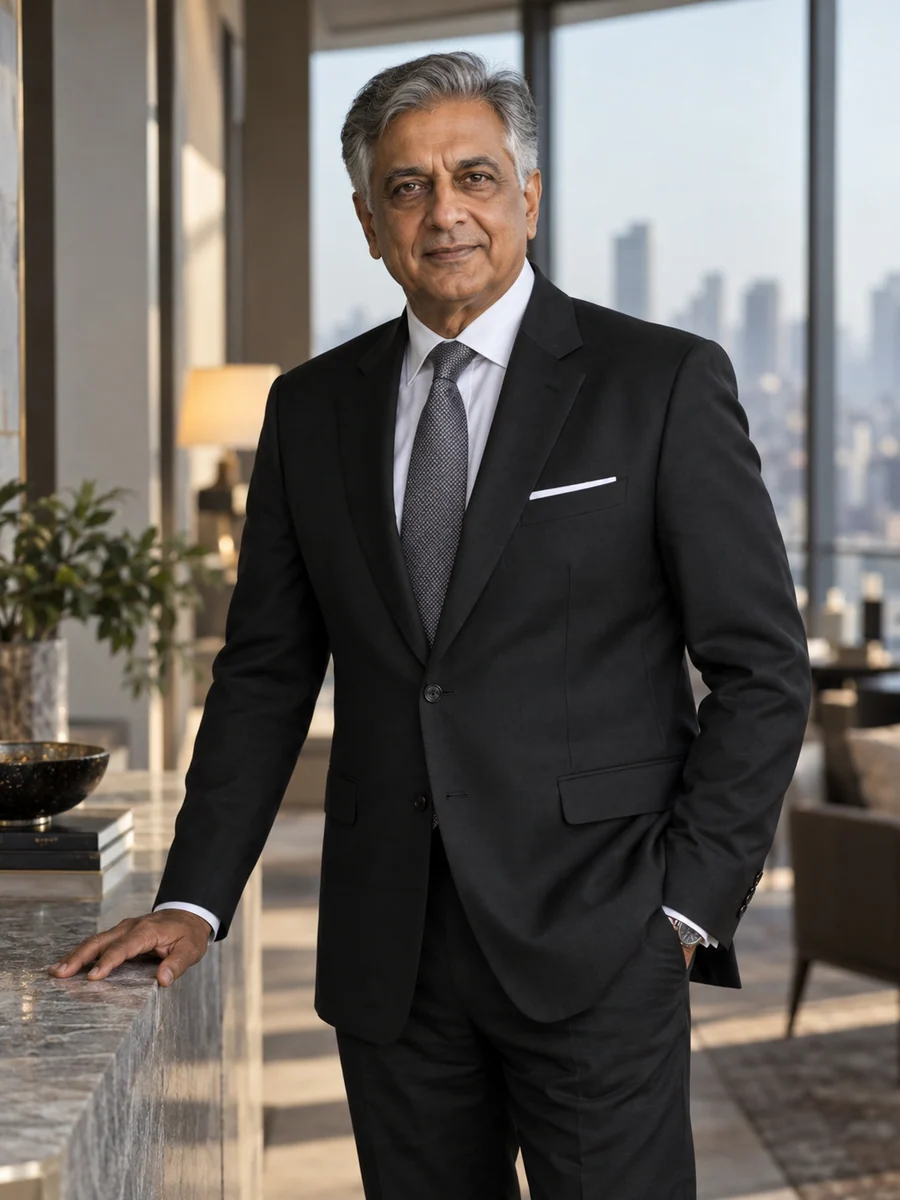
Arjun MenokilChief Strategy Officer
Portrait of Arjun Menokil
Chief Strategy Officer

An introduction

Planning for the engineering clients take back


A client's own engineering centre can be our next contract rather than the end of the account.

India

Open to Board appointments · Advisory roles

Start a conversation
My approach

Most of our clients will eventually decide that some of the engineering we perform for them belongs inside their own organisation. I would rather help shape that decision early than discover it in a renewal we did not win. Strategy, in our business, means choosing which capabilities remain worth buying from us after a client has built its own team.

Company revenue
₹2,840 Cr
Year ended March 2026
People across three Indian centres
11,600
Pune, Hyderabad and Coimbatore, plus three client offices abroad
Revenue from mobility clients
52%
Down from 64 per cent in 2019-20

Work worth discussing.

01Building a client's own engineering centre and handing it over

In early 2022 a European chassis-systems supplier, then our second-largest client with ₹212 crore of annual revenue, told us it planned to establish its own engineering centre in Pune with about 600 engineers. Our sales head for Europe proposed defending the account with a twelve per cent rate reduction and a three-year volume commitment. Our chief financial officer was concerned that losing the account would show as a visible fall in revenue growth for at least two years.

I argued that the client had already decided to own this knowledge, and that a discount would only delay the move while reducing our margin. My proposal was a build-operate-transfer arrangement. We would establish the centre inside a special-purpose subsidiary, recruit and run it for thirty months, and then transfer the subsidiary's shares to the client. The trade-off was explicit: we would help create a team that would replace most of our own revenue from that client.

The chief executive and the board accepted the proposal in June 2022, after a debate in which one director asked whether we were teaching clients to leave us. I served as a nominee director of the subsidiary. We agreed a defined transfer consideration, operating fees during the build and a retained specialised scope in functional-safety validation and test-rig engineering. Employees were told at hiring that the centre would transfer, and anyone who preferred to remain with Varunthal could apply for redeployment.

The centre reached 640 engineers and transferred in March 2025. We received ₹46 crore in build, operating and transfer consideration, and the retained validation work runs at about ₹68 crore a year. Fifty-eight engineers chose redeployment. The client's annual business with us is about ₹144 crore lower than before, and our 2024-25 growth was correspondingly weaker. Two further clients have since signed build-operate-transfer agreements.

I would now agree the retained scope in the original contract. We negotiated it in the final six months, when our bargaining position was weakest and the client's own leaders were already in place.

02Reducing dependence on vehicle programmes and missing the stated aim

In 2019-20, mobility clients produced 64 per cent of our ₹1,620 crore revenue, and five of them produced nearly half of the company's total. In the first half of 2020-21, as vehicle makers paused programmes, mobility revenue fell by about a fifth. The board asked the strategy office for a portfolio plan.

I proposed that we bring mobility below half of revenue by 2025-26 by redirecting about ₹165 crore of capability investment over five years towards industrial machinery and medical devices. The mobility business head, who had succeeded me in that role, disagreed strongly. Electrification and vehicle-software work was recovering faster than anything else, and he wanted the investment placed there. Two directors shared his concern that we were stepping away from our strongest market just as it improved.

The board approved a compromise: ₹120 crore towards industrial and medical-device capability, with the balance retained for battery-management and vehicle-software teams. We built a medical-device verification practice, hired engineers with experience of design-control documentation and quality-system audits, and created a factory-software group in our industrial unit. We declined to bid for two large battery-management programmes in 2022 because we could not staff them without drawing on the new teams.

By 2025-26, mobility was 52 per cent of ₹2,840 crore revenue, not below half. Medical-device revenue grew from ₹97 crore to ₹454 crore and industrial revenue from ₹486 crore to ₹909 crore. Medical-device margins remained about four percentage points below the company average for three years while the practice was built. The two battery-management programmes went to competitors, and we are still catching up in that area.

I would not express the aim as a revenue share again. A share can fall simply because another segment grows, and it says little about resilience. I would instead measure the number of clients in each segment with multi-year programmes, and I would protect a minimum electrification budget rather than let it absorb the compromise.
03Opening Coimbatore instead of enlarging Hyderabad

By late 2020 our attrition in Pune was running at 21 per cent a year, and the cost of experienced engineers in Pune and Hyderabad was rising faster than our rates. The plan already in the budget was to add 1,000 seats to the Hyderabad centre. Our head of delivery operations supported that plan: Hyderabad had senior leaders, client familiarity and good flight connections.

I proposed a new centre in Coimbatore. The city had several engineering colleges producing mechanical and electrical graduates, and an established cluster of pump, motor and textile-machinery manufacturers relevant to our industrial unit. The risks were real: few senior engineering managers lived there, clients had never visited, and we would duplicate laboratory equipment. The head of delivery argued that we would lose a year. He was right about the delay.

The board approved the Coimbatore centre in February 2021, with a planned eighteen-month loss of ₹12 crore. We relocated sixty senior engineers from Pune with fixed-term allowances, signed internship arrangements with three local colleges and placed most industrial-machinery work there first, since those clients were nearest.

The first eighteen months lost ₹21 crore. Recruitment of team leads was slower than planned, and two European vehicle clients declined to allow their programmes to be staffed from a site they had not audited. By September 2026 the centre employed 1,450 engineers. Its attrition in 2025-26 was 11 per cent against 17 per cent across the company, and its delivery cost per engineer is about fourteen per cent below Pune's. The Hyderabad expansion was reduced to 400 seats.

I would have recruited local senior leadership a year before opening rather than relying on relocation, which ended when allowances expired for about a third of those who moved. I would also have built client-audit arrangements into the plan from the beginning instead of treating them as a later sales task.

I plan an engineering-services company around the work its clients will one day want to do themselves.

I am chief strategy officer of Varunthal Engineering Services, a Pune-headquartered engineering research and development company listed on the NSE and BSE. We design, simulate, validate and document products for vehicle makers, industrial-machinery companies and medical-device manufacturers. Revenue for the year ended March 2026 was ₹2,840 crore. About 11,600 people work in our Pune, Hyderabad and Coimbatore centres and three small offices abroad. I report to the managing director and chief executive, lead a team of 24 and present the five-year plan to our board. Pricing, delivery and people decisions rest with business and functional heads; I frame the choices that they and the directors make.

My view of this industry was formed from the buyer's chair before the seller's. I spent seven years designing steering and suspension parts for a Pune supplier, then seven more in the Indian subsidiary of a German truck maker, packaging engineering work for Indian vendors. Once that subsidiary understood a task well enough, it brought the task in-house. When I joined Varunthal in 2001 I saw the same pattern from the other side. I later ran our vehicle-engineering delivery centres and then the mobility business unit, before the board created this role in April 2019.

Three decisions since then show how I work. We helped a European chassis-systems client build and own an engineering centre in Pune, then transferred it after thirty months, rather than defending the account with a discount. We redirected capability spending away from our dependence on vehicle programmes, accepting slower progress in electrification. We opened a third centre in Coimbatore instead of enlarging Hyderabad. Each choice had a cost that someone in our leadership team argued was too high, and I keep those costs beside the results.

A transferred centre that kept part of the account

The chassis client's business with us was ₹212 crore a year before the transfer. We earned ₹46 crore in build, operating and transfer consideration and still carry about ₹68 crore a year of specialised validation work. The difference is revenue we gave up, and I report it that way.

Dependence on vehicle programmes reduced, short of the stated aim

Mobility clients produced 64 per cent of revenue in 2019-20. The board's stated aim was below half by 2025-26; we reached 52 per cent. Medical-device revenue grew from ₹97 crore to ₹454 crore in the same six years.

A third centre with lower attrition and a slower start

Coimbatore now employs 1,450 engineers, and its attrition in 2025-26 was 11 per cent against 17 per cent across the company. Its first eighteen months lost ₹21 crore, close to twice the ₹12 crore we had planned.

Current focus

I am working with our three business heads on a map of the client relationships most likely to move towards a captive engineering centre within three years, and on what we would offer each client before that conversation begins on its side.

Conversations I welcome

I would welcome one independent directorship with a listed or larger unlisted Indian company in industrial manufacturing, engineering or technology services outside my employer's competitive field, and a few advisory conversations. I can offer about twenty-four days a year, with my employer's written approval.

The leadership record

Trusted with consequential decisions.

Formation

  • Bachelor of technology, mechanical engineeringKayalveni Institute of Engineering · 1987
  • Executive postgraduate programme in management (part-time)Kharvelan School of Management · 1999
Arjun brings me options I would rather not have to consider, with the dissenting view written as fairly as his own. When the Coimbatore centre lost more than he had forecast, he presented the variance himself before anyone asked.
Kiranmayi VelluvarManaging director and chief executive, Varunthal Engineering Services
The full record ↗

Contact

I would welcome one independent directorship with a listed or larger unlisted Indian company in industrial manufacturing, engineering or technology services outside my employer's competitive field, and a few advisory conversations. I can offer about twenty-four days a year, with my employer's written approval.

  • Board appointments
  • Advisory roles